A broken window, a rifled glovebox — and along with the sunglasses, the gate remote and the document wallet are gone. Or, more mundanely: the fob is simply nowhere to be found, and you cannot even say since when. A gate remote stolen or lost is not a mere duplicate-shopping errand: it is a key to your home in circulation, one that opens your gate without leaving the slightest sign of forced entry.
This guide puts the right moves in the right order: judging how serious the risk really is, deactivating the code in the gate receiver, choosing a replacement between an original fob and a universal remote like 1Control WHY, and — the part that pays off most — making sure that next time there is nothing left to steal, by moving the opening to your smartphone with 1Control SOLO.
Remote and registration papers in the same car: why this is a security problem
A remote on its own opens "a gate somewhere": without knowing which one, it is worth little to a thief. The trouble is that it is almost never stolen on its own.
The classic case is theft from a parked car: in the glovebox, right next to the fob, sit the registration papers and often the insurance certificate — documents carrying your name and address. Whoever smashed the window walks away with the key to your driveway gate and the exact address where it works. And a vehicle gate is rarely just a gate: it leads to the garage, the garden, often a secondary entrance far less watched than the front door. An opening made with a remote leaves no trace either: no forced lock, no visible break-in.
There is a difference between lost and stolen, and it is worth weighing. A fob dropped in the park is a low risk, but not zero: that code stays valid forever until someone deactivates it, and you cannot know whose hands it will end up in. A remote stolen from the car together with your documents is a concrete risk with a narrow window: the countermeasures belong in the following hours, not the following days.
Lost gate remote: what to do right away
1. Assess the real risk
If the remote disappeared together with documents showing your address, treat it as top priority and report the theft to the police — you will need that for the documents anyway, and it puts the incident on record. If the fob is "just" missing, by all means keep looking — but do not postpone the deactivation indefinitely: a radio code never expires on its own, and every day it stays valid is a day someone else could use it.
2. Deactivate the gate remote in the receiver
The only real countermeasure is making the gate receiver forget that code. There are two routes: selective deletion of the single code, if your receiver supports it and you can identify the missing remote; or a full memory reset, followed by re-pairing every remaining remote — the more common path, since few installations keep a record of which slot belongs to whom. Procedures differ from brand to brand and we will not repeat them here: buttons, sequences and receiver differences are covered in the guide to the gate receiver memory.
Once that is done, the stolen remote goes back to being a mute piece of plastic: it can press all it wants, the gate no longer answers.
3. Stolen fob in an apartment building: tell the management company at once
If the gate is communal, the receiver is part of the shared installation and you cannot touch it yourself: report the stolen fob to the management company straight away, so they can task the gate contractor with the deletion or reset. Press on timing — until someone acts, the stolen code keeps opening everyone's gate — and put the request in writing. How remotes, duplicates and responsibilities work on a shared gate is covered in the guide to the communal gate remote control.
Want to open your gate from your phone?
Check in seconds whether your system is compatible with 1Control SOLO: it fits existing gates and garage doors, one-off purchase, no subscription.
139,00€ 119,00€ VAT included
- 1,500+ reviews on Amazon, Facebook and Trustpilot
- Secure payments
- 2-year warranty
Replacing the remote: original or universal?
With the old code deactivated, you need a replacement. The classic route is an original fob from the gate motor's manufacturer: identical to the one you lost, but with prices, waiting times and availability you do not control — and on older installations the model may have been out of production for years.
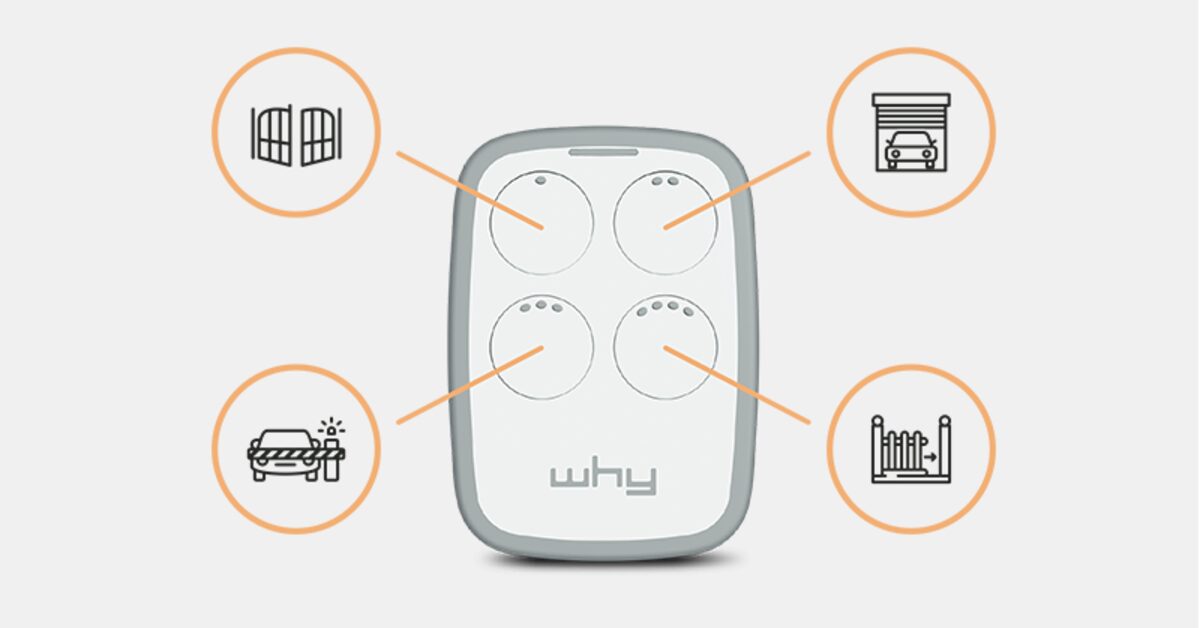
The alternative is a universal remote. 1Control WHY copies the signal of over 800 remote models, rolling code included, across the common frequencies between 433 and 868 MHz: one object that duplicates the household's surviving fob, paid for once, with no subscriptions. Before buying, check your model on the WHY compatibility page.
One honest note: duplicating requires a working remote to copy from — your partner's fob or the household's second one is perfect. If the stolen remote was the only one, the receiver step is unavoidable: a new remote gets paired first, and the copies are made from that one.
Prevention: your smartphone as the gate fob that never stays in the car
The weak point of a physical remote is its daily life: clipped to the sun visor, in plain sight on the dashboard, forgotten in the glovebox. A smartphone follows the opposite logic — it leaves the car with you, lives in your pocket, and is protected by a PIN and biometrics. To a thief, a locked phone is useless; a fob is ready to use.
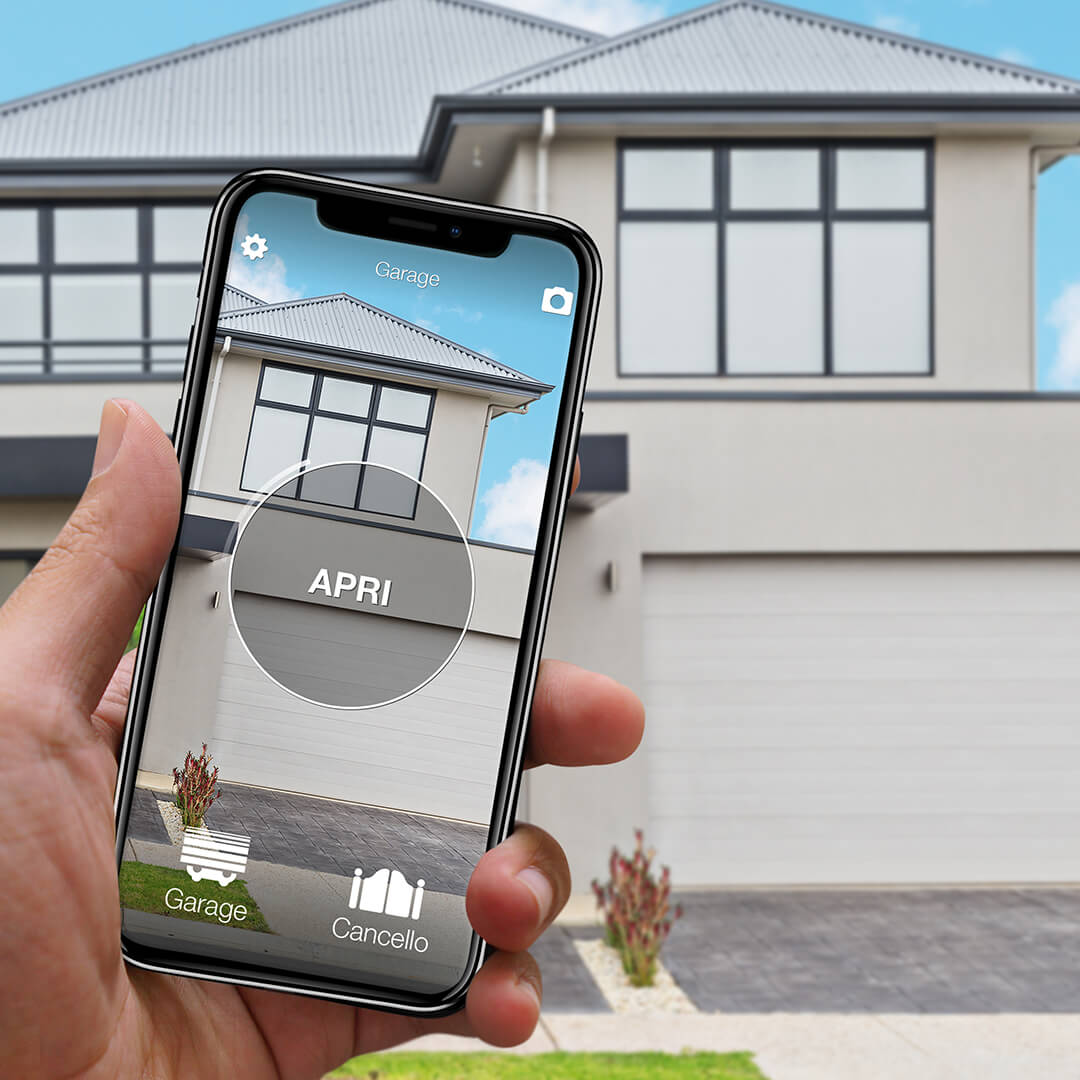
That is the idea behind 1Control SOLO: it clones the signal of over 800 remote models, rolling code included, and moves the opening to the app. The communication between smartphone and device is encrypted Bluetooth and happens entirely locally: no Wi-Fi at the gate, no SIM, and it works even where the phone has no signal.
And the family? Shares by phone number are free: everyone opens with their own smartphone, restricted to days and time windows if needed, and every permission can be revoked at any moment. The access history tells you who opened and when. The practical result for this guide's topic: fewer physical remotes circulating in the family means fewer remotes to lose or have stolen.

Code grabbing, rolling code and jamming: what protects against what
Physical theft is not the only way to steal an opening, and the threats deserve to be told apart. Code grabbing is the interception of the radio signal: a receiver records the transmitted code and plays it back. On fixed-code remotes, which always send the same sequence, it works. Rolling code exists precisely for this: the code changes on every press, and the replay of an already-used code is ignored by the receiver. It therefore protects against signal replay — not against theft of the object itself: whoever holds the remote opens the gate anyway, rolling code or not. That is why, after a theft, deletion from the receiver remains the only real defence.
Jamming is different again: a jammer floods the frequency and stops commands from getting through. The typical scenario is on closing — you press, the gate or the car seems to lock, but the command never arrived and the entrance stays open. Rolling code does not protect against jamming: they are different threats, and no remote is immune to it. The defence is behavioural: before walking away, always check with your own eyes that the gate has actually closed. For the wider picture — doors, windows, habits — see our guide on protecting your home from burglary.
Frequently asked questions
Do I have to reset the whole receiver, or can I delete just the lost gate remote?
It depends on the receiver. Some models let you delete a single code if you can identify it; many only offer a full memory reset, after which every remaining remote must be paired again. Procedures vary a lot between brands: when in doubt, the receiver manual or your gate installer are the right references.
Who pays for reprogramming the receiver in an apartment building after a theft?
The receiver is part of the shared installation, so the work goes through the management company and the cost is normally split between residents according to the building's rules. A replacement for your personal fob is usually at your own expense. Arrangements vary from building to building: your managing agent is the reference.
Can a thief trace my home from a stolen gate remote?
Not from the remote alone: the signal contains no address. The risk appears when documents showing your address disappear together with the remote — like the registration papers kept in the car. In that case the thief holds the key and knows where to use it, which is why deactivating the code quickly matters.
Does SOLO work if my gate remote was stolen?
Yes, if you still have another working remote to clone, or if the code had already been cloned onto SOLO before the theft. If the stolen remote was the only one, the receiver must first be reprogrammed with a new remote: from then on SOLO can clone it and move the opening to your smartphone.
Conclusion
A stolen remote stops being a danger at the exact moment the receiver forgets its code: everything else — the police report, the management company, the replacement — organises itself around that step. The best prevention, though, is taking away the thing worth stealing: an opening that lives in your smartphone never sits in the glovebox, never gets lent out and never gets lost, and the family's spare keys become free, revocable shares instead of more plastic in circulation.
The first step takes a minute: check that your remote is among the 800+ supported models on the compatibility page, then choose whether to duplicate it onto WHY, bring it onto SOLO, or both.