The key exchange is the logistical knot at the centre of every short-term rental: the guest arrives whenever their flight, train or motorway decides, you have a life of your own, and in between sits a bunch of metal keys that has to change hands. Over the years hosts have tried everything — the trusted neighbour, the shop on the corner, the lockbox on the railing, the co-host, the paid key exchange service — and every method carries its own costs, risks and time constraints.
This is an honest comparison of the 8 key handover methods hosts actually use today, with a summary table and one factor that has changed the game since 2025: a growing number of European cities have started banning key lockboxes from public space, which pushes some old habits off the board and promotes others. We will also keep score on the metric most comparisons ignore: traceability — whether you can ever know who entered your property, and when.
The short answer for new hosts: the most secure key exchange for Airbnb guests is no physical handover at all. Pair a smart lock or a PIN keypad with time-limited access: each guest gets a personal code or digital key that activates at check-in and expires at check-out, every opening is logged, and access can be revoked in seconds — no exposed key, no shared lockbox code, no waiting on the doorstep. The comparison below shows how all 8 methods measure up against that standard.
The table: 8 methods at a glance
| Method | Cost | Constraints for you | Main risks | Traceability |
|---|---|---|---|---|
| 1. In-person handover | Your time (30–60 min per check-in) | Maximum: your diary follows the arrivals | Delays, waiting around, late-night arrivals | Total |
| 2. Neighbour / local shop / cleaner | Favours or a small fee | You depend on their availability | Unavailability, untracked key movements | Low |
| 3. Co-host / property manager | A share of every booking, forever | Few: you delegate the whole arrival | High recurring cost, less guest contact | Medium (manager's reports) |
| 4. Key exchange service (KeyNest, Keycafe) | Per-collection fee or subscription, forever | Drop-off point not always nearby | Partner-store hours, recurring cost | Medium (service log) |
| 5. Lockbox | £15–40 one-off | Where to mount it (public-space bans spreading) | Fines and removals, recycled codes, exposed key | None |
| 6. Smart lock (DORY) | Hardware, one-time purchase, no subscription | Door with a Euro cylinder | Batteries (but ~1 year + mechanical key backup) | Full (per-user access log) |
| 7. PIN keypad (PAD) | Hardware, one-time purchase, no subscription | Powered entrance (gate, garage, buzzer door) | Hardly any: the PIN expires by itself | Full (per-code access log) |
| 8. Remote opening (LINK) | Hub, one-time purchase, no subscription | Internet at the property | Network dependency (for remote use only) | Full + push notifications |
Let's walk through them one by one.
Manage every guest entrance through one access system
Explore the 1Control solution for front doors, shared entrances, gates, guests and staff. Start with the hospitality setup; if you need a smart lock, then check your door for DORY.
1. In-person handover: the gold standard that doesn't scale
Meeting the guest at the door is still the richest method: a handshake, a quick tour, the restaurant tips no app can deliver — and that warmth shows up in the reviews. The problem is that it does not scale. Every check-in costs you an hour between waiting and travelling, arrival times slip (the 3 p.m. check-in that becomes 7 p.m. is the universal hosting story), and with more than one listing it quietly becomes a second job with antisocial hours.
When it works: a single property near your home, few arrivals, a genuine pleasure in hosting. When it doesn't: frequent evening and late-night arrivals, multiple units, a day job with fixed hours. Either way you need a plan B for out-of-hours arrivals — the delayed flight never sends advance notice.
2. The neighbour, the corner shop, the cleaner
Informal delegation works until it doesn't: the neighbour is away in August (precisely when you are busiest), the shop closes on Sundays, the cleaner has her own schedule — and every key passed from hand to hand is a blind spot. Who is holding the spare set tonight? Nobody can say. It remains useful as a human safety net, but building the day-to-day operation of a listing on someone else's goodwill is fragile: availability is not a process, and every favour you ask erodes the relationship a little. Remember too that responsibility for the welcome — including any guest registration rules that apply where you host — stays with you, even when somebody else hands over the key.
When it works: as an emergency fallback, or with a formalised co-host who genuinely runs the welcome. When it doesn't: as the main system behind a regular hosting operation.
3. Co-host or property manager: delegate everything, at a price
Professional co-hosts and short-let property managers take the key handover off your hands — and usually everything else with it: guest messaging, cleaning, linen, reviews. It is the most comfortable option and the most expensive one: billing is typically a commission on every booking (often a double-digit percentage of your rental income, to be checked with each provider) or a fixed fee per arrival. Over a full year, outsourcing the welcome this way can be the single largest line in your hosting budget.
When it works: you live far from the property, you want a turn-key service, and your margins allow it. When it doesn't: you enjoy managing the guest relationship yourself and only need to solve the key logistics — for that specific problem there are solutions with no recurring cost at all (methods 6 to 8).
4. Key exchange services: KeyNest, Keycafe and outsourced key logistics
Key exchange services hold your keys at a partner shop or in an automated locker: the guest walks in, shows a code, collects the keys. KeyNest, founded in London and an official Airbnb partner, runs the largest network — thousands of KeyNest Points (convenience stores, cafés, hotels and lockers) across the UK, much of Europe, the US, Canada, Australia and New Zealand, with pay-as-you-go collections from £5.95 + VAT and unlimited-collection subscriptions for frequent hosts (check the official price list). Keycafe, based in Vancouver, takes the automated route: 24/7 SmartBox lockers in 40+ cities, with strong coverage in the US and Canada (New York, Boston, Chicago, Los Angeles, San Francisco, Seattle, Toronto, Vancouver among others) plus London and Paris, billed per pickup plus a daily storage fee, or via an annual unlimited plan — again, check official pricing. Always verify the actual coverage around your property before committing.
These services genuinely solve the problem of your presence, but they introduce a recurring cost that never ends, add a stop to your guest's journey — not exactly the dream arrival after twelve hours of travel, suitcases in hand, with the pickup point on the other side of the neighbourhood — and, unless it is a 24/7 locker, remain hostage to the partner store's opening hours. Above all, the physical key keeps circulating, with everything that implies: late returns, lost sets, copies nobody ever counted.
When it works: central districts with dense coverage, hosts who can't or won't install anything, properties where any modification is off the table. When it doesn't: smaller towns without partner points, high booking volumes where per-collection fees stack up fast, or whenever your goal is to eliminate the physical key rather than relocate it.
5. The lockbox: cheap, but increasingly cornered
For years the lockbox was the default low-cost answer, and on private property it can still play a role. But the context has shifted: Paris banned key lockboxes from street furniture and public space on 24 January 2025, with removal orders and fines up to €1,500 (source: Ville de Paris), Spain's Valencia region has prohibited them for tourist rentals, and several Italian cities including Milan, Florence and Rome have ordered removals — we cover the full picture, city by city, in our guide to lockbox bans and the alternatives.
Even where it remains legal, the structural flaws are unchanged: one code shared by every guest and rarely rotated, a physical key exposed on the street, and zero traceability — the lockbox cannot tell you who took the key or when, and it cannot be revoked once the code is out. When it works: nowadays, mainly as an internal store for an emergency spare key, inside private property, away from the guest flow. When it doesn't: as your primary handover method — between spreading bans, wary freeholders and recycled codes, the risk now outweighs the saving.
6. Smart lock: the key goes digital
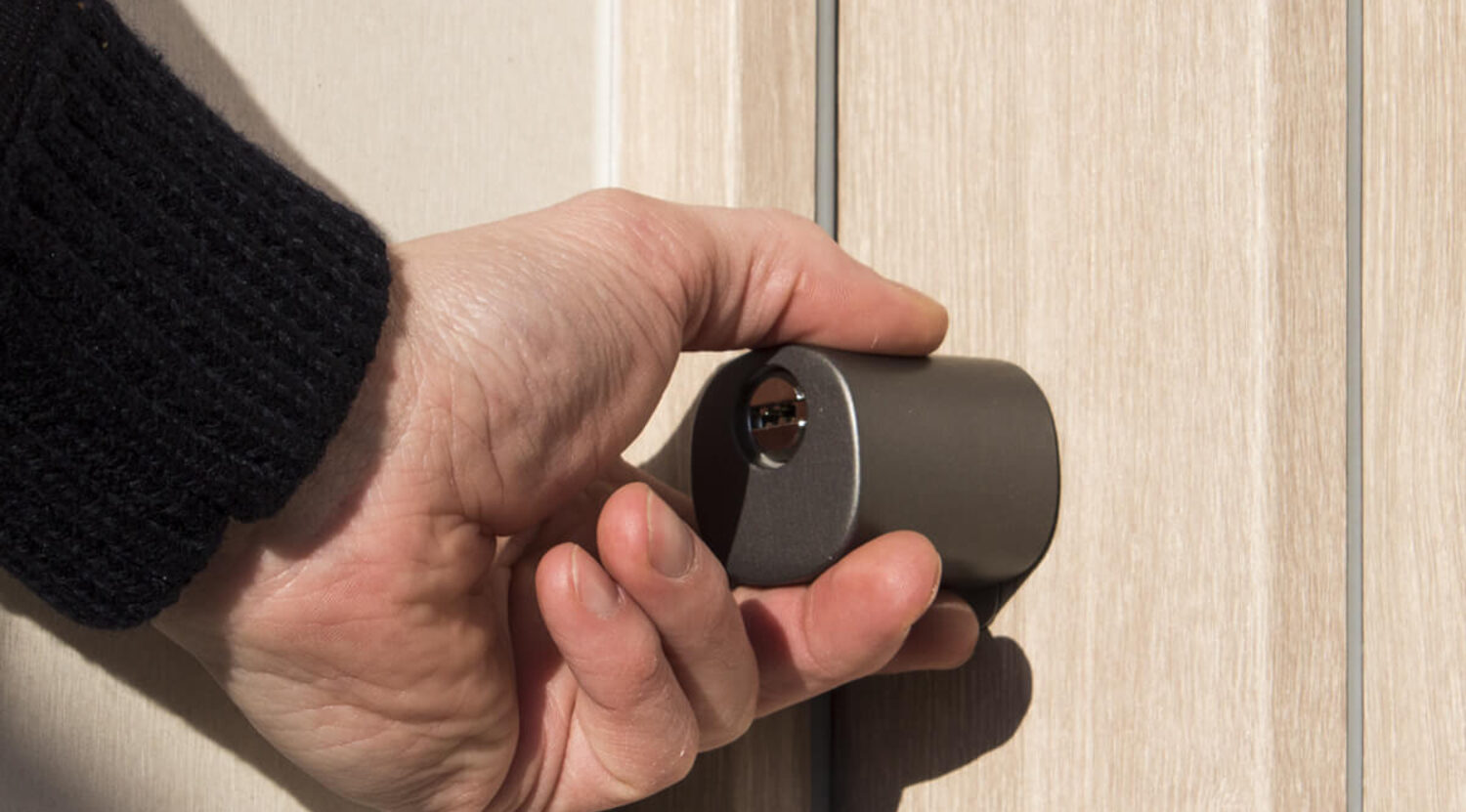
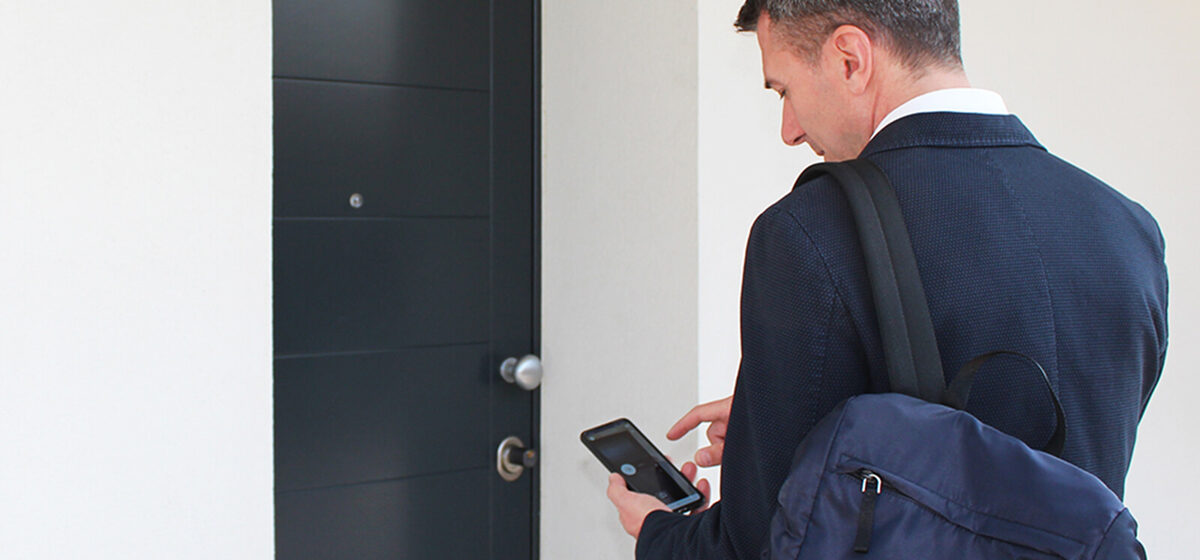
With a smart lock like 1Control DORY the "handover" simply disappears: the guest receives a digital key valid from check-in to check-out, opens the door with their smartphone, and every opening lands in the access log with a date and time. No duplicates in circulation, nothing to return, and instant revocation if anything goes wrong — compare that with a lost metal key, which means recutting copies or swapping the cylinder.
- How it works: DORY replaces the existing Euro cylinder with no drilling and no wiring — about 10 minutes with an Allen key, fully reversible, which also makes it landlord-friendly on rented properties. DORY MINI manages 3 users, DORY standard manages 10.
- Reliability: the CR2 batteries last over a year with early warnings in the app, and the traditional mechanical key always keeps working as a backup.
- Requirement: a door with a Euro profile cylinder (the vast majority of modern European doors, security doors included) — to pick the right model, see our guide to smart locks for Airbnb and short-term rentals.
7. PIN keypad: zero requirements for the guest
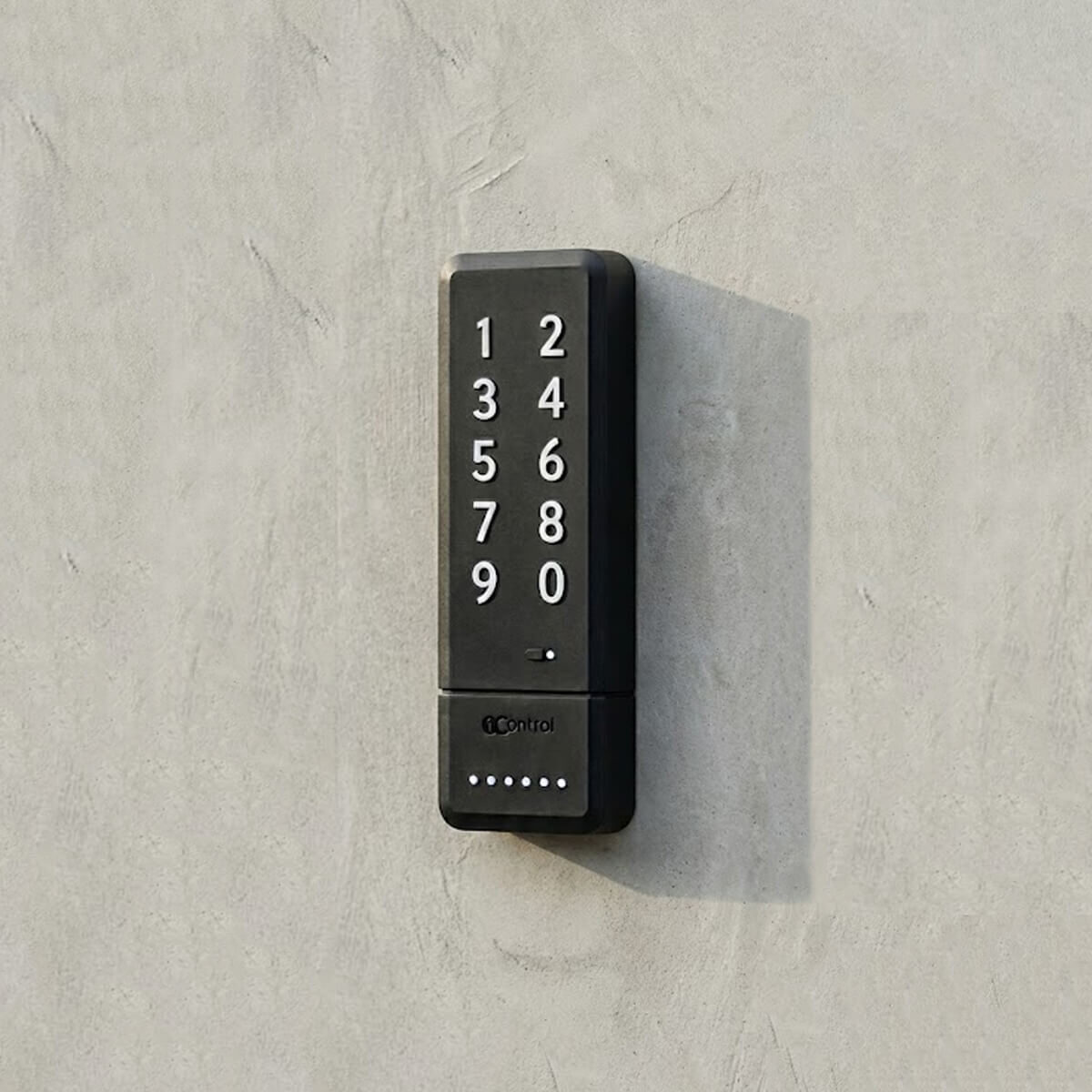
The PAD keypad applies the same principle to powered entrances (gate, garage, electric building door) and strips it down to the essentials: the guest receives a PIN valid only for the dates of the stay and types it in. No app, no charged smartphone, no Bluetooth: it works for everyone — the older guest, the overseas visitor with no data plan, the phone that died somewhere over the Atlantic. PAD installs wirelessly by copying the existing remote control (over 800 models supported), runs on two AAA batteries, is weatherproof for outdoor use, and includes 4 PIN codes, expandable from the app. For a B&B or rental with a parking gate it is often the first building block of self check-in.
8. Remote opening: you open the door, from anywhere
With the LINK hub — the bridge between the Internet and 1Control's Bluetooth devices, up to 5 per hub, connected over 2.4 GHz Wi-Fi or LAN — you can open any entrance of the property from any distance. It is the method that completes all the others: a guest stuck at the gate at midnight, a three-minute video call, and you open the door while you are still on the line. On top of that: a push notification at every opening, voice control through Alexa, Google Home and Siri, and — with door sensors — the real-time status of doors and gates, so you always know whether the property locked up behind the last departure.
When it works: always, as the companion to methods 6 and 7 — and it is indispensable for hosts who live far from the property. When it doesn't: on its own it is not enough — you need at least one device on the entrance to drive (PAD, SOLO or DORY) and a stable internet connection at the property.
Which combination to choose
Methods 6, 7 and 8 are not rivals: they are modules of the same system, and the strongest setups mix them. The typical combination for a flat in an apartment building is PAD or SOLO on the street gate or building door + DORY on the apartment door + LINK for remote control: the guest is autonomous for the whole stay with a PIN and a digital key, you keep a remote hand on every entrance for the unexpected, and cleaners get their own recurring access windows. The scenarios by property type are on the 1Control solutions for B&Bs and Airbnb page.
On cost, a three-year view for a single listing shows the structural difference between "paying forever" and "buying once":
| Method | Upfront spend | Recurring cost | 3-year total (indicative) |
|---|---|---|---|
| Key exchange service (KeyNest, Keycafe) | £0 | per-collection fee or subscription (check official pricing) | £200–500+ depending on check-ins |
| Co-host / property manager | £0 | commission on every booking | often the biggest cost line of all |
| Lockbox | £15–40 | £0 (but fines where public-space bans apply) | £15–40 + the risks |
| 1Control (PAD + DORY MINI + LINK) | one-time purchase (prices on the product pages) | £0 — no subscription | the initial hardware, nothing else |
And for anyone starting today from the classic setup — a bunch of keys and a lockbox — this is the orderly transition:
- Map the entrances your guest passes through (gate, building door, apartment door) and note which are powered and which use a key cylinder.
- Install the devices: PAD or SOLO on the powered entrances, DORY on Euro-cylinder doors (the online compatibility check takes a minute), LINK if you want remote opening and notifications.
- Update your check-in instructions on the platforms: PIN or digital key for the stay, your number for remote assistance — and check the guest registration and self check-in rules that apply in your country and city.
- Recall the physical keys in circulation (cleaners and contractors included) and keep them as a backup at the property: from here on, access is created and revoked from the app.
Frequently asked questions
How can new hosts ensure secure key exchanges for Airbnb guests?
Skip the physical handover entirely: pair a smart lock or a PIN keypad with time-limited access. Each guest gets a personal code or digital key that activates at check-in and expires at check-out, every opening is logged, and access is revoked in seconds — no exposed key, no shared lockbox code, no waiting on the doorstep.
What is the cheapest way to give keys to Airbnb guests?
On purchase price, the lockbox (£15–40). On total cost, rarely: between spreading public-space bans, codes to rotate and lost keys, one fine or one failed check-in wipes out the saving. Keyless methods (PIN, digital key) cost more upfront but nothing afterwards — with no monthly fees, unlike key exchange services and property managers.
Are key lockboxes still allowed for Airbnb?
It depends on where you host. Paris banned them from public space in January 2025, Spain's Valencia region prohibits them for tourist flats, and several Italian cities have ordered removals; elsewhere they remain legal but freeholders and building managers are increasingly hostile. Check your city's rules and, wherever you host, treat the lockbox's structural flaws — one shared code, an exposed key, no access log — as the real reason to move on.
How do I hand over keys when a guest arrives at 2 a.m.?
This is the scenario where digital methods win outright: PAD's PIN and DORY's digital key work at any hour, and if anything goes wrong a three-minute video call is enough to open the door remotely with LINK — from your sofa. No neighbour to wake, no pickup point closed for the night.
What happens if a guest loses the key?
With physical keys: copies to recut or a cylinder to replace, plus the lost time. With digital keys the problem doesn't exist: the PIN expires on its own, the digital key is revoked and a new one issued in under a minute. That is the structural difference between relocating your keys and eliminating them.
Conclusion
The best way to hand over keys is not having to hand them over. Traditional methods relocate the problem (to a neighbour, a shop, a box on the wall); digital methods eliminate it: access that expires automatically, a time-stamped log of every opening, instant revocation, zero duplicates in circulation. To work out which entrance to start from, the smart lock guide for Airbnb rentals and the 1Control solutions for B&Bs and Airbnb cover the typical setups, property by property.