For a decade the key lockbox — the combination key safe zip-tied to a railing by the door — was Europe's default self check-in tool. That era is closing fast: Paris banned lockboxes from public space in January 2025, Dublin began removing and shredding them in April 2025, Spain's Valencia region outlawed them for tourist flats, and Milan's ban took effect on 1 January 2026.
If your check-in depends on a box with a code, here is where the bans apply, what you risk, and the smart alternatives that remove the physical key handover altogether.
Where key lockboxes are banned: a European round-up
Paris: banned from public space since January 2025
By an order of 24 January 2025, the City of Paris prohibited lockboxes on street furniture and public space — railings, bollards, bike racks, posts. Spotted boxes get a sticker, the owner has 15 days to remove them, then the box is confiscated as abandoned. Reported fines run to €1,500, rising to €3,000 for repeat offences (sources: Ville de Paris, monimmeuble). Nice and Lille have followed with crackdowns of their own.
Dublin: removal and destruction since April 2025
Dublin City Council banned short-let lockboxes from public structures — lamp posts, bike stands, poles — with enforcement from 14 April 2025. Offending boxes are removed and destroyed — dozens were literally shredded within weeks (sources: The Irish Times, RTÉ).
Spain: the Valencia region outlaws lockboxes for tourist flats
The Comunidad Valenciana went further than street furniture: Decreto-ley 9/2024 (in force since 8 August 2024) reformed the rules for viviendas de uso turístico and prohibited handing keys to guests through lockboxes on the public highway, alongside duties such as a 24-hour contact line (sources: BOE/DOGV, The Green Lockers). Rules vary between autonomous regions, and the anti-lockbox mood has spread to Seville and beyond.
Italy: Milan, Florence and Rome
Milan banned lockboxes on public land — street furniture, road signs, fences, gates and light poles — from 1 January 2026, with a 30-day window to comply, then fines of €100 to €400 plus removal costs (sources: Euronews, Il Sole 24 Ore). Florence had already banned them in its UNESCO historic centre, Rome runs removals at owners' expense, and Venice and Bologna have moved the same way; since Italian hosts must also verify guests' identity in real time, an anonymous box fails on two fronts at once.
Manage every guest entrance through one access system
Explore the 1Control solution for front doors, shared entrances, gates, guests and staff. Start with the hospitality setup; if you need a smart lock, then check your door for DORY.
Why cities are cracking down
Three reasons recur in the official texts. Street clutter: clusters of boxes occupying public space in historic centres without permits or fees. Security: a key anyone with a forwarded code can collect, with no record of who took it — Milan's resolution even cites criminal investigations. And guest registration rules: most European countries require hosts to identify or register guests in some form, which a code shared over chat sits uneasily with. More in our guide to self check-in legal requirements.
The lockbox was always the weak link
Bans aside, the lockbox remains the most fragile way to run self check-in:
- One code for everyone — changed only when you remember to; every past guest still knows it.
- No audit trail — you never know who opened the box or when.
- A physical key in circulation — lost, copied or not returned, the only fix is changing the lock.
- Exposed to anyone — forceable with basic tools, and it advertises a frequently empty short let.
The smarter route: remove the key handover
The instinctive reaction is to ask where the lockbox can hang now. The better question: does your guest need a physical key at all? With a time-limited PIN, a digital key on their phone or a remote opening after a quick video call, the lockbox simply has no job left.
Time-limited PIN codes at the entrance: the PAD keypad
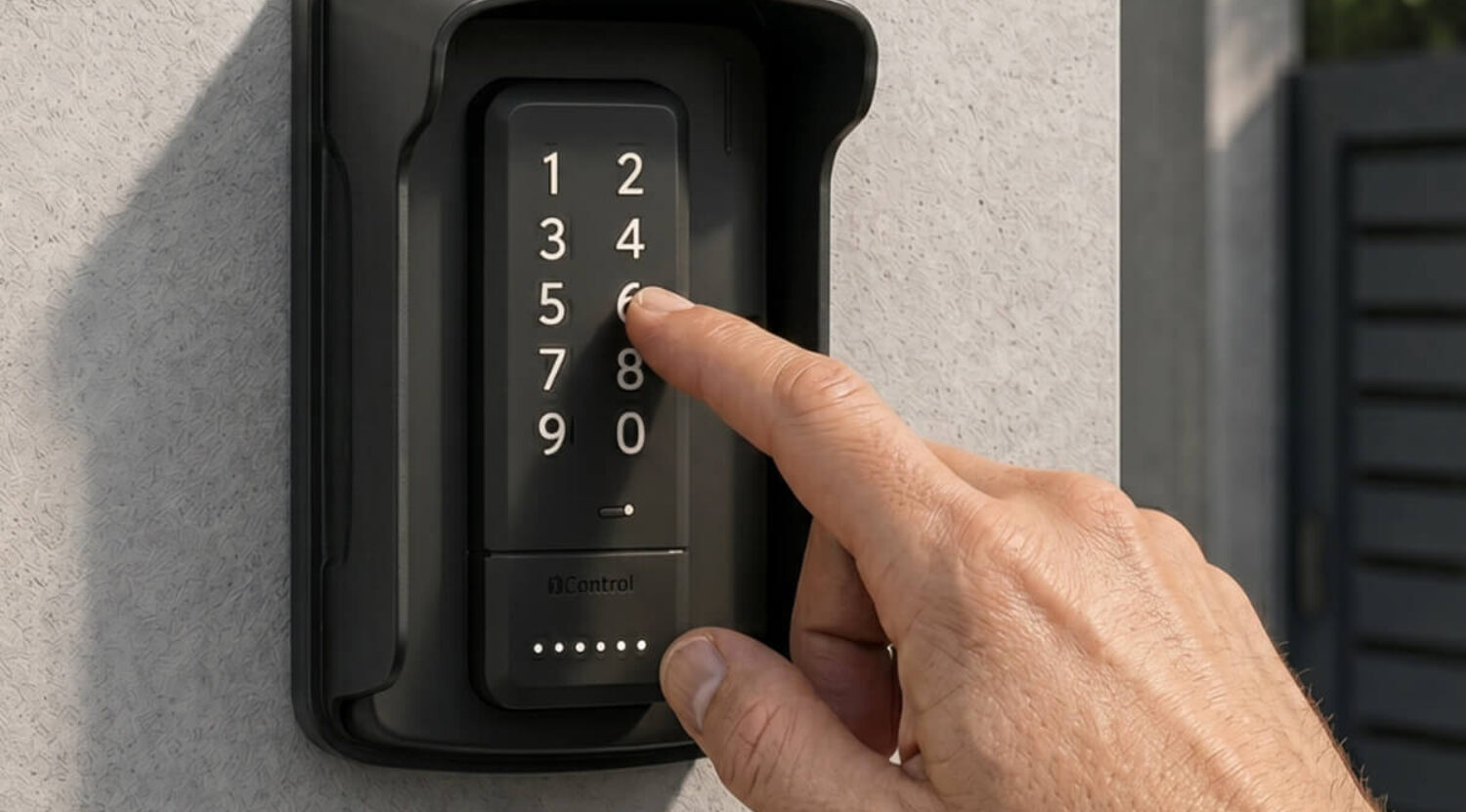
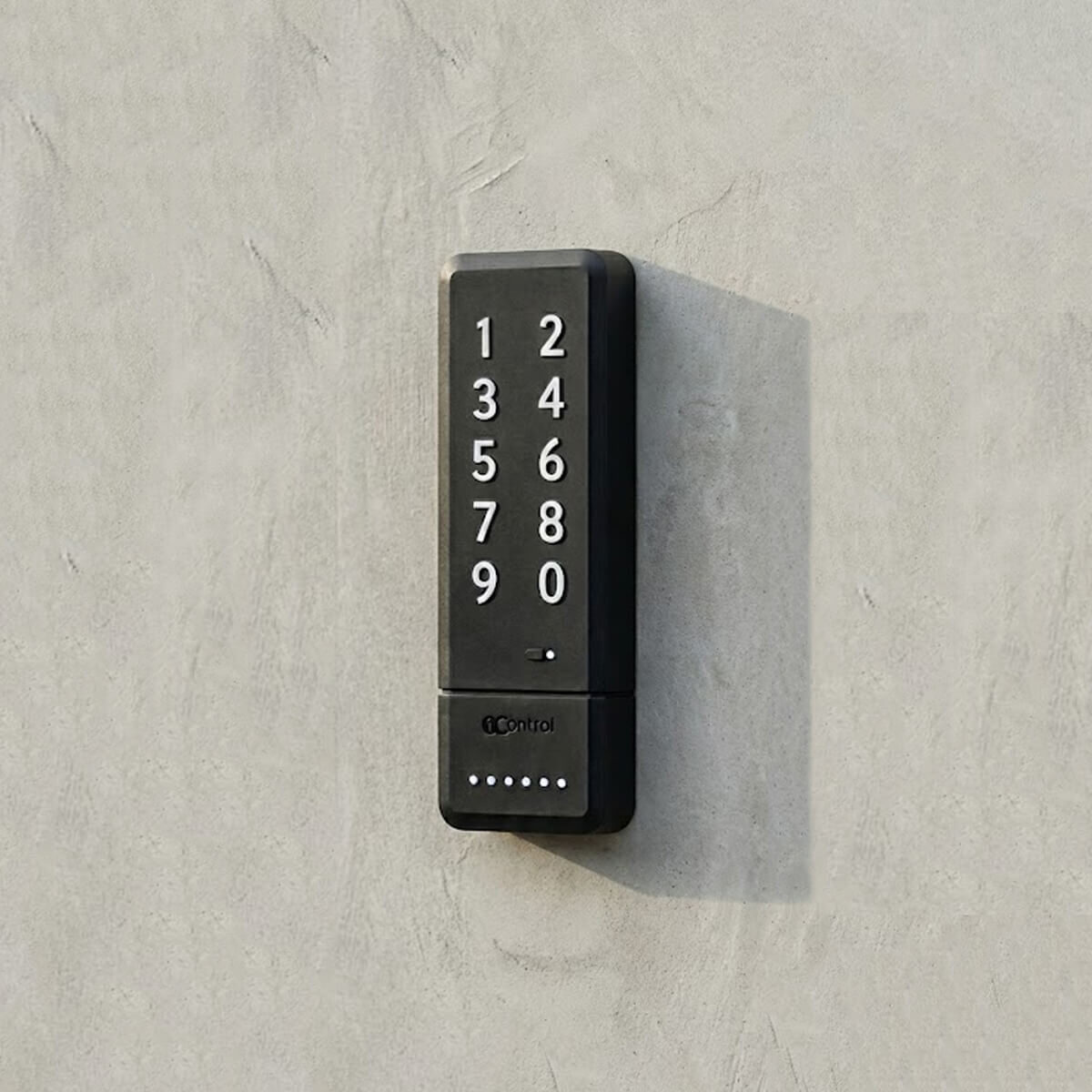
PAD is a wireless, outdoor-rated smart keypad for powered gates, garages and electric entrances: it works by copying the signal of your existing remote — over 800 models supported, rolling codes included — with no wiring, on two AAA batteries. Each booking gets a PIN valid only for the dates of the stay (4 PIN codes included, expandable): the guest types it and walks in — no app, no key — and the code expires at check-out. It is the lockbox without its flaws — one code per guest, everything logged, no metal key in circulation — as a one-time purchase, no subscription.
A smart lock on the door: DORY
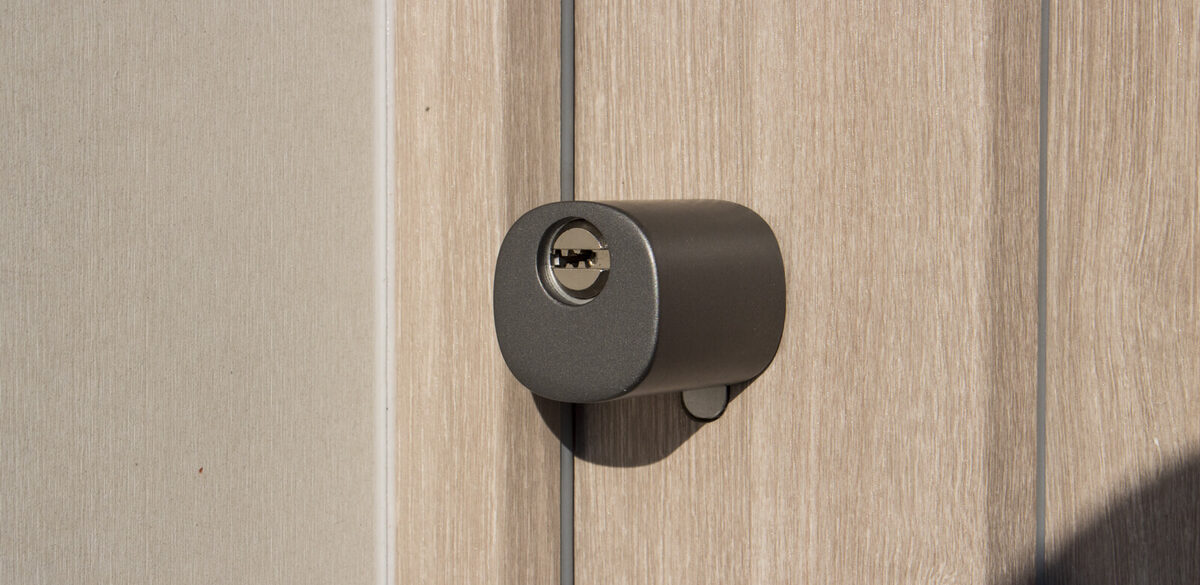
For non-electrified doors — the apartment or room door — DORY replaces the existing euro cylinder in about ten minutes, fully reversibly, with no drilling. Guests open with their smartphone using digital keys that expire with the booking; the mechanical key remains as backup, the CR2 batteries last over a year (MINI manages 3 users, standard 10), and every opening lands in the access history. For the full host setup, see our smart lock for Airbnb rentals guide.
Remote opening and notifications: the LINK hub
With the LINK hub connected to the property's network (Wi-Fi 2.4 GHz or LAN cable), your 1Control devices become controllable from anywhere: LINK acts as a bridge between the Internet and the Bluetooth devices at your entrances, up to 5 per hub. It enables the flow regulators increasingly expect — a video call to identify the guest, then the door opened remotely while you are on the line — plus notifications and voice control via Alexa, Google Home and Siri, no monthly fees.
Lockbox vs smart alternatives: the comparison
| Criterion | Key lockbox | Time-limited PIN (PAD) | Smart lock (DORY) |
|---|---|---|---|
| Allowed on public space | Banned in Paris, Dublin, Milan, the Valencia region | On your entrance, no public space used | In the door, no public space used |
| Code per guest | One for everyone, changed by hand | One per booking, expires automatically | Expiring digital key per guest |
| Physical key in circulation | Yes (lost key = lock change) | No | No (mechanical key stays with you as backup) |
| Access history | None | Yes, per code | Yes, per user with date and time |
| Recurring costs | None | None | None |
| Works with guest identity checks | Only as a handover after identification | Yes (PIN shared after identification) | Yes (digital key active after identification) |
On cost: a mechanical lockbox at roughly €25–40 (indicative — check current retail pricing) wins on purchase price. But one €1,500 Paris fine, one forced removal or one guest locked out at night is worth far more than the difference — and against subscription check-in platforms, one-time hardware pays for itself.
Using a lockbox today? Do this, in order
- Check your city's current rules. If your box sits on public space in Paris, Dublin, Milan or the Valencia region, remove it before the city does — at your expense.
- Map your guests' entrances. Street gate, building door, apartment door — each needs an answer; the classic mistake is covering the door and leaving guests stranded at the gate.
- Pick the replacement per entrance: PAD (PIN, powered gates), DORY (digital key, euro-cylinder doors), LINK for remote opening. See our comparison of Airbnb key exchange methods for the full breakdown.
- Update your check-in instructions on Airbnb and Booking: no more "the lockbox code is…", but how the PIN works and when you will call.
- Keep the lockbox indoors if you like — inside the property, holding the cleaning crew's emergency key, it stops being a problem.
Frequently asked questions
Are key lockboxes banned everywhere in Europe?
No — there is no EU-wide ban. The rules are city or regional measures, mostly targeting public space: Paris since January 2025, Dublin since April 2025, Milan since January 2026, plus the Valencia region's tourist-flat ban. Other cities are weighing similar moves, so always check your own city's current regulations.
Can I still use a lockbox on my own private property?
Often yes — most public-space bans do not reach private property, though building rules or stricter local measures may apply, and the Valencia ban targets tourist flats specifically. A private lockbox only fixes the clutter problem, though: where guest identification is required, a code over chat with no identity check may still leave you exposed.
What is the best alternative to an Airbnb lockbox?
It depends on the entrance: a PIN keypad like PAD for powered gates, a retrofit smart lock like DORY (digital keys that expire at check-out, mechanical key as backup) for euro-cylinder doors, the LINK hub for remote opening. See configurations by property type on the 1Control solutions for B&Bs and Airbnbs page — all one-time purchases, no subscription.
What if my guest has no smartphone or won't install an app?
That is where the PAD keypad shines: the guest receives a PIN and types it in, like on a hotel safe — no app, no account, no Bluetooth needed. It works for older guests, travellers without a data SIM and dead phones alike.
The bottom line
The bans from Paris to Milan signal that the "key in a box, code over chat" model has run its course. The alternative is not going back to waiting on doorsteps: time-limited PINs, expiring digital keys and remote opening give guests the same autonomy and hosts far more control, with hardware you buy once. Map your entrances, then pick the right device for each.
This article is for information only, not legal advice. Bans, fines and their scope are set by local regulations and change quickly: always check your city's current rules.