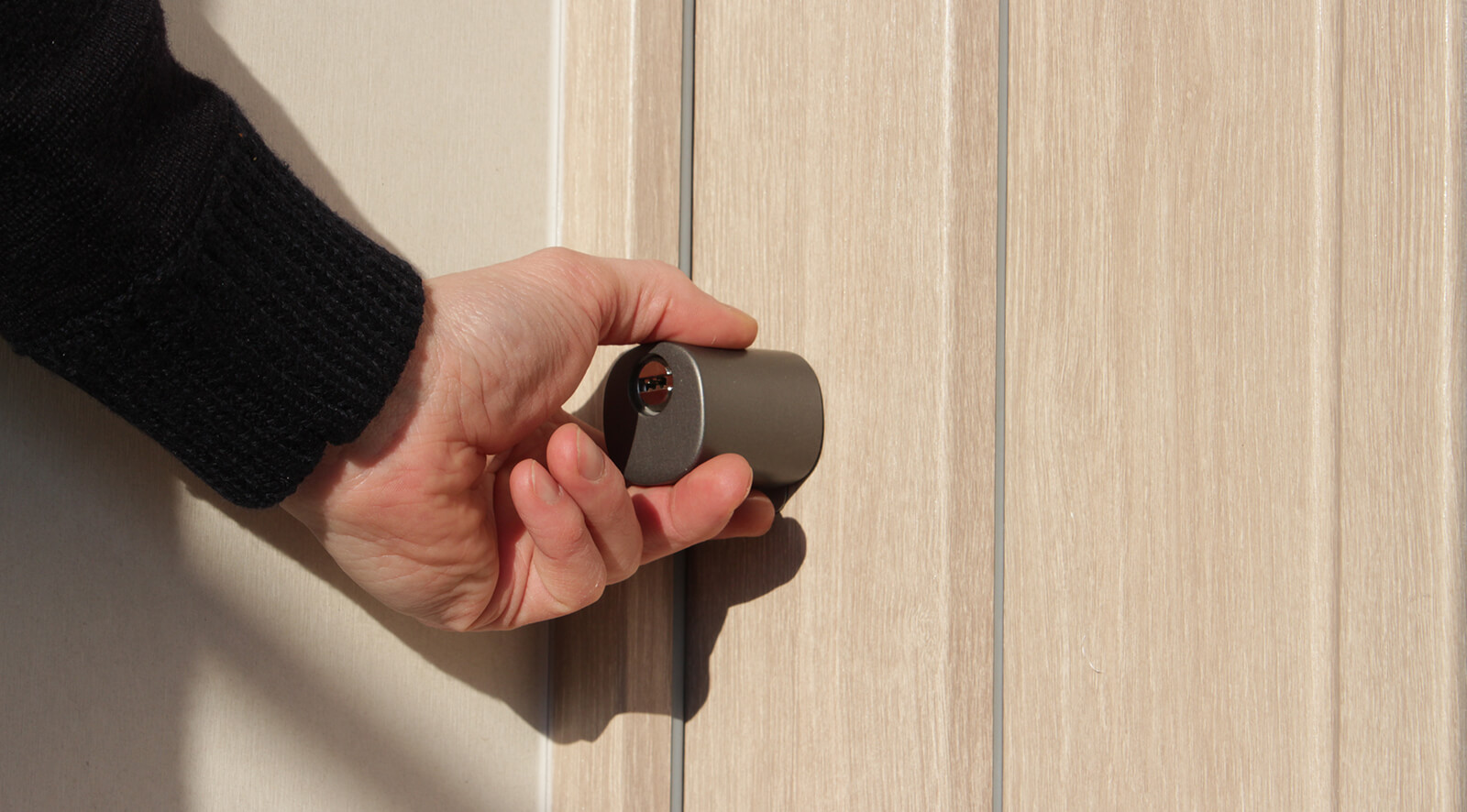
Keyless entry is the umbrella term that covers every way you can unlock a door without inserting a metal key — from a tap on your phone screen to a six-digit PIN on a keypad, from a glance at a camera to a smartwatch tap on your wrist. For UK buyers the search volume has multiplied across the last three years on terms like “keyless entry”, “keyless door lock” and “keyless entry smart lock” — but the products underneath those searches differ wildly on which methods they actually support and which front-door types they fit.
This guide is not about whether you should buy a smart lock — that is a different conversation. This one is about how keyless entry actually works, the six methods you will run into on the market today, which method fits which lifestyle, and which lock wins per method when you compare DORY, Yale, Nuki, August and SwitchBot side by side. Every concrete example is anchored to 1Control DORY, the Italian Euro cylinder smart lock that retrofits onto your existing front door in about ten minutes without drilling, without wiring and without removing the mechanical key.
Want to skip ahead and see whether keyless entry fits your door? Discover 1Control DORY or check your door's compatibility in 60 seconds before reading on.
What “keyless entry” really means on a modern smart lock
Keyless entry is the user-facing benefit, not the device. It describes the outcome — you open your door without inserting a metal key — abstracted from the technology that makes it happen. The same physical lock can support several keyless methods in parallel: a phone over Bluetooth, a smartwatch, a paired PIN keypad, an auto-unlock geofence, a voice command. “Smart lock” is the device that enables those methods; “keyless entry” is what you actually do with it.
That distinction matters because two locks that both advertise “keyless entry” can be very different products underneath. One might only support an app over Bluetooth, with no keypad and no voice. Another might support five methods out of the box but require a cloud subscription for the most useful ones. A third might support every method ever invented but burn through AA batteries every two months. The label “keyless door lock” on the box tells you nothing about which methods are included, which need accessories, and which depend on the internet.
The six methods of keyless entry, explained
Every smart lock on the UK market today implements some combination of these six methods. Reading the table below is the fastest way to understand what a given lock can actually do for you, and what fails when something goes wrong.
| Keyless method | How it works | Device that handles it | Internet required | Typical range | Failure mode |
|---|---|---|---|---|---|
| Smartphone app (BLE) | App authenticates over Bluetooth Low Energy, sends opening command | Smart lock + phone (DORY + iPhone/Android) | No | 5–15 m | Dead phone battery |
| Smartwatch (BLE) | Same flow, the watch is paired separately as a user | Apple Watch / WearOS + smart lock | No | 5–10 m | Dead watch battery |
| PIN keypad | User types a multi-digit PIN on an external wireless keypad | External keypad (1Control PAD) paired to the lock | No | At the door | Forgotten PIN |
| Biometric (fingerprint / face) | Sensor recognises the user and sends the open command | Lock with built-in reader (not a DORY method — see below) | No | At the door | Wet or dirty finger, glove |
| Auto-unlock (geofence) | Phone uses GPS plus BLE proximity to unlock as you approach | Smart lock + phone app with geofencing enabled | No (BLE final hop) | ~50 m geofence | False-positive openings |
| Voice / remote (Wi-Fi) | Alexa, Google or Siri command routed via cloud to a Wi-Fi hub, then to the lock over BLE | Hub (1Control LINK) + lock + voice device | Yes | Anywhere on the planet | Internet or cloud outage |
DORY supports five of these six methods out of the box or with optional accessories: app, smartwatch, PIN (via PAD), auto-unlock and voice/remote (via LINK). Biometric is deliberately not part of the DORY family — the rest of this section explains why, and what each method is actually good for in real-world use.
Method 1 — Smartphone app over Bluetooth (the everyday default)
App-over-BLE is the workhorse of keyless entry. Your phone authenticates with the lock over Bluetooth Low Energy using a rotating encrypted session key, then sends the open command. The whole exchange happens locally, in under a second, with no internet involved. That is why DORY's local Bluetooth opening keeps working even with the router unplugged: the lock and the phone are talking radio directly, not through someone else's cloud. 1Control DORY uses BLE 4.0 with a long battery life of about a year on two CR2 lithium cells, the kind of duty cycle that makes the keyless method silently reliable rather than constantly reminding you about low batteries.
Method 2 — Smartwatch (keys-free runs and walks)
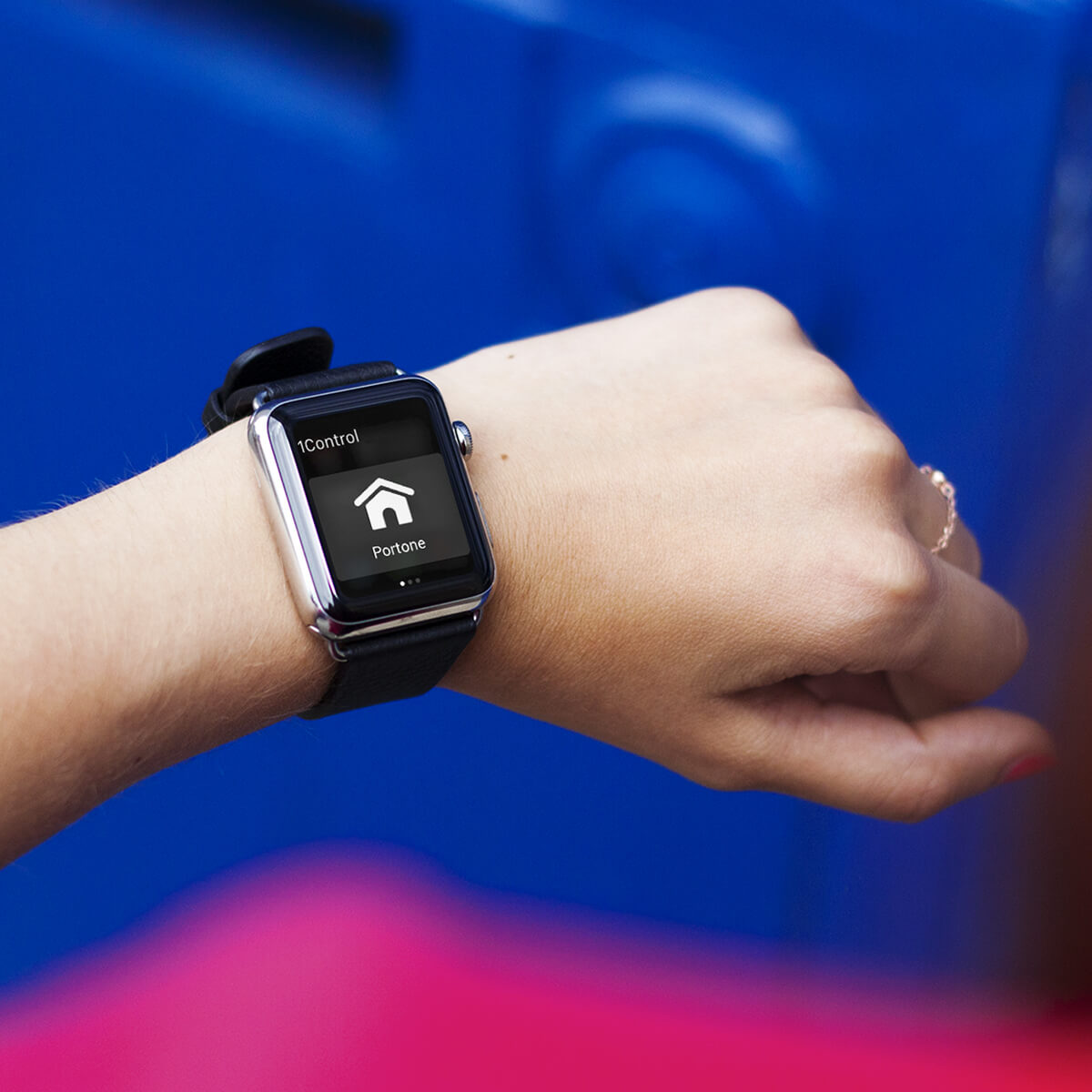
The smartwatch is the underrated keyless method. It comes into its own the moment your phone is not with you: a run, a dog walk, the school run on a rainy day with sleeping kids in the car. The watch is paired separately in the app as its own “user” with its own permissions. The DORY product page documents this method directly: “Open with smartphone, smartwatch or traditional key.” Apple Watch and WearOS are both supported, with the same BLE encryption as the phone path.

Method 3 — PIN keypad (the universal fallback)
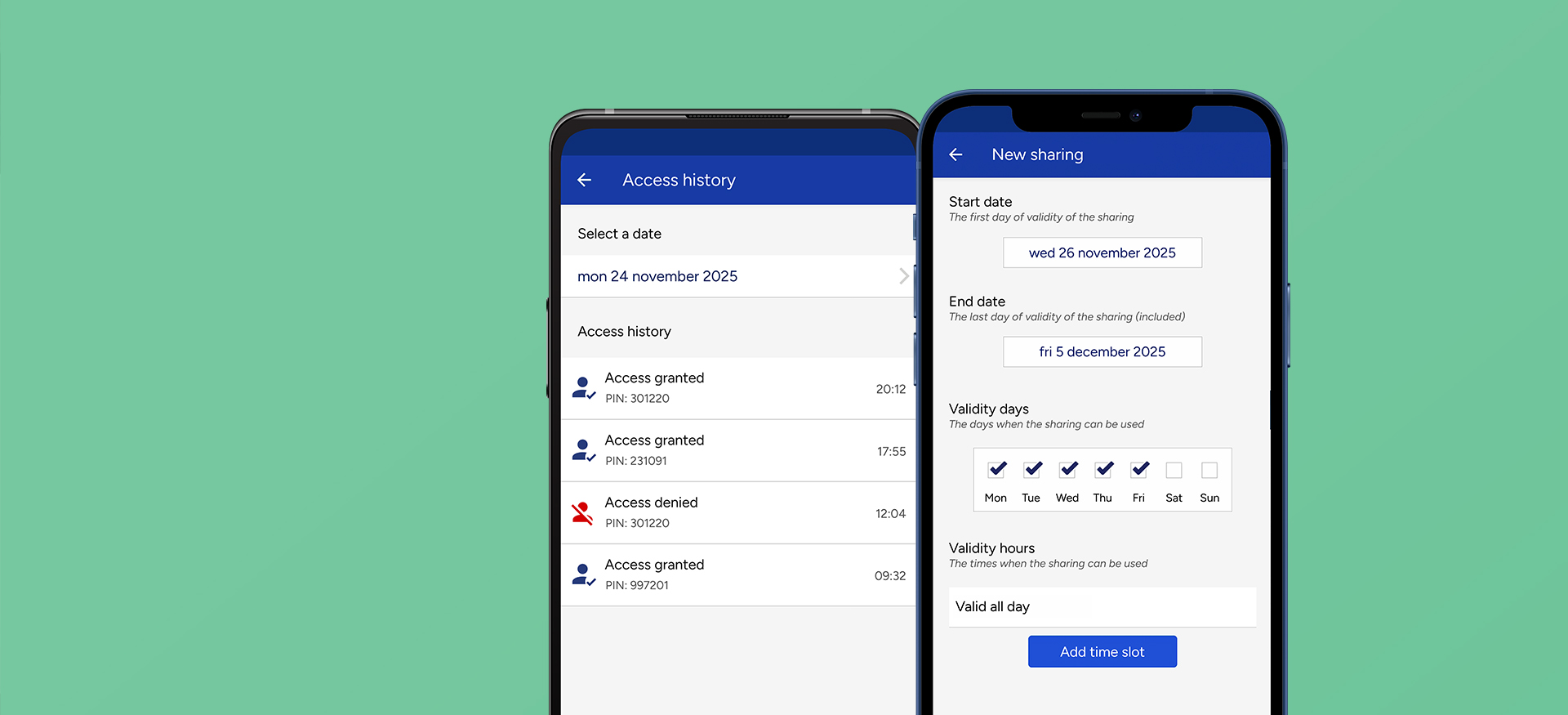
The PIN method is the most underrated form of keyless entry. It works for visitors who do not have your app, for children, for cleaners, for a Tuesday handyman, for an elderly neighbour. It needs no smartphone at the door, no app account, no Bluetooth pairing — just a number to remember. DORY itself does not have an integrated keypad; the keypad lives on the wall outside, separately, paired over Bluetooth: 1Control PAD. PAD supports up to 1,000 PINs, runs on AAA alkaline batteries for two-plus years at ten openings a day, and the PINs can be time-bound (a cleaner who only needs access on Tuesdays from 9 to 12) or one-shot (a single visit).
The architectural advantage of decoupling the keypad from the lock is durability. The keypad is the exposed component — it sits in the rain, it gets touched by everyone, it lives outside. Putting the smart lock electronics on the door itself, away from weather, keeps the lock dry and lets you replace the keypad in years to come without touching the lock at all.
Method 4 — Biometric (fingerprint and face)
Biometric keyless entry — usually a fingerprint reader, occasionally face recognition — is the method most often shown in marketing photos and the one most prone to disappointing in daily UK use. Cold fingers, wet hands after rain, gloves in winter and accuracy drops with multiple household members all eat into the headline conversion rate of the sensor. Biometric is not a DORY method, and that is a deliberate design choice rather than an omission: where biometric sensors live outside the lock they add a failure point that the rest of the system has to compensate for, and where they live inside the lock they shorten battery life dramatically. If you want biometric specifically, plan for a lock with a built-in reader (some Yale Linus and SwitchBot variants) and accept the duty-cycle cost.
Method 5 — Auto-unlock with geofencing
Auto-unlock is magic when it works and frustrating when it does not. Your phone monitors a roughly 50-metre geofence around the door; when you cross it inbound, the phone hands off to BLE proximity, the lock recognises the encrypted session and opens just before your hand reaches the handle. DORY supports auto-unlock as an opt-in per user. The honest caveat: enable it only for the primary owner, not for the whole household, otherwise you risk false-positive openings when family members walk past on their way somewhere else. And remember the GPS battery cost on the phone — constant location polling drains a battery faster than any single keyless method.
Method 6 — Voice and remote opening (Alexa, Google, Siri, CarPlay)
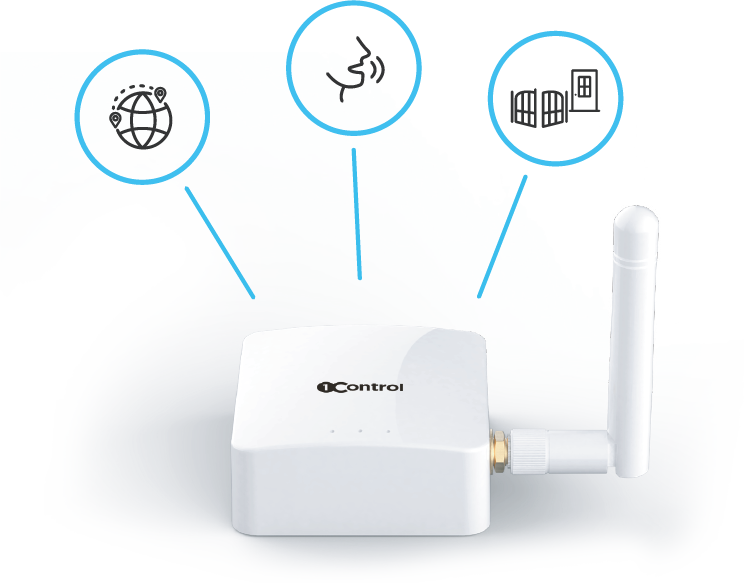
Voice and remote opening are the two keyless methods that require an internet bridge. The lock keeps speaking Bluetooth locally; a hub bridges that Bluetooth to your Wi-Fi network and from there to the wider internet, which is what makes Alexa, Google Home, Siri Shortcuts, Apple CarPlay and Android Auto possible. For DORY this hub is the LINK hub: Wi-Fi 2.4 GHz or wired Ethernet, USB-powered, pairs with DORY over BLE. Apple HomeKit is not currently supported on the 1Control range; Matter is on the roadmap. Without LINK, DORY still opens from phone, watch and PAD — you just lose the “open the door from the office” capability and the voice commands.

Explore DORY before checking your door
See how it works, compare DORY MINI, MINI + LINK and DORY, then check in a few steps whether your cylinder and door are compatible.
Which keyless method suits which lifestyle
The right keyless method depends on who actually uses the door and how. Below is a lifestyle-to-method matrix built on patterns we see in 1Control support tickets — it is not about “which lock”, it is about “which method per scenario”.
| Scenario | Primary keyless method | Why |
|---|---|---|
| Solo professional, hybrid worker | App (BLE) + auto-unlock | One device on the body, hands-free arrival |
| Family with teens and a cleaner | App for adults + PIN via PAD for the cleaner | Mixed audience, some phones some not |
| UK Airbnb / short-let host | Time-bound PIN via PAD + remote opening via LINK | No physical key handovers, automatic revoke at check-out |
| Pet sitter, dog walker, courier | Single time-bound PIN | One-shot access, no app account required |
| Elderly relative pop-in | Smartwatch | No phone to unlock first, no PIN to remember |
| Office of 5–15 staff | App (BLE) + instant revoke from the admin panel | Audit trail, fast off-boarding when staff leave |
| Frequent delivery household | Remote opening via LINK | Buzz the courier in without going to the door |
Most real households end up running two or three methods in parallel on the same lock: app for the adults, PIN for irregular visitors, mechanical key in the drawer as the silent backup. That overlap is the feature, not the bug — if one method fails on a given day, another takes over without you noticing.
What separates a serious keyless entry lock from a gadget
Once you understand the six methods, the lock-shopping question stops being “does it have keyless entry?” (they all do now) and becomes “how seriously was the keyless side engineered?”. Five criteria separate a lock you can install and forget about from one you will replace within two years.
Method coverage out of the box. The first question is how many of the six methods the lock supports natively versus through accessories you have to buy separately. 1Control DORY covers five out of six (everything except biometric) once you add PAD for PINs and LINK for voice and remote. The methods that matter day to day — app, watch, PIN, auto-unlock — all work without the internet.
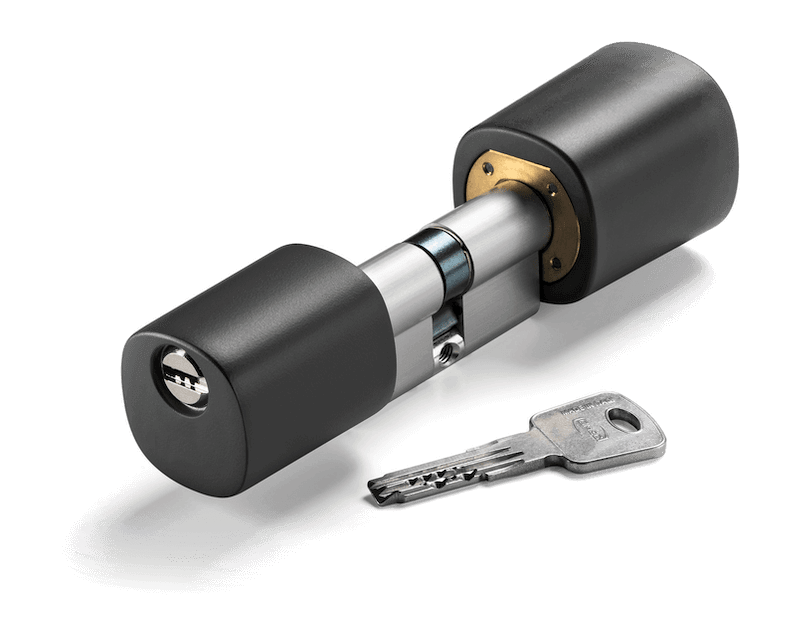
Mechanical fallback for the dead-phone scenario. The single most important keyless-entry question is what happens when your keyless method fails — the phone is flat, the keypad batteries are dead, the Wi-Fi is down. On DORY the mechanical key always works, in parallel, by design. The MINI ships with three traditional keys, the Standard with five. Many US-style smart deadbolts have no physical-key backup at all; that “or traditional key” in the DORY product copy is what protects you from being locked out.
Local-first versus cloud-first. A keyless entry lock that requires the cloud to open the door is a keyless entry lock that stops working the day the manufacturer's cloud goes down or the company gets acquired. BLE-first locks like DORY route the opening locally between the phone and the lock; the cloud is involved only for voice and remote scenarios via LINK. This is also a privacy property — the cloud does not see every time you open your own door.
Battery cost per keyless cycle. Motor-on-the-thumbturn designs (the architecture used by most Yale, Nuki and August locks) drain AA cells in one to three months because they physically rotate a key on every opening. Integrated-cylinder designs like DORY drive the cylinder mechanism directly in milliseconds; two CR2 lithium batteries last about a year. Translated into keyless entry terms: how often does your “keyless” method silently stop working because no one has changed the batteries.
Encryption and PIN management. Look for a separate admin PIN (DORY uses an eight-digit administrator code distinct from the opening flow), encrypted BLE with rotating session keys, per-user shares that can be revoked individually without resetting the whole lock, and a clear audit trail. PIN sharing should support time bounds (specific days, specific hours) and one-shot codes — both are present on DORY + PAD.
Best keyless entry smart locks compared (2026)
The big four competitors in the UK and EU keyless entry market today are Yale (Linus L2), Nuki (Smart Lock 4), August (Smart Lock Pro 4) and SwitchBot (Lock Pro). The table below compares them against 1Control DORY purely on keyless capability — not on price, not on TCO, just on which keyless methods each lock supports and whether the mechanical key survives.
| Model | App (BLE) | Smartwatch | PIN keypad | Biometric | Auto-unlock | Voice / remote | Mechanical key | UK Euro cylinder fit |
|---|---|---|---|---|---|---|---|---|
| 1Control DORY (MINI / Standard) | Yes | Apple Watch + WearOS | Yes (via PAD) | No | Yes | Yes (via LINK) | Always — 3 or 5 keys included | Yes, retrofit in ~10 min |
| Yale Linus L2 | Yes | Apple Watch | Yes (Yale Smart Keypad) | Separate model | Yes | Yes (Yale Connect / Matter) | Optional (motor-on-thumbturn) | Yes |
| Nuki Smart Lock 4th Gen | Yes | Apple Watch | Yes (Nuki Keypad 2.0) | Fingerprint (Keypad 2.0) | Yes | Yes (Bridge or Matter) | Original key retained (motor-on-thumbturn) | Yes |
| August Smart Lock Pro 4 | Yes | Apple Watch | Optional (August Smart Keypad) | No | Yes | Yes (Wi-Fi built in) | Original key retained (motor-on-thumbturn) | US-focused, limited EU spread |
| SwitchBot Lock Pro | Yes | Limited | Yes (Keypad Touch) | Fingerprint (Keypad Touch) | Yes | Yes (Hub Mini / Hub 2) | Original key retained (motor-on-thumbturn) | Yes (Euro cylinder retrofit kit) |
Read carefully, the table says something the marketing pages do not. On method coverage the five products are roughly equivalent — everyone supports app, watch, PIN (via accessory), auto-unlock and voice. The real difference sits in the column nobody talks about: mechanical key. Yale, Nuki, August and SwitchBot are motor-on-the-thumbturn designs — they leave your existing cylinder in place and bolt a motor on the inside to rotate it. The original key keeps working because the original cylinder is still there; the lock itself, however, runs through AAs in weeks. DORY is the only design here that integrates a high-security Euro cylinder with a multi-year warranty (5 keys on Standard, 3 on MINI, supplied with a copy-protection code printed on a card), at the cost of swapping your old cylinder out. The trade is “keep the old cylinder vs one-year battery life and integrated security” — not a feature comparison.
Keyless entry on UK doors: front door, composite door, Euro cylinder
Keyless entry on a UK front door is, mechanically, a Euro cylinder retrofit. Most front doors and composite doors fitted in the UK since the mid-2000s use a standard Euro profile cylinder compliant with EN 1303 — the same cylinder shape used across continental Europe. If yours does, both retrofit-cylinder smart locks (DORY, Nuki Smart Lock 4) and motor-on-thumbturn smart locks (most others) will physically fit. The choice between the two architectures is a battery-life and security trade, not a fit question.
Composite doors and multi-point locking. The vast majority of UK composite doors use multi-point locks: lifting the handle engages three to five bolts up and down the door, and a single throw of the key deadlocks the lot. Keyless entry works exactly the same way on these doors as on single-point doors — the smart lock controls the cylinder, the user (or an automation) still has to lift the handle to engage the multi-point bolts before locking. Auto-unlock on a composite door, in particular, only unlocks the cylinder; the handle still has to be pressed down on entry.
Security doors and defenders. If your UK front door has a defender (the external escutcheon designed to protect against cylinder snapping), the only extra step is checking the cylinder length tolerance. Defenders are designed around a few millimetres of cylinder protrusion; an electronic cylinder is slightly longer than a purely mechanical one and may need a different defender size. DORY's free compatibility tool walks you through the measurement, including the case of doors with a defender, before you place an order.
Real-world keyless entry use cases
Home with rotating visitors. Adults use the app over BLE, the cleaner gets a time-bound PIN via PAD valid on Tuesdays from 9 to 12, and an elderly mum keeps a traditional key in the kitchen drawer for emergencies. Three keyless methods running in parallel on the same lock, no method depends on the others working.
UK Airbnb and short-lets. The host issues a fresh PIN for each booking from the phone; the PIN goes live at check-in time and revokes automatically at check-out. Combined with remote opening via LINK, the host can buzz in a delayed arrival from anywhere. The canonical short-let stack is DORY Standard + PAD + LINK — the deposit pays for itself within a small handful of bookings once physical key handovers are gone.
Small office or coworking. Staff use the app on their work phones; the office manager grants and revokes shares without cutting new keys, and pulls an audit log when needed. DORY Standard supports ten users out of the box and scales to 450 users in the app for larger teams — the off-boarding lag drops from “swap the cylinder” to “tap revoke”.
Driveway gate + front door, one share. If you also have an automatic driveway gate, a single time-bound share can open both the gate (via 1Control SOLO) and the front door (via DORY). The Thursday cleaner receives one share, the household sees one entry in the audit log, the courier walks straight from the pavement to the doorstep with no phone calls. For the gate side specifically, see also our smart gate opener guide.
Common myths about keyless entry
“Keyless entry can be hacked from outside the door.” The radio-replay attack that this fear is built on stopped working a decade ago: modern smart locks rotate session keys per opening, so a captured signal is useless on the next attempt. The realistic risk surface is account takeover (someone gets into your app account), not radio interception — treat the lock account like a banking account, with a strong password and two-factor authentication, and the surface is small.
“My phone will die and I will be locked out.” Only true on locks with no physical-key backup. On DORY the mechanical key is permanent and always in your pocket; the “keyless” in “keyless entry” describes what you usually do, not what you must do. The watch is also a separate user, so a flat phone leaves the watch path open.
“Keyless entry needs internet.” Only the voice-and-remote method does. App, smartwatch, PIN keypad and auto-unlock all run over Bluetooth Low Energy locally between phone and lock — they keep working with the router unplugged, in an underground car park, on a remote holiday cottage without 4G coverage.
“Keyless entry is a gimmick that will be obsolete in five years.” The Euro cylinder format is a 1950s mechanical standard that the EU and UK have not changed and are not about to. A retrofit smart lock is a reversible upgrade: if you ever want to go back to a purely mechanical lock, you swap the cylinder back in ten minutes. There is no “sunk cost” in trying keyless entry; the worst case is reinstalling the old cylinder.
Beyond methods: the strategic buying decision
Methods are one half of the keyless-entry decision. The other half — total cost of ownership over five years, the risk matrix, when not to buy a smart lock, the three buyer profiles that actually map onto real households — sits in a separate piece: our strategic smart-lock buyer's guide. Read this article to understand how keyless entry works; read that one to decide whether and which. The two are designed to be complementary, not to repeat each other.
Frequently asked questions
What is keyless entry on a smart lock?
Keyless entry is the ability to unlock a door without inserting a metal key — via a smartphone app over Bluetooth, a smartwatch, a PIN keypad, biometrics, auto-unlock with geofencing, or voice commands through Alexa, Google Home or Siri. A given smart lock typically supports two or three of these methods natively and adds the rest through paired accessories.
How does keyless entry actually work over Bluetooth?
Your phone authenticates with the smart lock over Bluetooth Low Energy using a rotating encrypted session key. Once the lock has verified the credential, the app sends the open command and the lock motor releases the cylinder. The entire exchange happens locally between phone and lock in under a second, with no internet involved.
Can keyless entry work without internet?
Yes, for the app, smartwatch, PIN keypad and auto-unlock methods — all run over Bluetooth Low Energy locally. Only voice control (Alexa, Google Home, Siri) and remote opening from outside the home require internet. On the 1Control range, internet is added through the optional LINK Wi-Fi hub; without it, DORY still opens from phone, watch and a paired PAD keypad.
What happens if my phone dies and I have a keyless entry lock?
On a serious keyless entry lock such as 1Control DORY the mechanical key always works as a permanent backup — the cylinder is a real cylinder, not a digital-only one. On smart deadbolts with no physical-key fallback (common in some US-style models) you are reliant on a paired keypad, a paired second phone or a paired smartwatch.
Are keyless entry locks safe? Can they be hacked?
Modern smart locks use AES-class encryption over Bluetooth LE with rotating per-session keys, so radio replay attacks fail. The realistic risk is account takeover — if someone breaks into the manufacturer's app account, they could authorise themselves — which is the same risk model as your online banking. Use a strong password and two-factor authentication and the surface is small.
Can I retrofit keyless entry on my existing UK Euro cylinder door?
If your front door or composite door uses a standard Euro profile cylinder (EN 1303), yes. With DORY you swap the existing cylinder for an electronic one in about ten minutes — no drilling, no wiring, no changes to the door, frame or handle. The free compatibility tool walks you through the cylinder measurement before you place an order.
Does keyless entry work with Alexa, Google Home or Apple HomeKit?
With DORY plus the LINK Wi-Fi hub: Alexa, Google Home, Siri Shortcuts, Apple CarPlay and Android Auto are all supported. Apple HomeKit is not currently supported on the 1Control range; Matter is on the roadmap. Without LINK, the lock still opens locally from phone and smartwatch over Bluetooth, you only lose the voice and remote layer.
What is the best keyless entry smart lock for a UK rental property?
A retrofit smart lock you can fully reverse at end of tenancy. DORY is a Euro cylinder swap with no drilling and no door modifications — when you move out you reinstall the original cylinder in ten minutes and the door is exactly as it was. Most UK tenancies accept this once it is clear that the operation is fully reversible and leaves no trace on the door.
How long do batteries last on a keyless entry smart lock?
On motor-on-thumbturn designs (Yale Linus, Nuki, August Smart Lock Pro): typically one to three months on AA cells, because the motor physically rotates the key on every opening. On integrated-cylinder designs like DORY: about a year on two CR2 lithium cells, because the motor acts directly on the cylinder mechanism in milliseconds. The difference is architectural, not marketing.
How much does keyless entry cost in 2026?
DORY MINI, DORY Standard and the DORY MINI + LINK bundle are one-off purchases on the 1Control online shop, no monthly subscription, no fee for additional app users beyond the version cap, no paywalled features. The PAD keypad can be added if you want PIN-based keyless entry. Total spend for a full keyless-entry stack (lock + hub + keypad) sits below most cloud-locked US competitors over five years once batteries are counted in.