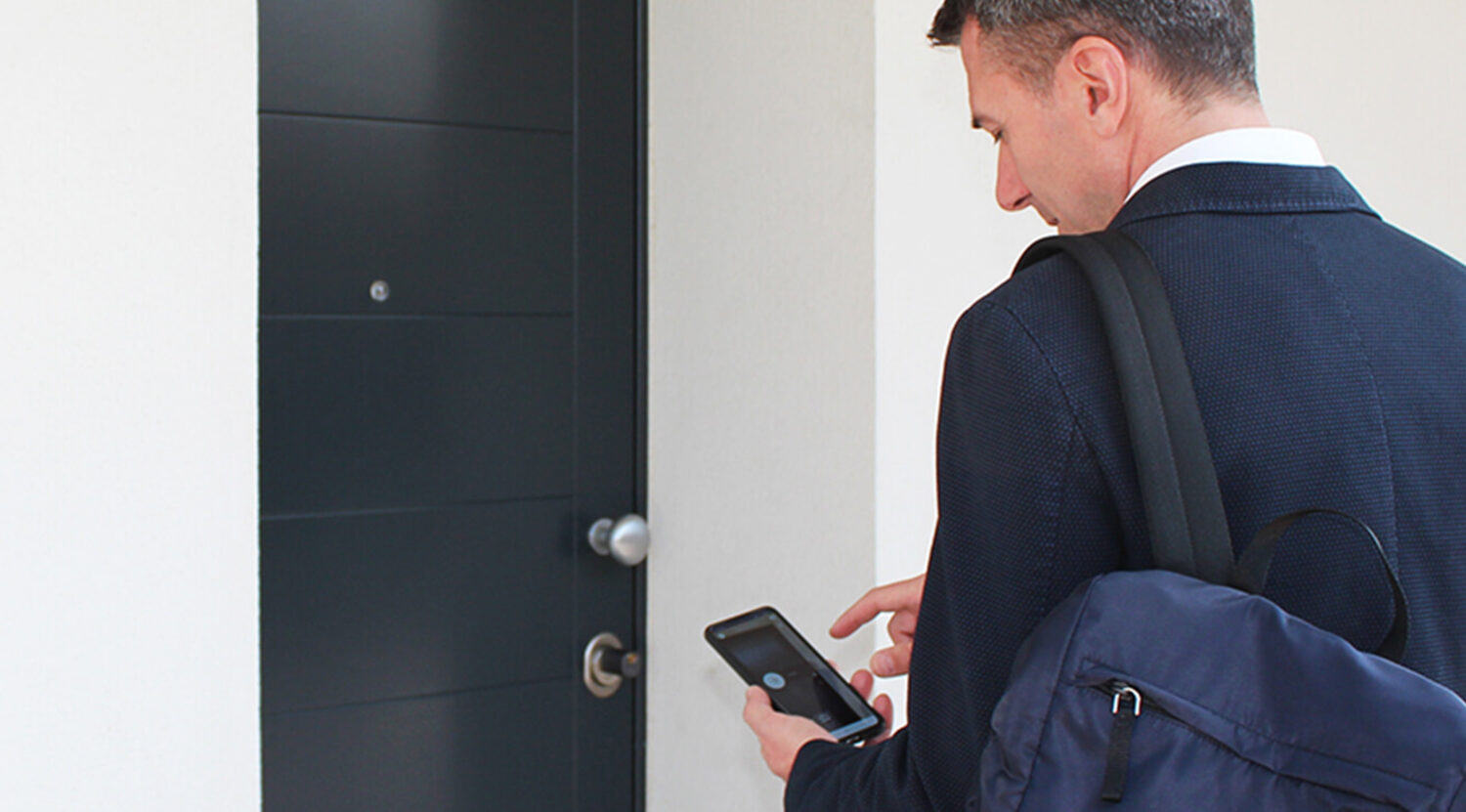
Search “is self check-in legal” and you will find a confident yes, a confident no, and a dozen articles that contradict each other — all technically correct, because they answer for different places. The host in Rome is reading about a court ruling on ID checks, the host in Paris about lockboxes cut off railings, the host in Manchester about neither. There is no single international law on self check-in, and any guide that pretends otherwise is wrong for most of its readers.
What exists instead is a stack of rules — national, regional, city, sometimes building-level — about three things: registering your guests with the authorities, verifying their identity, and where the key may physically live. This guide maps the layers, gives you a checklist for your own location, shows four European examples plus the UK and the US, and ends with a flow that adapts to almost any jurisdiction. The short version: in most places self check-in is perfectly workable — what changes is the homework around it.
What self check-in is — and where Airbnb stands
Self check-in means the guest can enter the property without the host being physically present at arrival. In practice it takes four forms:
- Key lockbox: a combination box holding the keys, mounted near the entrance; the host sends the code.
- Keypad with PIN: a numeric code opens the gate, the building door or the apartment door — no physical key in circulation.
- Smart lock: the guest opens the door from their smartphone with a digital key valid for the stay.
- Remote opening: the host opens the door or gate from the app at the moment of arrival.
The platforms are comfortable with all of it: Airbnb's own self check-in help page lists smart locks, keypads, lockboxes and building staff as supported methods and delivers the host's instructions to guests automatically before arrival. One thing to clear up early, though: Airbnb's identity verification is a platform trust feature, not a legal compliance tool — local registration and ID duties remain yours. For a comparison of the handover methods themselves, see our guide to Airbnb key exchange methods.
Why there is no single answer: the four layers of rules
“Is self check-in legal?” is really four questions stacked together.
Layer 1 — can you rent short-term at all, un-hosted? Some cities restrict renting an entire home for short stays without the host living there — New York City is the best-known case, covered below — and there the check-in question barely arises.
Layer 2 — guest registration. Much of continental Europe requires hosts to collect guests' details and report them, typically to the police or interior ministry within 24 hours of arrival; Germany instead requires a signed form kept on file. Other countries, like the UK, have only a light record-keeping duty, and many US states have nothing of the kind.
Layer 3 — identity verification. Separate from registration: does anyone have to check that the person arriving matches the document? The spectrum runs from no check at all, through “record the document details”, up to Italy's requirement to visually verify the guest against their ID in real time. It is the layer most often misreported as a blanket “self check-in ban”.
Layer 4 — the hardware and the public space. Even where registration and ID rules are relaxed, cities increasingly regulate where the key lives: Paris has banned lockboxes from the public space, several Italian cities and Spain's Valencia region have moved the same way, and building rules can restrict devices in shared areas anywhere.
The checklist: what to verify before you automate
Run your property through these five levels once and you have your local rulebook:
- National: is there a traveller-registration scheme (police reporting, ministry portal, signed form)? What data, from which guests, by what deadline? Is there an identity-verification duty, and how must it be done?
- Regional / state: do regions add their own registration systems, licence numbers or tourist-tax declarations? (Spain's autonomous communities do; in the US the state layer is mostly tax.)
- City: does the city require a permit or registration number for the listing? Does it restrict un-hosted short stays? Has it regulated lockboxes on the public space?
- Building: do co-ownership rules restrict short stays or hardware in shared areas (lockboxes at the entrance, keypads on the communal door)? Contractual rather than legal — but it bites just as hard.
- Platform: what does your booking platform require for your market — registration numbers in the listing, check-in instructions, cancellation duties?
A European snapshot: four examples
Four snapshots — examples, not an exhaustive list. If you host in France, Germany, Spain or Italy, look up the full local rules (the local-language editions of this guide cover those markets in depth); every other country has its own answer too.
Paris: key lockboxes banned from the public space
Since a municipal order of 24 January 2025, attaching key lockboxes to street furniture — railings, posts, bike racks — is prohibited across Paris. Boxes found are stickered, the owner has 15 days to remove them, then the city removes and destroys them; fines can reach around €1,500 (source: Ville de Paris). The ban covers the public space only: a box on private property is a matter for the co-ownership, not the city. Other European cities are moving the same way; we track the bans and the alternatives in key lockbox bans and what to use instead.
Italy: identity checks must happen in real time
Italy is the strictest large market on the identity layer. Hosts must register all guests with the state police portal within 24 hours of arrival and — after a November 2025 Council of State ruling (Italy's highest administrative court) — must also visually verify each guest against their ID document; receiving document photos by chat is not enough (source: Il Sole 24 Ore). The prevailing reading is that the check must be in real time but not necessarily in person: a live video call in which the guest shows face and document, followed immediately by a remote door opening, fits the requirement under current interpretations. Italian hosts have not abandoned self check-in — they have added a video step to it.
Spain: every guest registered through SES.Hospedajes
Royal Decree 933/2021, fully enforceable since 2 December 2024, requires all tourist accommodation — hotels and holiday rentals alike — to report detailed traveller data through the interior ministry's SES.Hospedajes platform, generally within 24 hours of arrival. The data set is granular, minors must be declared, and sanctions run from about €100 to €30,000 for serious infringements (source: Airbnb's RD 933/2021 FAQ). Spain does not ban self check-in — but the registration duty is the host's alone, some autonomous communities run parallel systems (Catalonia does), and the Valencia region has restricted lockboxes for tourist flats. Automate the door, never the paperwork.
Germany: the Meldeschein survives for foreign guests
Germany's federal registration law (Bundesmeldegesetz, §§29–30) long required every guest to sign a paper registration form, the Meldeschein. Since 1 January 2025 that duty is abolished for guests with German citizenship — but it remains for foreign guests, who must still sign the form on the day of arrival, kept on file by the host, because of Schengen-level commitments (source: German Hotel Association (IHA) FAQ). The signature shapes self check-in: contactless arrival is straightforward for domestic guests, while for foreign guests the flow must produce a signed form — electronic under certain conditions, or via a brief organised handover.
Manage every guest entrance through one access system
Explore the 1Control solution for front doors, shared entrances, gates, guests and staff. Start with the hospitality setup; if you need a smart lock, then check your door for DORY.
The UK and the US: same question, different answers
United Kingdom. There is no continental-style police reporting. What exists is the Immigration (Hotel Records) Order 1972: serviced and self-catering accommodation must keep a record of all guests over 16 — full name and nationality, plus passport details and next destination for guests who are not British, Irish or Commonwealth nationals — retain it for at least 12 months and keep it available for inspection (source: VisitBritain). Nothing is transmitted, and no law prescribes how the guest gets through the door. England is also phasing in a national short-term let registration scheme — but that registers properties, not guests.
United States. No national rules: everything happens at city and state level, and the variation is extreme. New York City is the sharpest example: under Local Law 18, hosts must register with the city, and renting an entire home for under 30 days is prohibited — the host must be present, with at most two guests (source: NYC 311). In NYC the self check-in question is therefore mostly moot for entire-home short stays. Hundreds of other US cities sit elsewhere, many requiring only a permit and occupancy taxes. Check your own city before assuming either freedom or prohibition.
A compliant self check-in flow, step by step
Whatever your jurisdiction requires, the flow below adapts: collect the data early, verify identity the way your rules expect, tie access to the booking dates, keep a record.
- Map your obligations once. Run the five-level checklist and write down what data you must collect, whether and how identity must be verified, the registration deadline, and any hardware restrictions. That list is your compliance design.
- Collect guest data before arrival. Ask for the names and document details your rules require via the platform's messaging or a pre-check-in form, days before the stay — and only what the rules call for: over-collecting creates a privacy problem while solving nothing.
- Verify identity the way your jurisdiction expects. In many places this step is simply “keep the details on file”. Where real-time verification applies (Italy) or a signed form is needed for some guests (Germany), schedule a short video call or organised handover at arrival, agreeing a time window or a “message me when you're outside” arrangement in advance.
- Open the first door — remotely if needed. With the LINK hub on site you can open the gate, building door and apartment door from the app wherever you are — including during the verification call, so identification and entry happen in the same moment where your rules want that. The building entrance is where most self check-ins fail: we cover it in how to open the building door remotely for guests.
- Give time-limited access for the rest of the stay. A PIN on the PAD keypad valid from check-in to check-out for powered gates and garage doors, or a digital key on the DORY smart lock for the apartment door. Any identity step attaches to the first entry; afterwards the guest comes and goes freely and the access expires on its own.
- File the registration and keep the log. Submit the traveller registration within the local deadline (24 hours is common) and keep the access history on: if anything is disputed, knowing who opened which door and when is your best documentation.
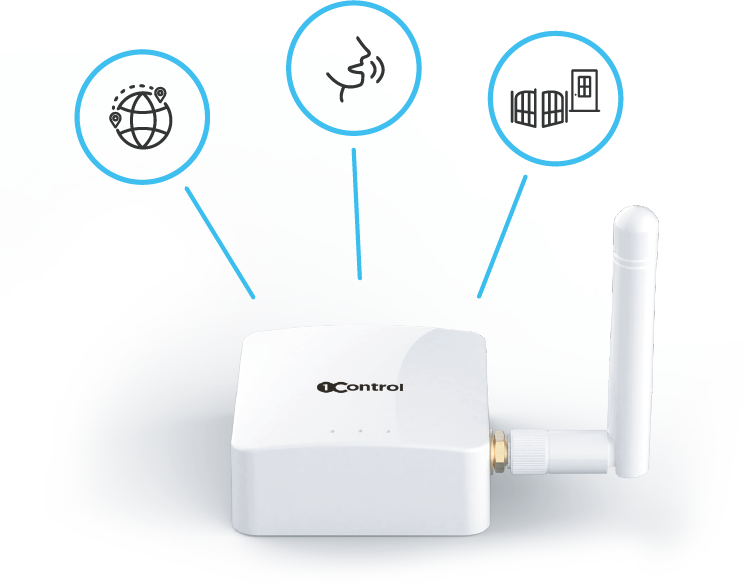
The hardware that makes the flow work
Two capabilities carry the whole flow: opening doors and gates from anywhere, and issuing access that expires by itself. That is what the 1Control ecosystem does — and unlike subscription check-in platforms, the devices are a one-time purchase, with no subscription: sharing, access history and remote opening are all included.
- LINK (hub) — the bridge between the Internet and the Bluetooth devices on your doors and gates. It connects to the property's Wi-Fi (2.4 GHz) or LAN, manages up to 5 SOLO, DORY or LOCO devices, and enables opening from any distance, entry notifications and voice control (Alexa, Google Home, Siri).
- PAD (keypad) — installs on powered gates, garages and building entrances by copying the existing remote over radio (800+ remote models supported). 4 PIN codes included, expandable, each with validity rules for dates, days and time windows; runs on two AAA batteries and is built for outdoor use. For the guest: type the code and walk in, no app. Prefer app-based opening on the same gates? SOLO is the alternative.
- DORY (smart lock) — replaces the door's Euro cylinder in about ten minutes, reversibly, with no drilling. Digital keys with start and end dates, a mechanical key as permanent backup, CR2 batteries lasting over a year; DORY MINI manages 3 users, DORY 10.

A typical shared-building setup — PAD or SOLO on the entrance, DORY on the door, LINK for remote control — covers the guest's full path with a one-time spend. The complete scenarios are on the 1Control solutions for B&Bs and vacation rentals page; for the lock itself, start from the smart lock for rental properties guide.
Common mistakes
Treating platform verification as legal compliance. Airbnb verifying a guest for its own purposes does not register them with your police portal, satisfy a Meldeschein or stand in for a required ID check. Both layers must be cleared, separately.
Importing another country's setup. The forum post that says “just leave a lockbox, nobody checks” was written somewhere with no registration duty and no lockbox ban. Check-in advice does not travel across borders; your five-level checklist does.
A lockbox on public street furniture. Banned in Paris, restricted in a growing list of European cities, and trivially easy for enforcement to find. If you use one at all, it belongs on private property with the building's consent — and a time-limited PIN on a keypad does the same job with revocation and a log.
One PIN forever. A code that never changes is a key handed to every past guest, cleaner and contractor. Access should be per-guest and time-bound — valid from check-in, dead at check-out.
Forgetting the building. Co-ownership rules can restrict hardware on communal doors even where the city does not. One conversation with the building manager before installing saves the dispute after.
Doing the homework once. These rules moved repeatedly between 2024 and 2026 — a circular, a ruling and an appeal in Italy; a new portal in Spain; a new municipal order in Paris. Re-check your stack yearly, and before every new listing.
Frequently asked questions
Is self check-in legal for Airbnb and short-term rentals?
In most jurisdictions yes, but no single international rule exists. What varies by country and city is the homework around it: whether you must register guests with the authorities, whether and how you must verify their identity, and where access hardware such as lockboxes may be installed. Always check the requirements of your country, region and city, and your property type.
Does Airbnb's identity verification satisfy guest registration laws?
No. Airbnb verifies guests for its own platform trust purposes; that verification does not report anyone to portals such as Spain's SES.Hospedajes, and does not replace a required ID check or a signed German registration form. Where local law imposes registration or verification duties, they sit with the host — Airbnb's own compliance FAQs say exactly that.
Are key lockboxes still allowed?
It depends on the city. Paris banned lockboxes from the public space in January 2025, with removal and fines; several Italian cities and Spain's Valencia region have moved against them too. Elsewhere they remain legal but are the weakest piece of a check-in flow: a static code, no log, no remote revocation. On private property with the building's consent they may still be fine — but a time-limited PIN on a keypad or a digital key does the same job with more control.
What guest data should I collect before arrival?
Exactly what your local rules require — no more. In registration countries that typically means full names, document type and number, dates of birth and stay dates for all guests, sometimes including minors (Spain's SES.Hospedajes asks for a granular data set; the UK asks only for name and nationality, plus passport details for some guests). Ask via the platform's messaging or a pre-check-in form days before arrival, and do not store document copies longer than your rules allow.
Do I need to verify my guests' ID in person?
In most countries, no — there is either no active verification duty or a record-keeping one. The clearest exception is Italy, where after the Council of State ruling of November 2025 hosts must visually verify each guest against their document in real time; under current interpretations a live video call at arrival, followed immediately by opening the door remotely, fits that requirement. Germany requires foreign guests to sign a registration form on arrival.
How does remote opening work with 1Control?
The LINK hub connects to the property's Internet (Wi-Fi 2.4 GHz or LAN) and acts as the bridge between the Internet and the Bluetooth devices installed on your doors and gates: SOLO or PAD on powered gates, garage doors and building entrances, DORY on doors with a Euro cylinder. From the 1Control app you open any of them from any distance — for example during a verification video call — and you get entry notifications and an access history. The devices are a one-time purchase, with no subscription.
Conclusion
Self check-in is not a legal grey zone — it is a local question with local answers. The same automated arrival that is unremarkable in Manchester needs a registration upload in Madrid, a signed form for foreign guests in Munich, a video call in Milan, and is mostly off the table for entire homes in Manhattan. The hosts who get this right ran the checklist for their own address, wrote down the few obligations that actually apply, and automated everything around them.
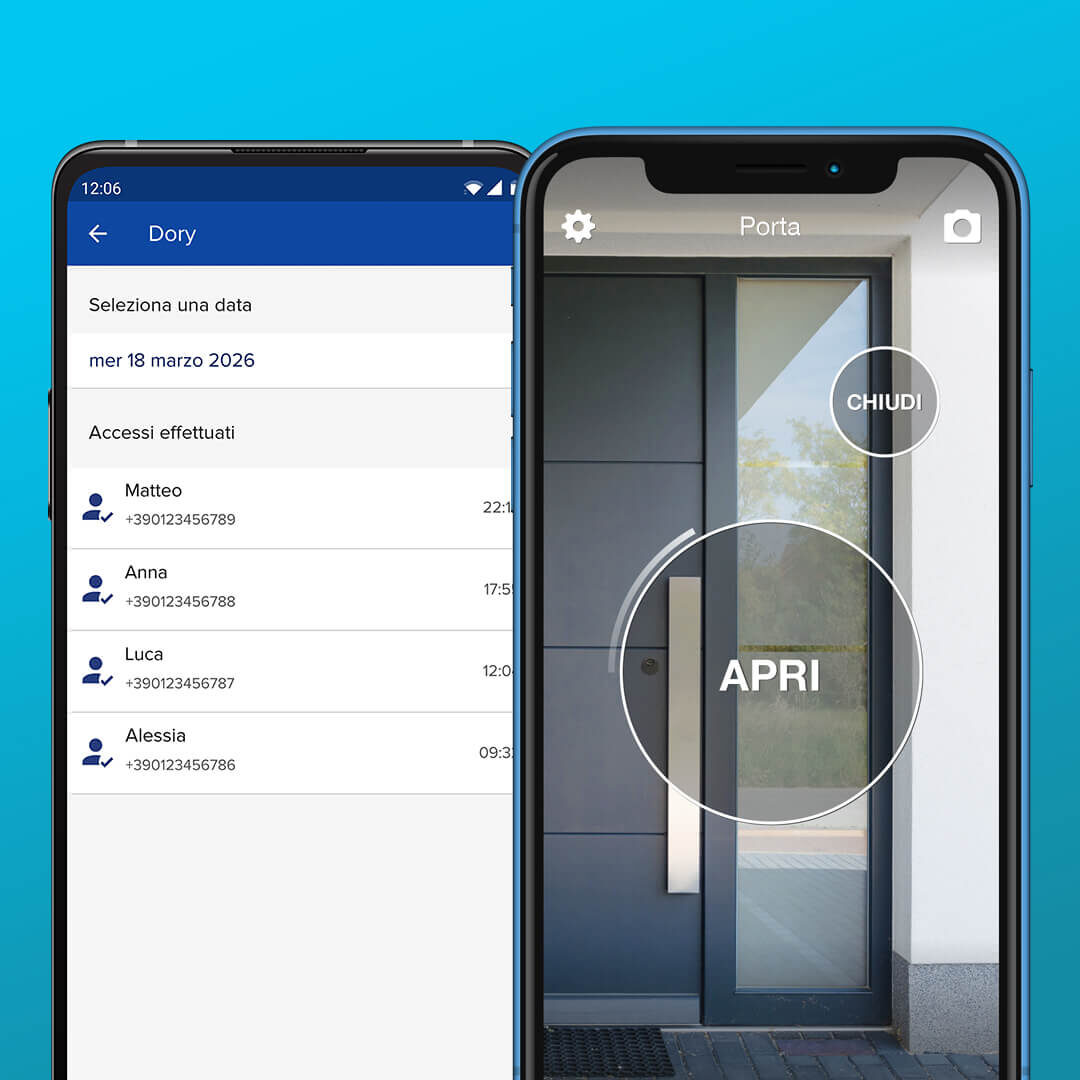
The technical side is the same everywhere: remote opening for the first entry, time-limited access for the stay, a log for everything. To see how that maps onto your property — no building works, no subscription — start from the 1Control solutions for B&Bs and vacation rentals page.
This article is for information only and is not legal advice. Short-term rental rules are evolving quickly in many markets: under current rules the picture is the one described above, but always check the requirements of your country, region and city, and your property type, before relying on any check-in setup.