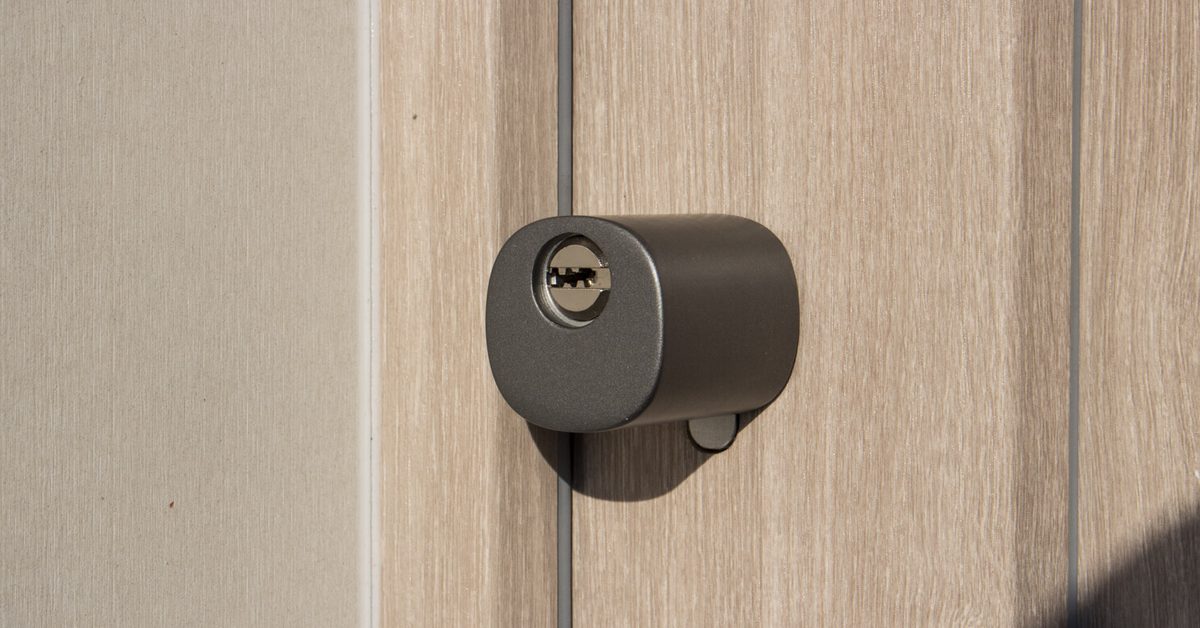
You do not need to take anything apart to find out which lock is on your door: the shape of the key and keyhole, where the lock sits and how many points it locks are enough. In short: the main types of door locks are the euro cylinder lock, the lever mortice lock, the nightlatch, the multipoint lock, internal door locks, electric locks and smart locks. Anything that uses a euro cylinder, including most multipoint locks, can be upgraded by changing just the cylinder, even to an electronic one such as 1Control DORY; the others need a conversion or a different solution first.
Below you will find how to recognise each type, what it is for and what can be changed. The step-by-step guides (measuring, replacing, converting) are linked type by type.
How to identify your door lock in three checks
Before looking for the right name, check the door in this order:
- The key and the keyhole. A keyhole shaped like an upside-down teardrop, round at the top with a tail below, belongs to a euro cylinder. A long key with a flat bit (a lever key) belongs to a lever mortice lock. A round cylinder on the outside with a latch box on the inside is a nightlatch.
- Where the lock sits. If the edge of the door shows a metal plate (the faceplate) with a latch and a bolt, the lock is fitted inside the door: a mortice lock. If a metal box is screwed to the inside face of the door, it is a rim lock, like a nightlatch.
- How many points lock. With the door open, turn the key or lift the handle: if bolts or hooks come out at the top and bottom as well, or the faceplate runs most of the height of the door, it is a multipoint lock.
The table sums up the most common cases and what they mean if you want to open the door from your phone.
| Lock type | How to recognise it | Can it take DORY? |
|---|---|---|
| Euro cylinder lock | Teardrop keyhole, fixing screw in the faceplate going through the cylinder | Yes, if the compatibility check confirms it |
| Lever mortice lock | Long lever key, no visible cylinder | Only after converting to a euro cylinder |
| Nightlatch (rim lock) | Round cylinder outside, latch box inside | No: the rim cylinder is not a euro profile |
| Multipoint lock | Long faceplate, locking points top and bottom | Yes, with a euro cylinder: only the cylinder changes |
| Internal doors, bathroom | Simple latch, small key or thumbturn with indicator | Usually not: no euro cylinder |
| Electric lock or strike | Opens from a button or intercom, has wires | No: the electric control is the way in |
| Oval cylinder | Oval keyhole with no tail | No |
Euro cylinder lock: the standard on modern front doors
This is what most modern front doors use, including uPVC and composite doors and security doors. The mechanism (latch, bolt and, on a multipoint lock, the extra locking points) sits in the lock case inside the door, while the part the key goes into is a separate component: the euro cylinder, held by a fixing screw through the faceplate.
You can spot it from the teardrop profile and the screw on the edge of the door, level with the lock. The big practical advantage is that the cylinder can be changed on its own, without touching the lock: undo the screw, turn the key slightly and slide the cylinder out. That makes it the place to start if you have lost your keys, want a stronger cylinder or want to open the door from your phone. Parts, sizes and variants are covered in the guide to the euro cylinder lock, and the swap itself in how to change a door lock.
Do not confuse it with the oval cylinder or with the round rim cylinder of a nightlatch: their profiles are different and they do not swap with a euro cylinder.
Making it smart: this is where DORY fits, replacing the cylinder with no drilling. The mechanical key stays, you open from inside by turning the knob and, from outside, the knob is enabled from your phone. It needs the fixing screw, at least 3 cm between the cylinder and the edge of the door and no cylinder guard: the checks are explained in smart lock door compatibility.

Thinking about a smart lock?
Check whether your door is compatible with 1Control DORY: it replaces your existing euro cylinder with no drilling and no changes to the door, and its mechanical key is always available. One-off purchase, no subscription.
299,00€ from 249,00€ VAT included
- 1,500+ reviews on Amazon, Facebook and Trustpilot
- Secure payments
- 2-year warranty
Lever mortice lock
The lever mortice lock works with a long key with a flat, stepped bit. It is common on older wooden front and back doors, often as a deadlock or sashlock, and you recognise it at once from the key and the tall, narrow keyhole with no cylinder.
The levers and the key combination are inside the lock itself: to change the keys you work on the lock, not on a removable part. Many owners convert it to a euro cylinder, with a lock case made for a cylinder in the same position, which also opens up modern cylinders and electronic ones. The steps are in convert a lever lock to a euro cylinder.
With a lever lock DORY cannot be fitted as it is: it can be considered only after the conversion, by checking the converted door again.
Mortice lock or rim lock, and the nightlatch
This distinction is about where the lock sits, not the key:
- mortice lock: the lock case is fitted into a slot cut into the edge of the door, and you only see the faceplate with the latch and bolt. It can take a euro cylinder or a lever key;
- rim lock: the case is screwed to the inside face of the door and the bolt or latch engages a keep fixed to the frame. The most common rim lock in Ireland and the UK is the nightlatch, with a round cylinder on the outside and a latch you can hold back from inside.
The nightlatch cylinder is round and screwed in from inside the case: it is not a euro cylinder with a side fixing screw, so DORY does not replace it. Many doors have a nightlatch as well as a main lock; if the main lock has a euro cylinder, remember that DORY replaces one cylinder only, and the nightlatch keeps working with its own key.
Multipoint lock
A multipoint lock secures the door at several points along its edge, not just in the middle: as well as the central bolt, hooks, rollers or bolts come out at the top and bottom and engage the frame. You recognise it from the long faceplate and from the points that come out, with the door open, when you lift the handle or turn the key.
There are two ways of working it. On uPVC and composite doors you usually lift the handle to throw the points and then turn the key to lock them. On many security doors it is the turns of the key that move all the points. Either way, the heart of the lock is almost always a euro cylinder, which can be changed on its own. How it works, common faults and changing the cylinder are in the guide to the multipoint door lock.
With DORY the multipoint lock stays as it is: DORY replaces the cylinder and, when you turn the knob, locks and unlocks like the key. If your door has to be locked by lifting the handle, that part stays manual.
Internal doors: latches, bathroom locks and offices
On internal doors the lock is there to keep the door closed rather than to protect:
- tubular latch or simple lever lock: a latch worked by the handle, sometimes with a small key that fits every room. Minimal protection, for privacy;
- bathroom lock: no key, a thumbturn inside and, outside, an engaged/vacant indicator with an emergency release;
- euro cylinder lock: on offices, studies or rooms that really need locking, a mortice lock with a cylinder is fitted.
On an internal door DORY only makes sense in the last case, with a euro cylinder of the right size and enough room around it: for example an office that several people need to open without handing out keys. With a simple latch or a bathroom thumbturn there is no cylinder to replace.
Electric locks and strikes: they open with an electrical pulse
An electric strike in the frame, or an electric lock, releases the latch when it receives current: it is what opens the side gate, the communal door of an apartment block or the door of a surgery when someone presses the intercom button. You can tell from the wires going to the lock and from the fact that it opens without a key, from a button. It usually also has a cylinder for opening by hand.
Here the smart part is not done on the cylinder but on the electric control, with a module wired into the system by an installer: for example SOLO KIT, which connects to the electric lock and opens it with its own remote. DORY is designed for doors that are locked with a key, not for electrically released ones.
Smart locks: a motor on the key or an electronic cylinder
A smart lock is not a separate type of lock but a way of operating the one you already have. There are two families:
- retrofit motor: a battery unit is fixed on the inside and turns the key or thumbturn of the existing cylinder;
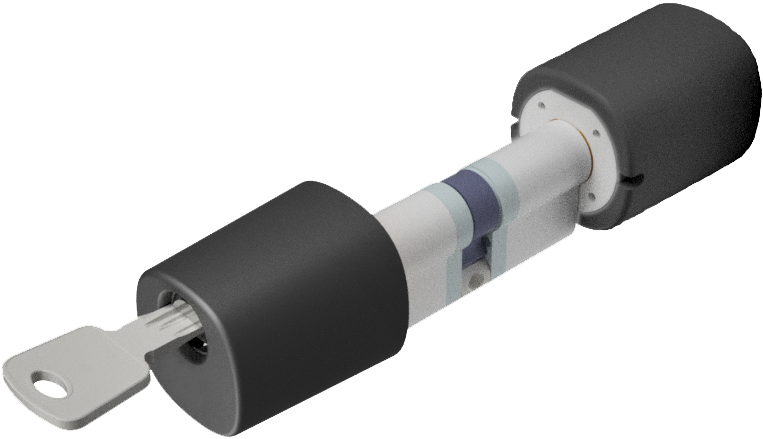
- electronic cylinder: the euro cylinder is replaced with one that has the electronics inside, like DORY. From outside the knob spins freely until your phone, smartwatch or key enables opening; then you turn it yourself to lock or unlock.
There are also complete electronic locks with a keypad or fingerprint reader, which replace the whole lock and usually mean work on the door. The differences between the first two approaches are in the Nuki vs DORY comparison; for the full picture see the smart lock buyer's guide.
Which lock should you choose for a front door?
When you have to decide what to keep and what to change, start from what you have:
- a euro cylinder: keep the lock and choose only the cylinder. What matters for security is resistance to snapping, drilling and picking, a restricted key (copies only with the ownership card) and a cylinder that does not stick out of the door. In Ireland and the UK, TS 007 three-star or Sold Secure SS312 Diamond ratings are a common benchmark for cylinders;
- a lever mortice lock: converting to a euro cylinder is the step that opens up every other option, including a smart one;
- a security door with a cylinder guard: the guard (or defender) protects the cylinder from outside. To fit DORY you need DORY and the 1Control defender together: no other guard, round or magnetic, is compatible;
- a multipoint lock that is hard to lock: sort out the mechanics first (door alignment, keeps, handle), then change the cylinder.
On a door without a cylinder guard, before buying an electronic cylinder it is worth running the DORY compatibility check: four questions on the type of cylinder, the number of locks, the fixing screw and the distance from the edge.
Frequently asked questions
How many types of door lock are there?
For a home there are seven main families: the euro cylinder lock, the lever mortice lock, the nightlatch and other rim locks, the multipoint lock, internal door locks, electric locks and smart locks. You tell them apart by the key and keyhole, where the lock sits and how many points it locks.
How do I know if my lock has a euro cylinder?
Look for a keyhole shaped like an upside-down teardrop and a fixing screw on the edge of the door, level with the lock, that goes through the cylinder. A long lever key means a lever mortice lock; a round cylinder with a latch box inside means a nightlatch.
What is the difference between a mortice lock and a rim lock?
A mortice lock is fitted inside the thickness of the door and you only see the faceplate on the edge; a rim lock is a box screwed to the inside face of the door. Front doors usually have a mortice or multipoint lock, often with a nightlatch as a rim lock above it.
Can I change just the cylinder without changing the lock?
Yes, if the lock takes a euro cylinder: undo the fixing screw in the faceplate and slide the cylinder out, the lock stays in the door. With a lever mortice lock, no: it has to be converted first.
Which locks can take DORY?
Locks with a euro cylinder held by the side fixing screw, with at least 3 cm between the cylinder and the edge of the door, including many multipoint locks. With a cylinder guard you need DORY and the 1Control defender together. DORY does not fit lever locks before conversion, nightlatches, oval cylinders or electric locks.
Which door lock is the most secure for a front door?
No single type is secure on its own: the door, the lock and the cylinder work together. A multipoint lock with a euro cylinder rated against snapping and drilling is the usual set-up on modern front doors; an old lever lock on its own is the weakest option.
Conclusion
Identifying your type of door lock takes a minute: look at the key, the edge of the door and how many points lock. With a euro cylinder you can change just the cylinder, even to an electronic one; with a lever lock the first step is the conversion. To find out whether your door can take DORY, run the compatibility check.