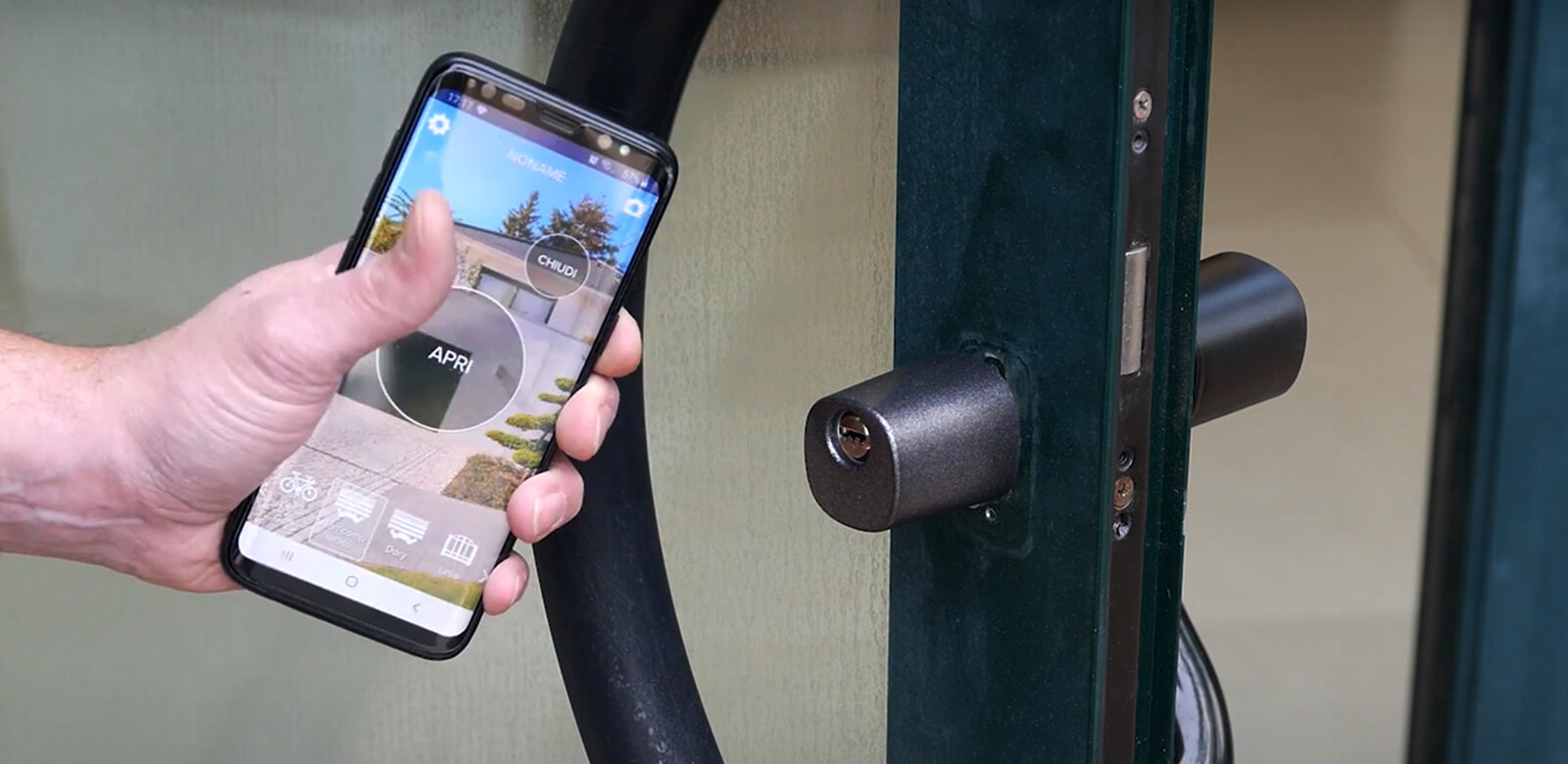
In short: a euro cylinder (or euro profile cylinder) is the part of the lock you put your key into. It runs right through the lock case, it is held by a single screw on the edge of the door and it can be replaced without changing the lock itself. You can spot one by three signs: the keyhole-shaped profile, a screw on the lock faceplate at the same height and a short, flat key. If you are about to replace it, you can also swap it for a smart cylinder such as 1Control DORY, which takes the place of the euro cylinder only.
This guide covers how a euro cylinder is built, how it works, how to tell it apart from a lever lock, how to measure it and what to look for in terms of security.
What is a euro cylinder?
The euro cylinder is the part of the lock that recognises the key. It is not the whole lock: the lock is the case set into the door, with the latch and the deadbolt (or, on uPVC and composite doors, the multipoint mechanism). The cylinder is the part you see from outside and inside that, when the right key is turned, operates the lock.
It is called “euro” because of its cross-section: round at the top and narrower at the bottom, like an upside-down teardrop or a classic keyhole. The profile is shared by almost every European manufacturer, so a cylinder from one brand can be replaced with one from another, as long as the sizes match. It is the standard on uPVC and composite front doors in Ireland and the UK, on many security doors and on plenty of internal doors.
How it is built: the parts of the cylinder
A standard euro cylinder has only a handful of parts:
- body (or housing): the metal casing with the euro profile, fixed inside the lock;
- plug: the part that turns with the key; a double cylinder has one on each side;
- pins and drivers with springs: they block the plug until the right key lines them up;
- cam: the small lever in the middle of the cylinder that operates the lock as it turns;
- threaded hole for the fixing screw: in the middle of the body, under the cam; this is where the faceplate screw holds the cylinder in place.
That single fixing screw is what makes the euro cylinder so practical: once it is out, the cylinder slides out of the lock without taking anything else apart.
How a euro cylinder works
When you insert the key, its cuts push the pins to the right height. If it is the right key, every pin lines up exactly at the gap between plug and body (the shear line) and the plug is free to turn. As it turns, it drives the cam, which moves the latch and the bolts: that is how the door is locked and unlocked.
With the wrong key, at least one pin stays across the shear line and the plug will not turn. Security cylinders work on the same principle, with more pins, specially shaped pins or extra locking elements that make opening without the key harder.
Many cylinders are key-operable from both sides even with a key left in (often sold as “anti-jam” or emergency function). That is useful if someone has left a key in on the inside.
How to identify a euro cylinder on your door
Three checks are enough, with the door open:
- The shape: look at the cylinder from outside. If you see the keyhole profile (or just a round hole with the key, where the cylinder is covered by a security plate), it is very likely a euro cylinder.
- The screw on the faceplate: on the edge of the door, on the metal strip where the latch and bolts come out, there is a screw level with the cylinder. That screw holds it.
- The key: a euro cylinder key is short and flat, with cuts along one edge or dimples on its faces.
If the key is long, with a shank and a bit (or two bits), and there is no cylinder screw on the faceplate, you have a lever lock, such as a mortice deadlock. There is no cylinder to slide out: getting a euro cylinder means converting the lock first, as explained in the guide convert a lever lock to a euro cylinder.
| What you check | Euro cylinder | Lever lock |
|---|---|---|
| Key | Short and flat, with cuts or dimples | Long, with a shank and a bit |
| Keyhole | Keyhole profile, or a round hole under a security plate | Narrow slot, no visible cylinder |
| Door edge | Screw level with the cylinder | No cylinder screw |
| Replacement | Only the cylinder is changed | Conversion or a different lock needed |
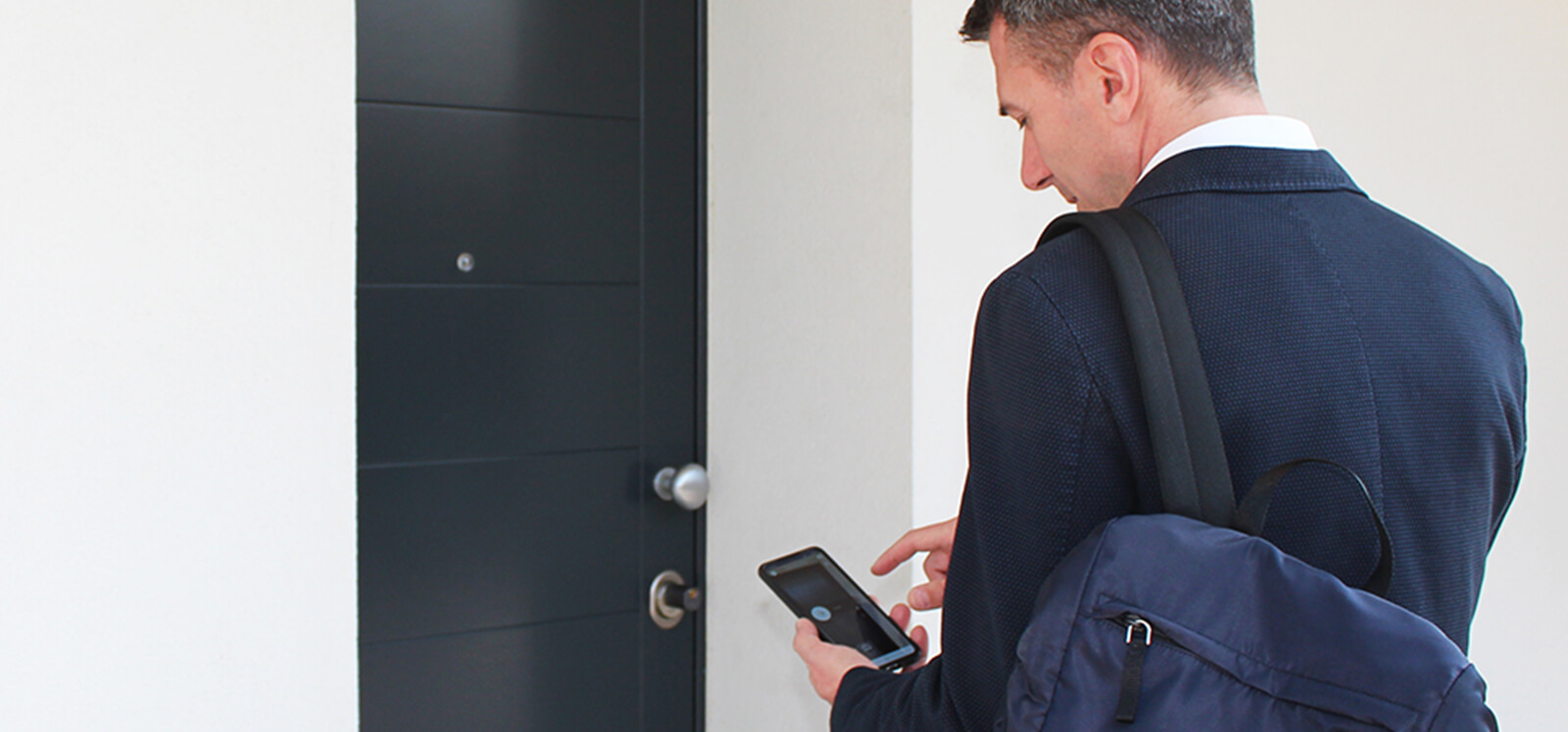
Changing the lock anyway? Make it smart
It's the same job: 1Control DORY replaces just your euro cylinder: open from your phone, with revocable temporary access and the mechanical key always available. Check in seconds whether your door is compatible. One-off purchase, no subscription.
299,00€ from 249,00€ VAT included
- 1,500+ reviews on Amazon, Facebook and Trustpilot
- Secure payments
- 2-year warranty
The variants: double, half and thumbturn cylinders
The profile stays the same; the version depends on the door:
- double euro cylinder: key on both sides; common on front doors;
- thumbturn cylinder: key outside, thumbturn inside; you lock and unlock from inside without looking for the key;
- half euro cylinder: key on one side only; used on roller shutters, garage doors and key switches;
- anti-jam (emergency) cylinder: as mentioned above, it opens even with a key left in on the other side.
There are also cylinders with other profiles, such as oval or round ones. They are not interchangeable with a euro cylinder, because they do not fit the same opening in the lock.
How to measure a euro cylinder lock
A euro cylinder is measured in two parts, both from the centre of the fixing screw hole:
- outside: from the centre of the screw to the outer end of the cylinder;
- inside: from the centre of the screw to the inner end.
The two figures are written like this: 35/45, 40/50 and so on, in millimetres. The overall length is the sum. The two sides are rarely equal, because the lock is not always in the middle of the door's thickness and one side may carry a handle plate or a security plate.
The rule of thumb: the cylinder should stick out no more than a few millimetres beyond the handle or its security plate. Too short and the key turns badly; too long and it gives a grip to anyone trying to snap or pull it. That is why you measure on the door, not on the old cylinder, which may already have been the wrong size. For the replacement itself, see our step-by-step guide on how to change a door lock.
Security: what to look for in a euro cylinder
There is no single “most secure” cylinder: what counts is the combination of cylinder, handles and door. Before choosing one, look for:
- anti-snap: the cylinder is designed to break at a sacrificial line and keep the lock working, which matters on uPVC and composite doors;
- anti-bump and anti-pick: resistance to techniques that open the cylinder without the key;
- anti-drill: hardened inserts that make drilling harder;
- restricted keys: copies only with a key card;
- ratings: the European standard EN 1303 grades durability and resistance; in Ireland and the UK, cylinders are also commonly tested to TS 007 (look for the 3-star mark) or Sold Secure SS312 Diamond. Ratings are stated in each product's documentation.
On security doors the cylinder is usually covered by a steel guard, the defender, which leaves only the key entrance free. Even the best cylinder does little if the door is weak or does not close properly; check what your home insurance policy expects, too.
When to replace the cylinder, and what it costs
Replace the cylinder when keys have been lost or you do not know how many copies exist, when you move into a new home, when the key catches through wear or when you want better protection. On a door that closes properly the job is simple: remove the fixing screw, turn the key slightly to line up the cam, slide the cylinder out and fit the new one in the right size.
The price depends mainly on the security rating, the length, the number of keys and whether the keys are restricted. If you call a locksmith, add the call-out. On a security door, also budget for the cylinder guard if it needs replacing.
The smart euro cylinder: DORY
If the cylinder is coming out anyway, you can replace it with a smart cylinder. 1Control DORY replaces only the euro cylinder: no drilling, no wiring, and the lock and door stay as they are. It is fitted like any cylinder: screw out, old cylinder out, DORY in, screw back in.
How it works day to day:
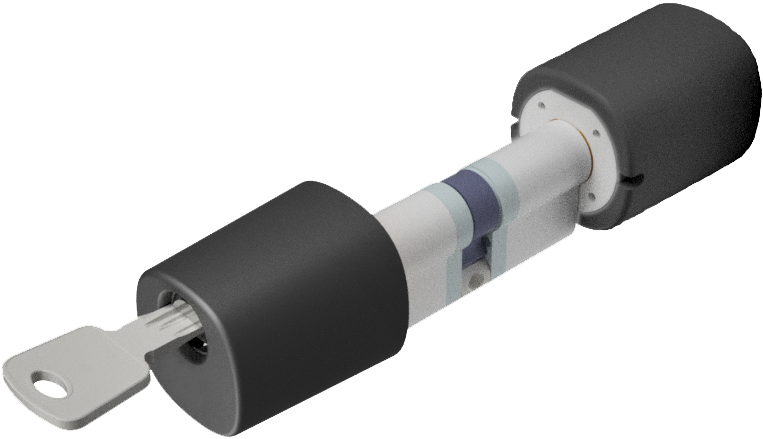
- DORY has two knobs: the electronic knob on the inside, with the electronics, the batteries and a small motor, and the mechanical knob on the outside, with the key;
- from outside, the knob spins freely until you enable opening from the app, a smartwatch or the mechanical key; then you turn it yourself and the lock opens or closes;
- from inside, you can always turn the knob, with no command needed;
- the mechanical key stays and works even with flat batteries; the two CR2 batteries last about a year;
- before fitting, you measure the door's thickness with the cardboard template in the box and adjust the length with the extensions included;
- to open remotely and with Alexa or Google Home you need 1Control LINK;
- DORY supports 10 users and comes with 5 mechanical keys; DORY MINI supports 2 users, with 3 keys.
Two conditions. The door must have a euro cylinder: a lever lock has to be converted first. And if the cylinder is protected by a defender, DORY can only be fitted with the 1Control defender: no other defender is compatible. Sizes and everything else are checked in the DORY compatibility check. If you are comparing models, see our guide to smart locks for UK euro cylinder doors.
Frequently asked questions
How do you measure a euro cylinder lock?
Measure on the door, from the centre of the fixing screw to each end: outside and inside, for example 35/45 mm. The cylinder should stick out no more than a few millimetres beyond the handle or security plate.
How can I tell if my door has a euro cylinder?
Look for three things: a keyhole-shaped cylinder face, a screw on the door edge level with the cylinder, and a short, flat key. A long key with a shank and a bit points to a lever lock instead.
What makes a euro cylinder secure?
A combination of anti-snap, anti-bump, anti-pick and anti-drill protection, restricted keys, the right length and a suitable guard or handle set. EN 1303, TS 007 3-star and Sold Secure SS312 Diamond ratings help you compare products.
How do you tighten a loose euro cylinder?
Open the door and tighten the fixing screw on the faceplate, at the height of the cylinder. If the cylinder still moves, check that it is the right length and that the screw goes into its threaded hole.
Can I replace a euro cylinder with a smart cylinder?
Yes, if the door is compatible. 1Control DORY replaces only the euro cylinder, without drilling, and keeps the mechanical key. With a defender it can only be fitted with the 1Control defender. Compatibility is checked with the DORY check on the 1Control website.
The bottom line
The euro cylinder is the easiest part of the door to change: one screw, the right size and a few minutes. Recognising it, measuring it properly and choosing the right protection is what makes the difference to security. If you are replacing it, it is also a good moment to consider a smart cylinder: start with the DORY compatibility check and, for the bigger picture, our guide to smart locks.