In short: home security is built in layers, and the order matters: solid door and window hardware first, then a burglar alarm to signal an intrusion; cameras, lighting and lived-in habits belong to the deterrence side, which has a guide of its own. This guide maps the alarm market honestly — wired or wireless, DIY or professionally monitored, with or without a monthly plan — without trying to sell you any of it. And it names the blind spot the brochures skip: no alarm on the market knows who is holding a copy of your keys.
One thing before we start: 1Control does not make or sell alarms or cameras. We make devices that control access — the front door, the gate, the garage. That is exactly why this guide can afford to be genuinely neutral about alarm brands, and direct about the one layer none of them covers.
Why do you want an alarm? The three answers
"Home security" is one of those searches that hides three different problems in one phrase. Before comparing sensors and sirens, it is worth working out which problem is actually yours — because only the first is solved by an alarm.
- You want to deter burglars and be alerted if someone breaks in. That is precisely what a burglar alarm is for, and the next two sections are a straight guide to choosing one.
- You want to control who comes in through the front door — the cleaner on Tuesdays, the dog sitter, a relative with a spare key. That is not an alarm problem at all; it is access control, and it is the pivot of this article, a few sections down.
- You want peace of mind about a home that stands empty — long working days, holidays, a second home. That is partly an alarm problem and partly an access problem: someone still has to get in to check on the place, and the gate and garage are the entrances they use. The section on external accesses picks that up.
Most households carry a bit of all three. The honest answer — and the structure of this guide — is that they take different tools, which happily do not interfere with one another.
Burglar alarms: an honest map of the market
The burglar alarm market looks crowded, but it divides along three practical lines: how the system is wired, who installs it, and who responds when it goes off. Settle those three and the brand matters far less than the fit with your home.
Wired or wireless
Wired systems connect every sensor to the control panel by cable. They are immune to battery routines and radio interference, and they suit new builds and major renovations, where the cabling disappears into the walls. In a finished home they mean disruption, which is why the market has swung decisively towards wireless: sensors that talk to the panel by radio, installed in an afternoon, with batteries to check once or twice a year. Modern wireless protocols are respectable; the honest caveat is that any radio system depends on its signalling working when it matters.
Who installs it
Professionally installed systems — Verisure, ADT and the traditional local installers — arrive with a survey, an engineer and a maintenance arrangement. You pay for expertise and accountability: sensor placement is decided by someone who does it daily, and there is a company to call when something misbehaves. Self-installed kits — Yale, SimpliSafe, Ring, eufy and others — trade that expertise for freedom: lower cost, no appointments, a system that moves house with you. The installation becomes yours to get right, and placement matters more than sensor count: a contact on every entry door and a motion sensor covering the natural route through the house beat a boxful of gadgets scattered evenly.
Who responds — and what the plan really covers
The deepest divide is not hardware at all: it is what happens in the thirty seconds after the siren starts. With professional monitoring, an alarm receiving centre sees the activation, verifies it and escalates — to you, to a keyholder, and in qualifying cases to the police. With self-monitoring, the alarm rings on your phone, and you are the receiving centre: capable of judgement no call centre can match, but also capable of being in a meeting, on a flight or asleep. Monitoring is a subscription, and the plans deserve the scrutiny any subscription does: what exactly is monitored, what the response actually is, what happens if you stop paying, and how the price moves after the first year. None of this makes monitoring poor value — it makes it a running cost to weigh with open eyes.
DIY home security systems: the British question
In the UK the DIY-versus-monitored choice has a sharper edge than the adverts suggest, and it is worth stating plainly. Police response to intruder alarms is not automatic: under national police policy, a routine response generally requires a professionally installed and monitored system registered with the police and generating confirmed activations — the sort of arrangement the monitored providers sell. A self-installed, self-monitored kit, however smart, normally sits outside that scheme: if the siren sounds while you are away, the plan is that you (or a neighbour) see the alert and make the call. For many households that is a rational trade — most activations are false, and a phone alert resolves them in seconds. For others — remote properties, frequent travel, a house targeted before — the monitored route earns its subscription.
Do burglars avoid homes with alarms in the first place? The research done with convicted burglars points the same way: most are opportunists choosing the easiest house on the street, and a visible alarm box moves a house down the list. It deters; it does not defend. An alarm signals a break-in — the physical resisting is done by doors, windows and locks, and the full deterrence picture is a guide of its own: our practical guide to protecting your home from burglary covers what actually works, in order of effectiveness.
The layer no alarm manages: who holds the keys to your home
Here is the blind spot promised in the title. Every alarm, monitored or DIY, shares one design assumption: the threat breaks in. Against the person who simply unlocks the front door, an alarm has nothing to say — whoever enters legitimately disarms it, and whoever holds a key usually holds the code too. Now count the keys to your home that are out in the world: the cleaner, the dog sitter, the builder who had one for a month, the previous owner. A metal key can be copied without your knowledge and lent on without your consent, and there is no list anywhere of how many copies exist. That is the layer where the alarm market goes quiet — and it is an access-control problem, not an alarm problem.
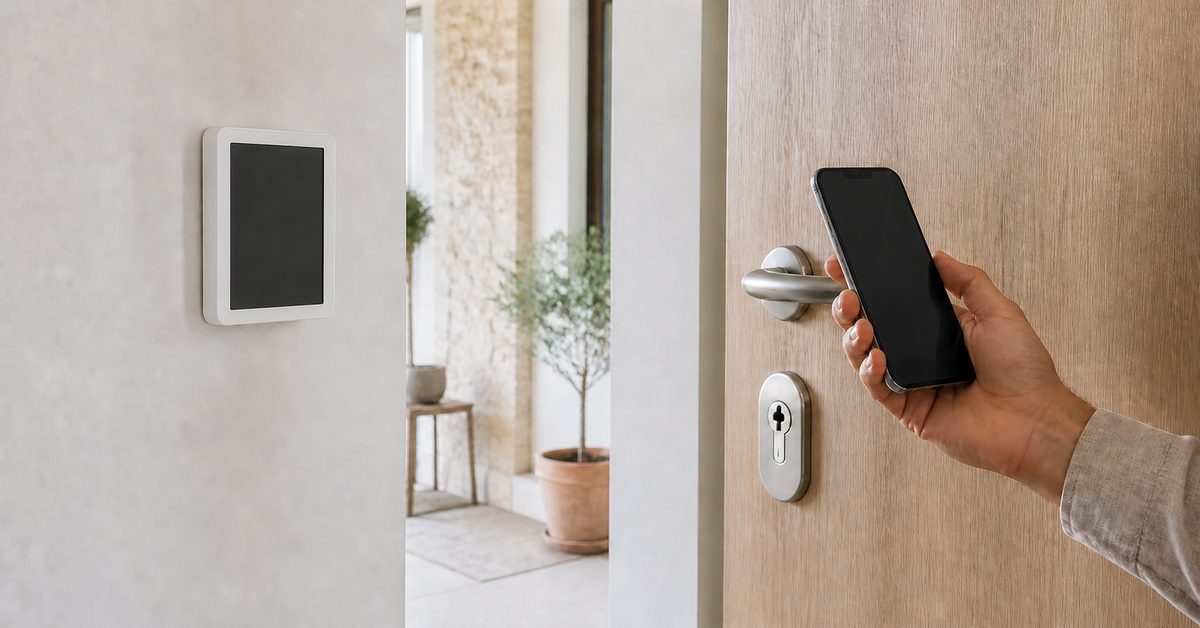
This is the problem DORY is built for. DORY is a smart lock that replaces the euro profile cylinder in your door — the format standard on most modern UK composite and uPVC doors with multipoint locks (older timber doors with a rim night latch or a mortice deadlock are a different format, so checking your cylinder is step one). Once fitted, keys stop being objects and become permissions: you grant a digital key from the app, limit it to the days and hours it is needed, and revoke it the moment an arrangement ends — no locksmith, no recutting, no wondering about copies. Every opening lands in a log with a date and a time, and the mechanical key keeps working throughout, as a permanent fallback rather than a risk you cannot count. It is a one-off purchase, with no subscription.
And to be honest in both directions: DORY is not an alarm. It does not sound a siren, it does not detect intruders, and it does not watch anything — it governs who can open the door and when. The entry history shows who opened the door, and when; on the outdoor side, the LINK hub with the optional sensors can notify you when the gate or garage opens and closes. It complements an alarm rather than replacing one. The two layers do different jobs, which is exactly why they combine so cleanly.
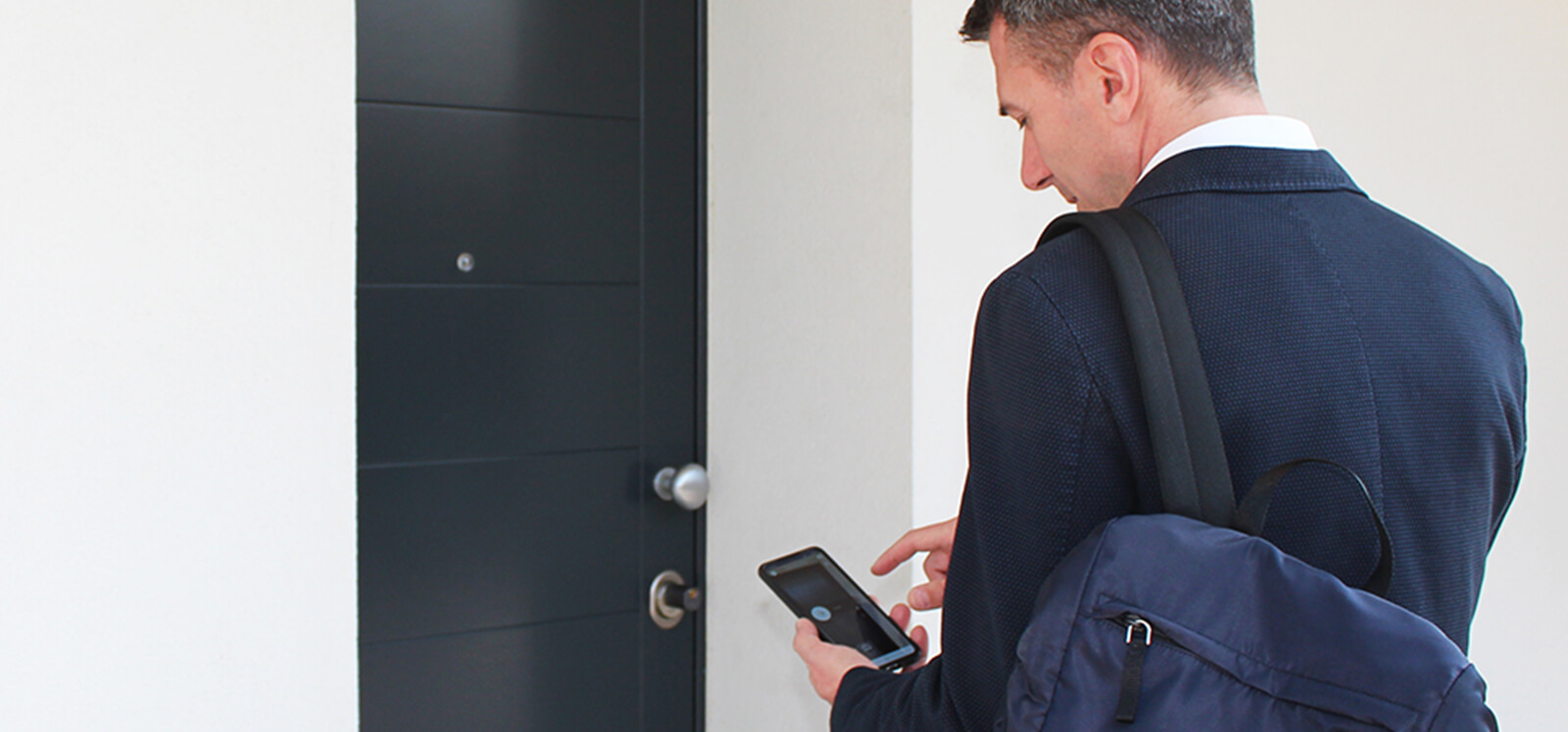
Alarms alert you. But who controls your house keys?
1Control DORY replaces just your door's euro cylinder: open from your phone, grant temporary revocable access and check the entry history. The mechanical key is always available. Check in seconds whether your door is compatible. One-off purchase, no subscription.
299,00€ from 249,00€ VAT included
- 1,500+ reviews on Amazon, Facebook and Trustpilot
- Secure payments
- 2-year warranty
Where we don't reach: what stays true whatever you buy
A neutrality promise cuts both ways, so here is ours. We do not do surveillance: no cameras, no sirens, no monitoring centre — for those, the first half of this guide is the honest map. And no smart device changes the physics of a break-in: burglary is a physical phenomenon, not a digital one. A smart cylinder governs keys; it does not stop a crowbar, and the door, the frame and the glazing still do the resisting. Judge any lock — smart or traditional — first as a piece of metal, and only then as a piece of software. Our comparison of electronic and traditional door locks takes exactly that view, mechanical fallback included.
The empty home and the second home: the external accesses
The third answer from the opening section deserves its own tools. When a house stands empty — a holiday, a second home, a rental between guests — someone still needs to get in: the neighbour who checks after a storm, the gardener, the relative who airs the rooms. And the entrances they actually use are the external ones: the driveway gate, the garage. Handing out remote controls has the same flaw as handing out keys — copies you cannot count and cannot cancel.
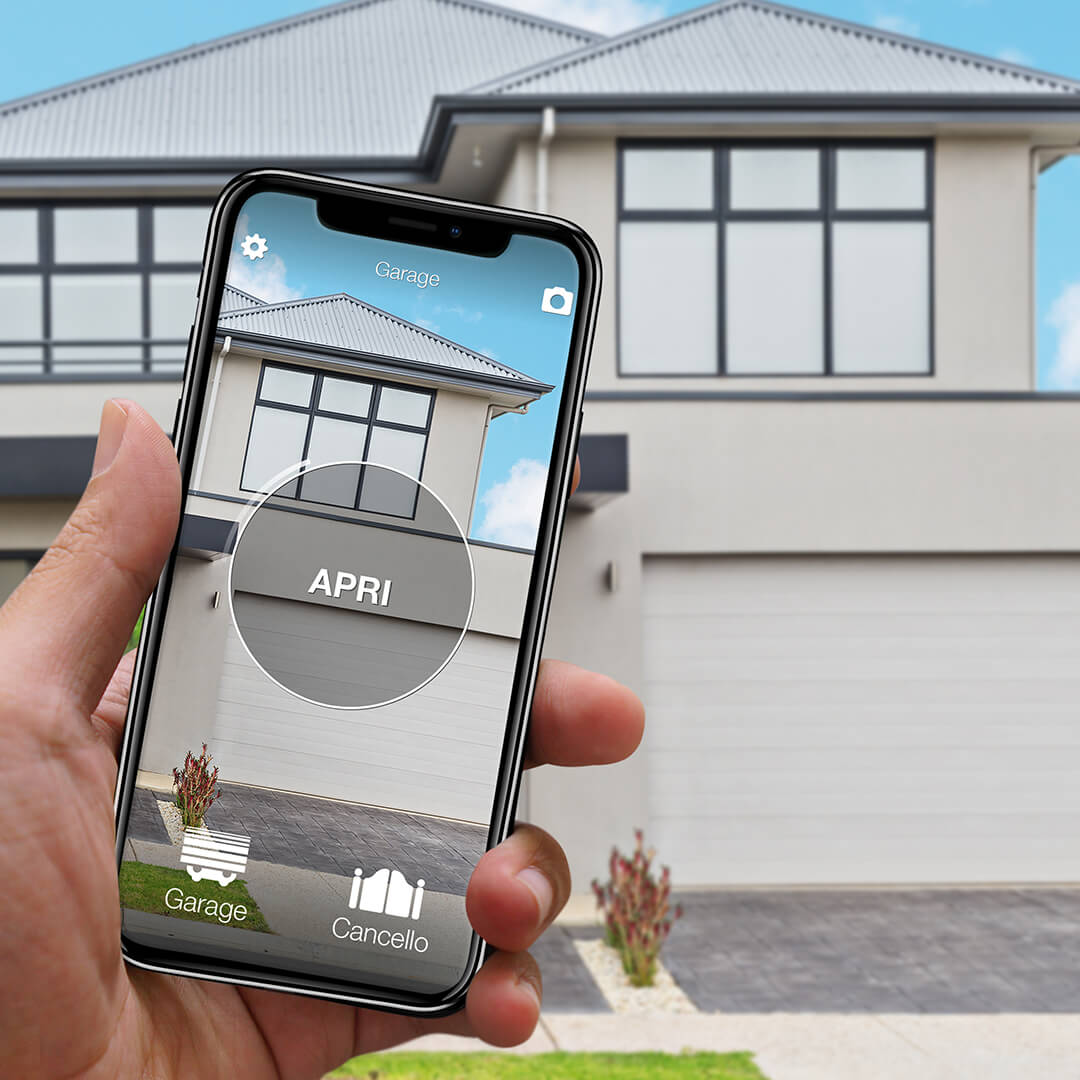
SOLO moves those entrances onto the phone: it connects to the radio-controlled automation you already own — gate, garage door, barrier — exactly as another remote would, rolling code included, with nothing rewired. You share access free of charge by phone number, and revoke it just as easily when the arrangement ends; add the LINK hub and you open from any distance. It is a one-off purchase, with no subscription. For the full setup — second homes, guests, changeovers — the dedicated guide is our article on smart access for holiday lets and second homes.
Combining the layers
Nothing in this guide is either/or. The complete picture for a typical house is an alarm to deter and signal, chosen with the criteria above; sound mechanical protection on doors and windows; and access control to govern the keys — DORY on the front door, SOLO on the gate and garage. The alarm and the access layer share no wiring, no hub and no app, so they cannot interfere with each other; each covers precisely what the other cannot see. That is what an honest map of home security looks like: not one product, but three layers, each doing its own job.
Frequently asked questions
Do burglars avoid homes with alarms?
Interviews with convicted burglars, including research commissioned by UK insurers and police forces, point the same way: most burglars are opportunists who pick the easiest target on the street, and a visible alarm box makes a house a less easy target. It is a deterrent, not a guarantee — an alarm signals a break-in, it does not physically prevent one — and it works best combined with solid door and window hardware and a lived-in look. The determined, targeted burglar is the rare exception, and no single measure stops them.
What is the best security system for a home?
There is no single best system — there is a best fit, and it is found with five criteria. Does mechanical protection of doors and windows come first, before any electronics? Does the alarm cover the actual entry points of your home rather than a standard kit list? Does the response model suit your life — professional monitoring, or alerts to your own phone? Are the running costs stated honestly, subscription included, over several years? And does the plan account for the keys in circulation, which no alarm monitors? A modest system that fits your home beats an impressive one that does not.
Is a DIY security system worth it?
For many homes, yes. DIY home security systems from brands such as Yale, SimpliSafe, Ring and eufy install in an afternoon, cost far less over time than a professionally installed and monitored service, and send alerts straight to your phone. The honest trade-offs: you are the monitoring centre, so an alert that arrives during a meeting or a flight is yours to handle; there is normally no police-response arrangement, which in the UK generally requires a professionally monitored system registered with the police; and the quality of the installation — sensor placement above all — is entirely down to you.
Are smart locks secure?
A good smart lock is as secure as the mechanical cylinder inside it, which is why the cylinder is the first thing to judge. A model such as 1Control DORY replaces the euro profile cylinder in the door and keeps the mechanical key as a permanent fallback, adding what metal keys cannot offer: digital keys you can grant, limit in time and revoke, plus a log of openings. It does not make the door physically stronger, and it is not an alarm — burglary remains a physical phenomenon, and the door hardware still does that job. Our comparison of electronic versus traditional locks covers the question in depth.
The bottom line
Buy in layers, in order. Start with the door and window hardware, because everything else assumes it. Choose the alarm by fit, not by brand: wired or wireless on the state of your walls, DIY or monitored on who you want answering at 3 a.m., and read the plan the way you would read any subscription. Then close the gap the alarm cannot see: know who holds your keys, and put the front door, the gate and the garage under control you can grant and revoke — one-off purchases, no monthly fees. Deterrence, resistance, and key control: three layers, three tools, no blind spot.