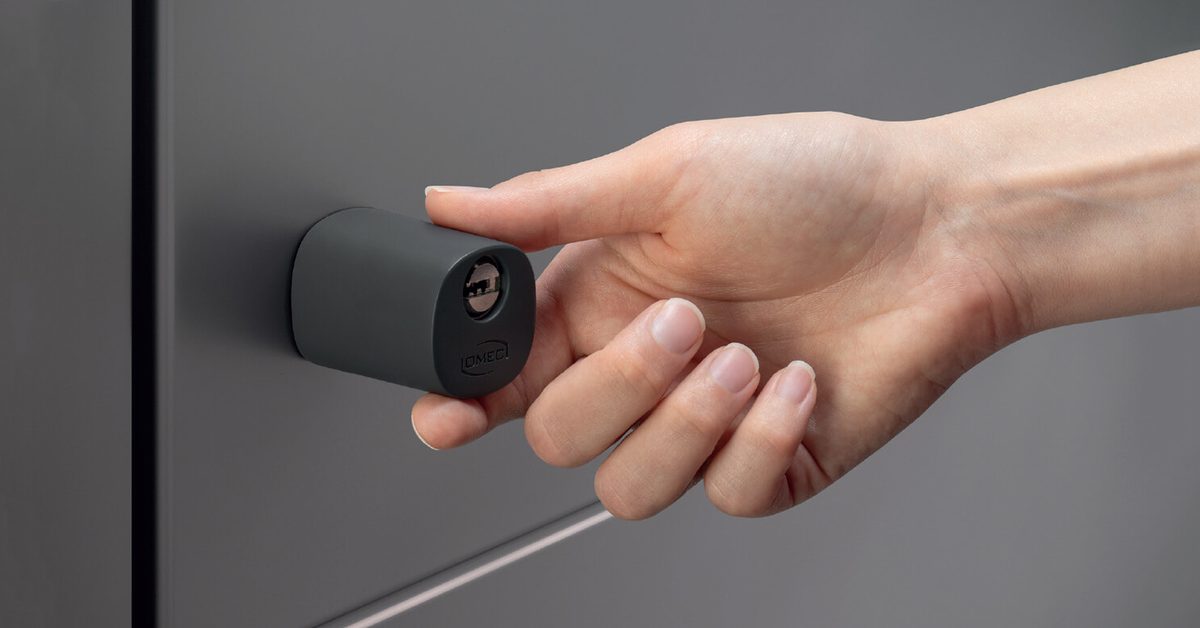
In short: yes, a lever lock can usually be converted to a euro cylinder lock without replacing the door. On most timber doors the lever mortice lock is swapped for a euro profile mortice lock with matching case size and backset, plus handles or escutcheons with a euro cut-out. On security doors with a double-bit lock, many lock makers offer conversion kits for their own models. It is a job for a locksmith or a confident, careful DIYer on internal doors; on front doors, check your insurance first. After the conversion the door has a euro cylinder, and you can also consider a smart cylinder such as 1Control DORY, once compatibility has been checked.
Why convert a lever lock
Lever locks come in two main families: the mortice lever lock found on many timber front and back doors, and the double-bit lock with a long key and two bits, common on continental-style security doors. People convert them for practical reasons:
- lost keys: with a euro cylinder you replace only the cylinder, in minutes, instead of the lock or its levers;
- choice: there is a huge range of euro cylinders with anti-snap, anti-bump and anti-drill protection, restricted keys and keyed-alike options;
- convenience: a short flat key, and the option of a thumbturn on the inside;
- smart options: smart cylinders such as DORY replace a euro cylinder, not a lever lock.
One caution: a good five-lever mortice deadlock is not a weak lock. If your home insurance requires a lock to a specific standard (BS 3621 is often quoted), make sure the replacement meets the same requirement before you convert.
How to tell if you have a lever lock
Look at the key: long, with a shank and one bit (lever lock) or two symmetrical bits (double-bit lock). From outside you see a narrow slot rather than a keyhole-shaped cylinder, and on the door edge there is no screw holding a cylinder. If in doubt, our guide to the euro cylinder lock compares the two side by side.
Before buying parts or asking for a quote, note the size of the existing lock case: the backset (from the front of the faceplate to the centre of the keyhole or spindle), the case depth and height, the faceplate size and the door's thickness. On a security door, note the lock's brand and model too, often stamped on the faceplate.
Two routes: new lock case or conversion kit
New lock case. On most timber doors, the lever mortice lock is replaced with a euro profile mortice deadlock or sashlock of the same size. If case size and backset match, it goes into the existing mortice. You then need a euro cut-out in the door for the cylinder (sometimes the old keyhole has to be enlarged) and escutcheons or handles with a euro hole, ideally a security handle set that protects the cylinder on external doors.
Conversion kit. On security doors with a double-bit lock, many manufacturers sell kits that replace the part reading the double-bit key with a housing for a euro cylinder, while the lock body and the locking bars stay in place. The kit has to match the brand and model of your lock exactly.
For front doors and security doors, have a locksmith or the door manufacturer's service team check the model, the sizes and the parts.

Changing the lock anyway? Make it smart
It's the same job: 1Control DORY replaces just your euro cylinder: open from your phone, with revocable temporary access and the mechanical key always available. Check in seconds whether your door is compatible. One-off purchase, no subscription.
299,00€ from 249,00€ VAT included
- 1,500+ reviews on Amazon, Facebook and Trustpilot
- Secure payments
- 2-year warranty
The conversion, step by step
The details vary from door to door, but the sequence is usually:
- measure: backset, case size, faceplate, door thickness;
- choose the parts: euro profile lock case or conversion kit, a cylinder of the right length, handles or security plate;
- remove: handles and escutcheons, the faceplate screws, then the old lock (on a security door, the inner panel first);
- fit: the new lock case or kit, enlarging the cylinder cut-out in the door if needed;
- fit the handles and the cylinder: fix the cylinder with the faceplate screw, making sure it sticks out only a few millimetres;
- test with the door open: every bolt throw, from outside and inside, with every key; then with the door closed;
- keep the keys and key card together in a safe place.
Testing with the door open is not a detail: if anything catches, you find out before you are locked out.
The state of the door and the cylinder's protection
Converting changes how the lock recognises the key, not how strong the door is. Before you start, check that:
- the door closes without pushing and the bolt throws smoothly into the keep;
- hinges, keep and frame are in good condition;
- the new cylinder is the right length and barely protrudes;
- on external doors the cylinder is protected, by a security handle set or, on security doors, by a steel defender that leaves only the key entrance free.
A door that sticks should be adjusted first: a new cylinder does not fix a warped door, and any lock, mechanical or smart, works badly on a door that rubs.
Cost and time
The cost depends on whether a standard lock case will do or a conversion kit is needed, on the cylinder, the handles and the labour. Two doors that look identical can cost differently because they have different locks. Ask for a written quote listing the lock case or kit, the cylinder (with its ratings and number of keys) and the handles or guard.
Time varies too: on an internal door with a matching case it is quick; on a security door it depends on the parts and on removing the inner panel.
After the conversion: the DORY smart cylinder
Once converted, the door has a euro cylinder, and that cylinder can be replaced with 1Control DORY without drilling or wiring. DORY has two knobs: the electronic knob on the inside, with the batteries (two CR2, about a year) and a small motor, and the mechanical knob on the outside, with the key. From outside the knob spins freely until you enable opening from the app, a smartwatch or the mechanical key; then you turn it yourself. From inside you can always turn the knob. The mechanical key works even with flat batteries; for remote opening and voice control you need LINK.
DORY only comes in after the conversion, and it has to be checked against the resulting set-up: sizes, door thickness and cylinder protection. On that point the rule is clear: if the cylinder is protected by a defender, DORY can only be fitted with the 1Control defender; no other defender is compatible. Discuss it with your locksmith before the conversion. Then run the DORY compatibility check.
Frequently asked questions
Can I convert a lever lock to a euro cylinder without replacing the door?
Usually yes. A euro profile mortice lock with the same case size and backset goes into the existing mortice, with a euro cut-out for the cylinder. On security doors with double-bit locks, the lock maker's conversion kit is the usual route.
How do I install a euro cylinder after the conversion?
Slide the cylinder into the lock with the cam lined up, fix it with the screw on the faceplate and check that it protrudes only a few millimetres. Test every key with the door open before closing it.
How do I know what size lock case I need?
Measure the backset (faceplate to the centre of the keyhole or spindle), the case depth and height and the faceplate size. A replacement euro profile case with matching sizes will fit the existing mortice.
Will converting affect my home insurance?
It can. Some policies require front-door locks to meet a specific standard, often BS 3621. Check your policy and choose a lock case and cylinder that meet the same requirement.
Can I fit a smart lock after the conversion?
Yes, if the set-up is compatible. 1Control DORY replaces the euro cylinder without drilling; with a defender it can only be fitted with the 1Control defender. Compatibility is checked with the DORY check on the 1Control website.
The bottom line
Converting a lever lock to a euro cylinder is a common job that keeps the door in place and makes every future cylinder change easy. What matters is the right lock case or kit for your door, the right cylinder length, good protection for the cylinder and a quick check of your insurance. After that you can stay with a mechanical cylinder or move to a smart one: in that case, the first step is the DORY compatibility check.