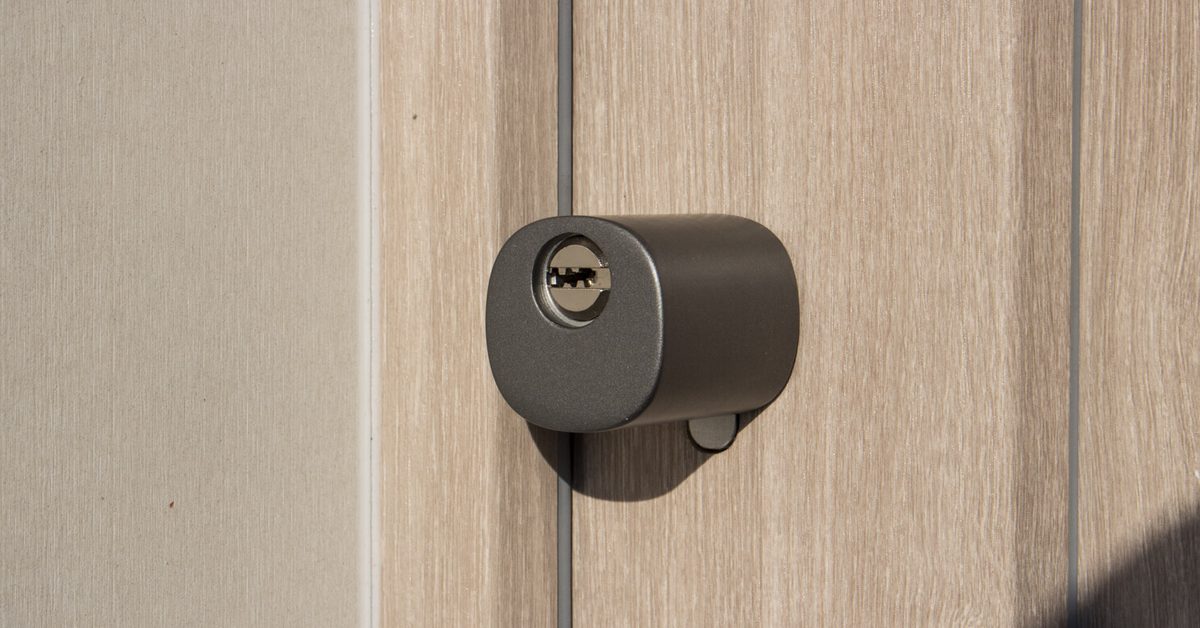
In short: a euro cylinder is measured in two halves, always from the centre of the fixing screw: from there to the outside end (side A) and to the inside end (side B). You write the result in millimetres, for example 40/50. The right size is the one that leaves the cylinder no more than a couple of millimetres proud of the handle plate or cylinder guard, not simply the size of the old one. If you are swapping it for a smart cylinder such as 1Control DORY, the door thickness is measured with the template in the box.
Below: the method step by step, how door furniture and guards change the measurement, how to read the sizes and the most common mistakes.
Euro cylinder sizes: side A and side B
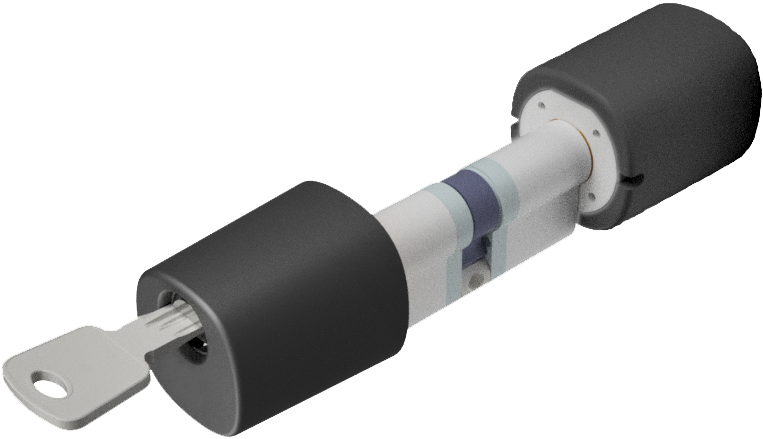
A euro cylinder runs right through the lock. In the middle is the cam, the small lever that works the lock, and below it the threaded hole for the long fixing screw that comes in from the edge of the door. That hole is the reference point for every measurement.
- side A (outside): from the centre of the screw hole to the outside end of the cylinder;
- side B (inside): from the centre of the screw hole to the inside end;
- overall length: the two added together. A 40/50 is 90 mm long.
The two sides are often different. The lock is not always in the middle of the door, and the outside usually has thicker furniture or a security guard. That is why the overall length is not enough: a 70 mm cylinder could be 35/35, 30/40 or 40/30, and fitted the wrong way round it sticks out on one side and sits short on the other.
Sizes usually go up in 5 mm steps per side. If your measurement falls between two sizes, choose the one that brings the outside end closest to flush.
How to measure a euro cylinder step by step
You need a rigid ruler or, better, a pair of callipers, plus paper and a pen. There are two methods and it is worth using both.
With the cylinder still in the door
- open the door and find the fixing screw on the faceplate, level with the cylinder;
- hold the ruler against the edge of the door with zero on the centre of the screw;
- measure to the outer face of the handle plate, escutcheon or cylinder guard on the outside: that is what side A has to cover;
- do the same towards the inside, to the face of the inside handle plate: that is the thickness for side B;
- write both numbers down and note which is outside and which is inside.
With the cylinder removed
Once the screw is out and the cylinder has slid free (key turned slightly so the cam lines up with the body), measure from the centre of the screw hole to each end. That is the size of the old cylinder: compare it with the measurement on the door. If the old one stuck out a long way or sat short, it was already the wrong size and should not be copied.
Thinking about a smart lock?
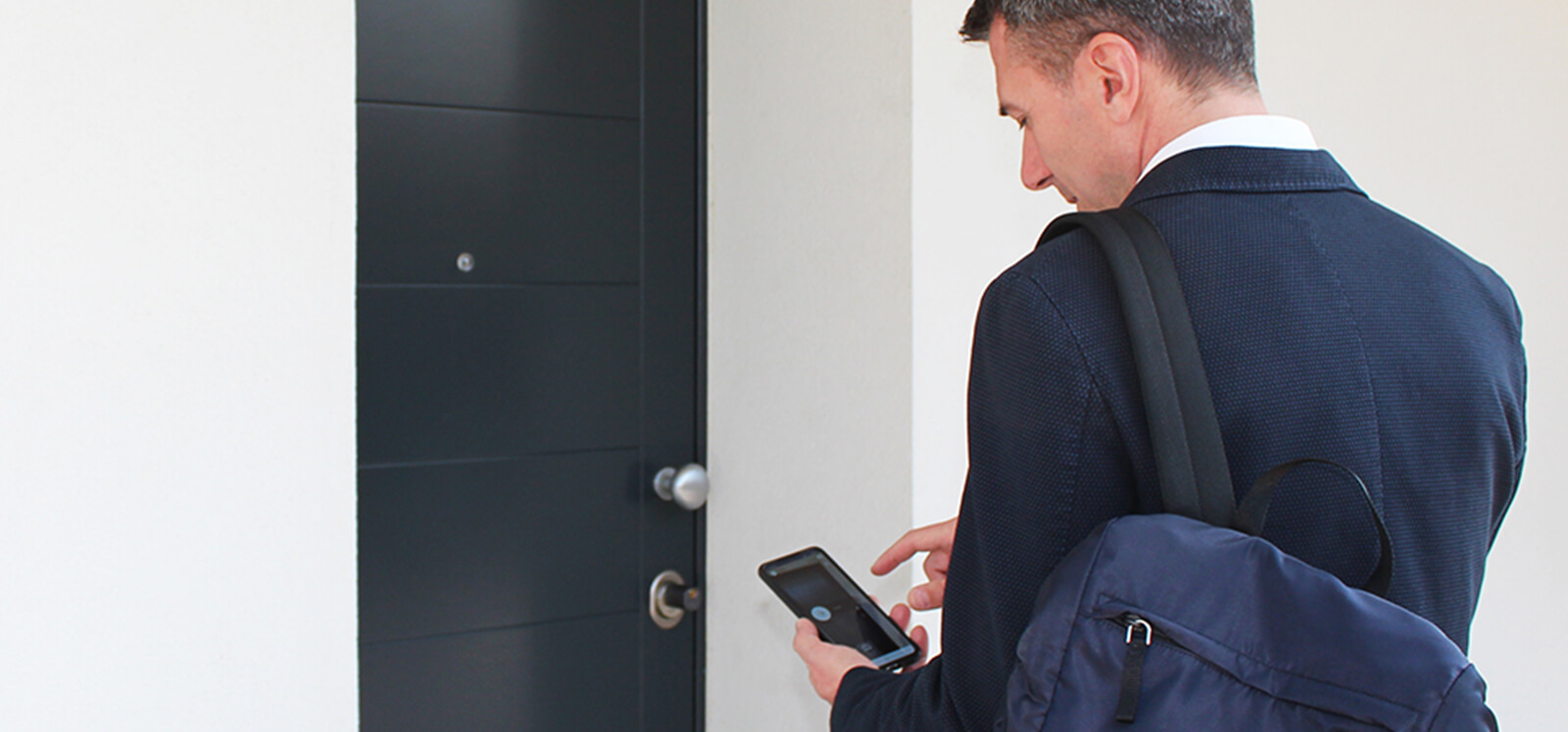
Check whether your door is compatible with 1Control DORY: it replaces your existing euro cylinder with no drilling and no changes to the door, and its mechanical key is always available. One-off purchase, no subscription.
299,00€ from 249,00€ VAT included
- 1,500+ reviews on Amazon, Facebook and Trustpilot
- Secure payments
- 2-year warranty
How far should a euro cylinder protrude? Handles and guards
The rule is simple: the cylinder should sit flush with the outside furniture or protrude very slightly, in practice no more than 2 to 3 mm. A cylinder that sticks out gives a burglar something to grip and snap; one that is too short sits back, the key does not go fully in and turns badly.
- handle plates and escutcheons: measure to their outer face, not to the door leaf or panel. If you are replacing them, measure with the new ones fitted;
- security handles and plates: these add thickness on the outside, sometimes several millimetres, and side A grows accordingly;
- cylinder guard (defender): on security doors a steel guard covers the cylinder and leaves only the keyway free. The cylinder should finish flush with it: measure to its outer face with the guard fitted;
- inside: a few extra millimetres are not a risk, but an inside end that is too long can get in the way of the handle, a door chain or a thumb-turn.
If you add or change a guard, the cylinder size changes too: measure once the guard is decided, never before.
Reading euro cylinder sizes: 40/50, 40x50, A and B
On packaging and in catalogues the size is written in several ways: 40/50, 40x50, 40-50, or A=40 and B=50, sometimes with the overall length (90). They all mean the two distances from the centre of the screw. That is also why euro cylinders are not all the same size, even though the profile is standard.
Watch the order: many manufacturers give the outside first, but not all, and some talk about key side and thumb-turn side. Before ordering, check the product sheet to see which number belongs to which side and compare it with your notes.
Other details you may see next to the size:
- emergency or double-function cylinders: they open from one side even with a key left in the other. This does not change how you measure;
- thumb-turn cylinders: key on one side, turn on the other. The thumb-turn side is measured to the end of the cylinder body, where the turn begins, not to the tip of the turn. Check the manufacturer’s convention anyway;
- half cylinders: a key on one side only, for example on garage doors or meter boxes; only that side is measured.
The most common measuring mistakes
- measuring only the overall length: the most frequent mistake; you always need both sides;
- measuring from the edge of the cam instead of the centre of the screw: it puts you out by several millimetres;
- swapping inside and outside: the cylinder sticks out on the wrong side and the screw will not line up;
- measuring the door without its furniture or guard: the new cylinder ends up sitting short behind the guard;
- copying the old cylinder without checking how far it stuck out;
- looking for a cylinder in a mortice lever lock: there is none; to move to a euro cylinder you first need to convert the lever lock to a euro cylinder.
If you are not sure your door has a euro cylinder, start with the guide to the euro cylinder lock and how to identify it. For the swap itself, see how to change a door lock.
Sizing a smart cylinder: the DORY case
A smart cylinder is chosen with the same logic: it has to match the door thickness on both sides. With 1Control DORY it works like this:
- the box contains a cardboard measuring template: you use it to take two measurements of the door thickness, one inside and one outside;
- based on those two measurements you adjust the length of DORY with the extensions supplied; videos on the 1Control website show how;
- you can also measure before you buy: at the end of the DORY compatibility check you are offered a paper measuring tool to print and cut out.
DORY replaces just the euro cylinder: the mechanical key stays, the outside knob turns freely until you enable opening, and the inside knob always turns. If the door has a defender, DORY can only be fitted with the 1Control defender: no other defender is compatible. With a lever lock, the conversion comes first.
Frequently asked questions
How do you measure a euro cylinder?
From the centre of the fixing screw hole to each end: one measurement to the outside (side A) and one to the inside (side B). Write them in millimetres, for example 40/50. The overall length on its own is not enough.
Are all euro cylinders the same size?
No. The profile is standard, so any brand fits the same lock, but the length of each side varies, usually in 5 mm steps. You need the two measurements from the centre of the screw to choose the right one.
How far should a euro cylinder protrude?
As little as possible: flush with the handle plate or cylinder guard, or a couple of millimetres at most. A cylinder that sticks out is easier to snap or pull; one that is too short sits back and the key goes in badly.
What length euro cylinder do I need for my door?
It depends on the door thickness and on the furniture on each side, so the door thickness alone does not give the answer. Measure from the centre of the screw to the outer face of the furniture on each side and choose the two sides separately.
Can I measure a euro cylinder without removing it?
Yes: hold a ruler against the edge of the door with zero on the centre of the screw and measure to the outer face of the furniture on each side. If you can, check the result against the removed cylinder.
The bottom line
Measuring a euro cylinder takes two minutes and a ruler, but getting it wrong costs you a cylinder that sticks out or turns badly. Remember three things: start from the centre of the screw, measure the two sides separately and go to the outer face of the handles and guards. If you are moving to a smart cylinder anyway, start with the DORY compatibility check and its paper measuring tool.