“Left or right handed?” is the first question you get when ordering a door, a sashlock, lever handles, hinges or a door closer, and the wrong answer means a return. In short: the usual method in Ireland and the UK is to stand on the side the door opens towards you, where you can see the hinges. Hinges on your left means a left-handed door; hinges on your right, a right-handed door. Be careful with hardware from other markets: many US suppliers read the door from the outside, and Italian or French catalogues stand on the push side, so the same door gets the opposite name. Here is the method step by step, the push and pull trap, and which parts really have a hand. If you are thinking about a smart lock such as 1Control DORY, the end of the article covers what changes (very little) and what to check.
Left or right handed door: the usual method
Most Irish and UK suppliers of doors and ironmongery use these three steps:
- stand on the pull side: the side the door swings towards when it opens. For an internal door that opens into a room, that usually means standing inside the room;
- find the hinges: on a standard door they are visible from this side;
- read the side: hinges on your left, the door is left handed; hinges on your right, it is right handed. The handle is on the opposite edge.
A quick check if you are unsure: open the door and stand with your back against the hinge side of the frame. If your left hand is closer to the handle, the door is left handed.
Not every supplier works this way. Some ask you to stand outside the room or the house, and US hardware uses its own codes (LH, RH, LHR, RHR) read from the outside. Always check the diagram on the product page: it is the only thing that counts.
Push side and pull side: the same door from both sides
Hand and swing depend on where you stand. Walk round the door and everything flips:
- from the pull side you open the door towards you and the hinges are on your left: left handed;
- from the push side you push the same door away and the hinges are on your right.
That is why “left handed” on its own is not enough. When you order, write the full description (“left handed, hinges on the left seen from the pull side”) or add a plan view: wall, hinges and an arrow for the swing.
The same door has a different name abroad
- Germany (DIN 107), and in practice Poland, the Netherlands and Hungary, also read the door from the side it opens towards: a left-handed door is “DIN links”;
- Italy reads it from the push side: the same door is called “destra”, right;
- France always pairs side and swing: the same door is “poussant droit” seen from the push side;
When buying from a foreign shop, only the manufacturer’s drawing is reliable.
Thinking about a smart lock?
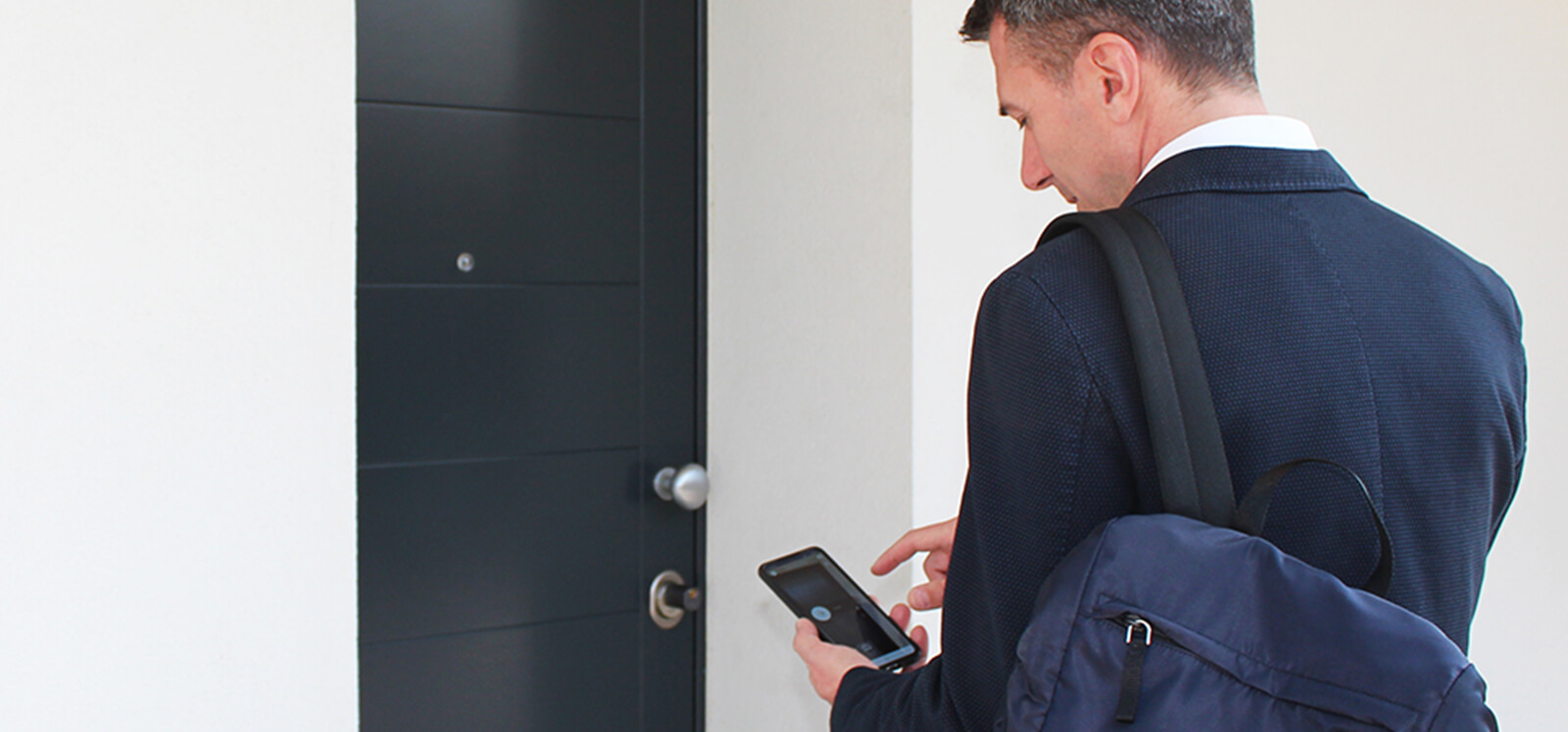
Check whether your door is compatible with 1Control DORY: it replaces your existing euro cylinder with no drilling and no changes to the door, and its mechanical key is always available. One-off purchase, no subscription.
299,00€ from 249,00€ VAT included
- 1,500+ reviews on Amazon, Facebook and Trustpilot
- Secure payments
- 2-year warranty
Why handing matters for locks, handles, cylinders and latches
Not every part of a door is handed. These are:
- the latch: the bevelled bolt that clicks shut when you close the door. The bevel must face the keep as the door closes. On many internal sashlocks and tubular latches it is reversible, but check the model;
- rim locks and nightlatches fixed to the face of the door: usually handed or adjustable for handing;
- multipoint locks on front and patio doors: made for one hand;
- lever handles: most are reversible; some designer levers with a shaped grip are handed;
- hinges and keeps on the frame;
- door closers: fitted differently depending on hand and side.
A euro cylinder is not handed
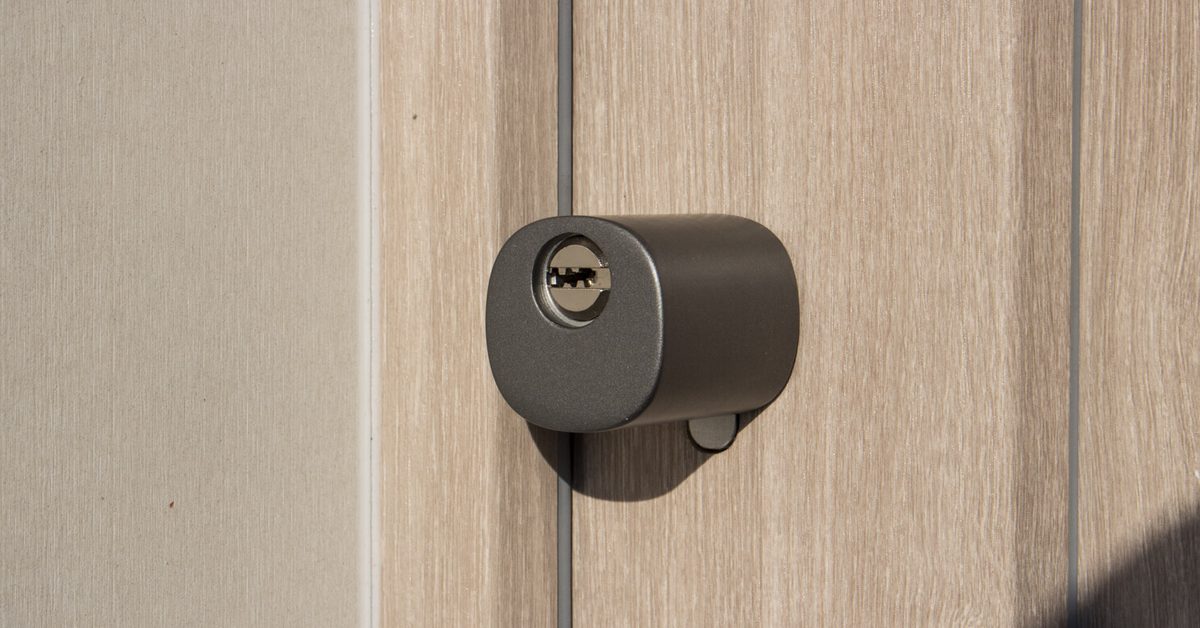
A euro cylinder is the same left and right: one cylinder fits a left- or right-handed door. It does have an inside and an outside, because the two measurements from the fixing screw towards each face can differ. When you replace it, what matters is which side is which, not the handing of the door.
Can you change the handing of a door?
It depends on the door. Many new internal door sets can be hung either way at installation. On a door already fitted, changing the handing means moving hinges and keeps, turning or replacing the lock, and often re-cutting the frame: carpentry work rather than swapping an accessory. If you are buying a new door, think first about the swing: light switches, furniture, radiators and the next door along.
Door handing and smart locks: what to check
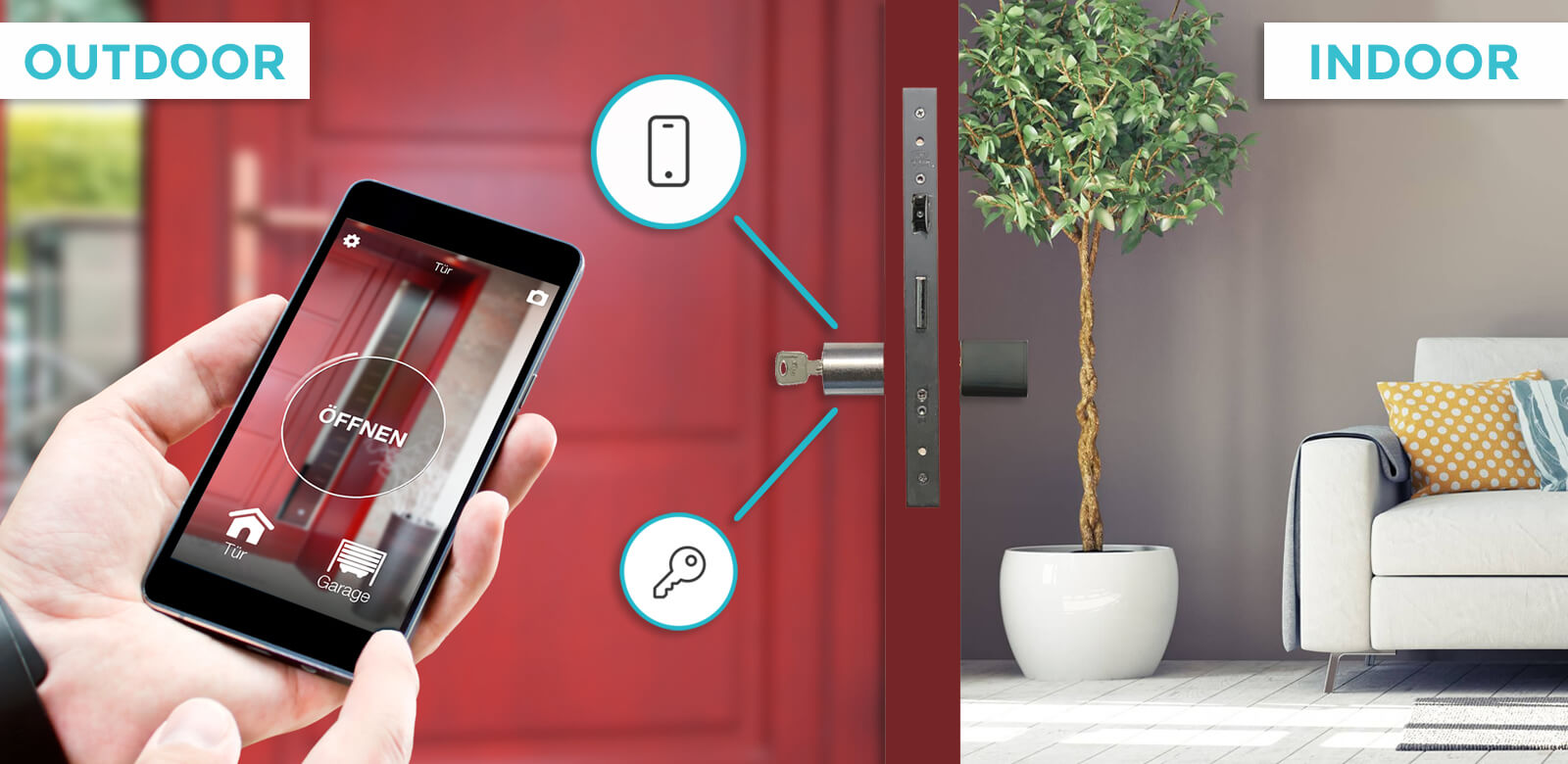
A smart lock that replaces the cylinder, like DORY, does not care whether the door is left or right handed: it takes the place of the euro cylinder and leaves the door, lock and handles as they are. What matters are the two faces:
- the electronic knob goes on the inside: it holds the electronics and batteries, and from inside you can always lock and unlock by turning it, with no phone;
- the mechanical knob with the key stays outside: it turns freely until your smartphone, smartwatch or key enables opening; then you turn it yourself to lock or unlock;
- you measure twice, inside and outside, with the cardboard gauge in the box; the length is adjusted with the extensions supplied.
The DORY compatibility check asks four questions: cylinder type, number of locks, side screw and the distance between the cylinder and the edge of the door, which must be at least 3 cm. On a security door with a cylinder guard (defender), DORY can only be fitted together with the 1Control defender: no other defender is compatible. Every check is explained in smart lock door compatibility.
Frequently asked questions
How do I know if my door is left or right handed?
Stand on the side the door opens towards you, where you can see the hinges. Hinges on your left means a left-handed door, on your right a right-handed door. Check the supplier’s diagram, because some read the door from the other side.
Is a left-handed door left handed from both sides?
No. Seen from the push side, the hinges of the same door are on your right. That is why you should always say which side you are describing, or add a drawing.
Do I need a left or right handed lever handle?
Most lever handles are reversible and fit either hand. Some designer levers with a shaped grip are handed: the product page will say so.
Is a euro cylinder left or right handed?
Neither: the same cylinder fits both. What matters are the two measurements from the fixing screw towards the inside and the outside, which can differ.
Do I need to know the handing to fit DORY?
No. DORY replaces the euro cylinder and its electronic knob goes on the inside. What matters are the cylinder type, the side screw, at least 3 cm between cylinder and door edge and the measurements of both sides.
Conclusion
To tell whether a door is left or right handed you need two things: which side you are standing on and where the hinges are. In Ireland and the UK the usual reading is from the pull side; other markets often use the opposite side, so always add a drawing to an order. Handing matters for the lock, the latch, rim locks, some levers, hinges and closers, not for the euro cylinder. If you want to make the door smart, start from the cylinder: the DORY compatibility check answers in four questions. If you are also changing the lock on an internal door, read the guide to internal door locks.