Most internal doors in Irish homes have a mortice lock or latch fitted inside the thickness of the door: the mechanism and key change, the principle does not. In short: a tubular latch for doors that only need to stay shut, a bathroom lock with thumbturn and emergency release for the bathroom, a lever sashlock where a room needs a key, and a euro profile sashlock for a home office, a let room or anywhere that has to be locked properly. Before buying, measure the backset, centres and forend of the old one. Below are the types, how to recognise them, what to measure and the swap step by step. At the end, honestly: when a smart lock such as 1Control DORY makes sense on an internal door, and when it does not.
Types of internal door lock
Tubular latch
No key: the handle moves the latch and that is it. The usual choice for kitchens, hallways and doors that only need to stay closed.
Bathroom lock
A thumbturn inside instead of a key, and an emergency release on the outside, often with an engaged indicator, that you turn with a coin or a screwdriver.
Lever sashlock
A latch plus a bolt locked with a simple lever key, usually two-lever on internal doors. It locks a room but does not secure it: many internal lever keys are alike and one key often opens several doors. You recognise it by the keyhole under the handle.
Euro profile sashlock
Instead of a keyhole, the profiled opening for a euro cylinder, the same as on a front door. Each cylinder has its own keys and you can change it without touching the lock: the answer for a home office, a let room in a shared house, a records room or a plant room.
There are also magnetic latches and locks for sliding doors, covered further down.
What to measure before you buy
Internal locks look alike, but a few millimetres out and the handles will not line up. Take the old one out and measure:
- backset: from the forend (the plate on the edge of the door) to the centre of the spindle hole. On mortice locks in Ireland and the UK, 44 mm and 57 mm are the common sizes, but measure yours;
- centres: from the centre of the spindle to the centre of the keyhole or cylinder. It varies between models and between lever and euro versions; if it is different, the holes in the door and the handle backplates will not match;
- case depth: the overall depth of the lock body, which has to fit the mortice;
- forend: width, height and shape of the ends, square or radius, so it sits in the existing recess;
- spindle: usually 8 mm square;
- latch direction: the bevel must face the keep. If you are not sure how the door opens, see left or right handed door.
The safest way is to take the old lock to the hardware shop.
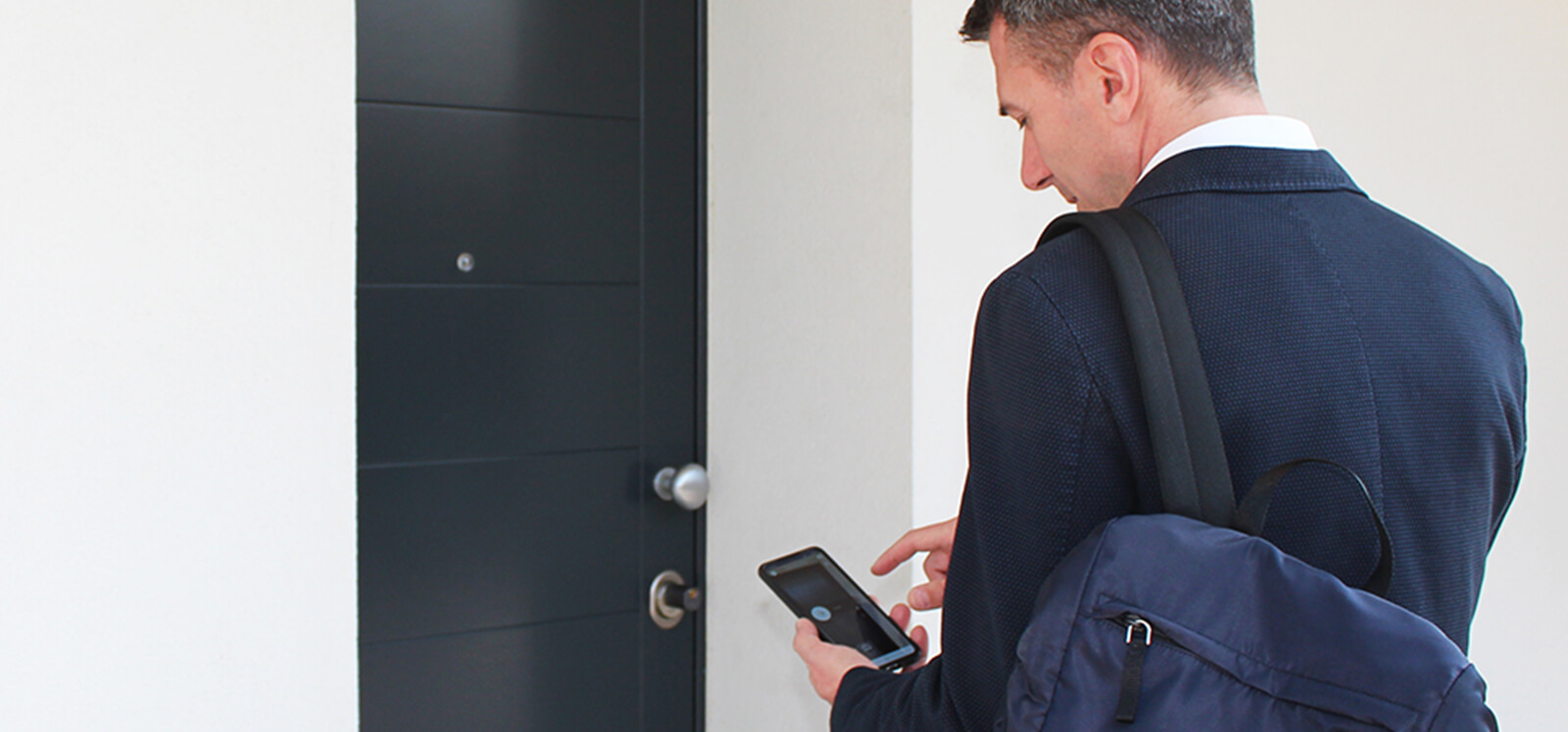
Thinking about a smart lock?
Check whether your door is compatible with 1Control DORY: it replaces your existing euro cylinder with no drilling and no changes to the door, and its mechanical key is always available. One-off purchase, no subscription.
299,00€ from 249,00€ VAT included
- 1,500+ reviews on Amazon, Facebook and Trustpilot
- Secure payments
- 2-year warranty
Replacing an internal door lock, step by step
- Open the door and wedge it.
- Remove the handles: undo the grub screw or the backplate screws and pull out both levers and the spindle.
- Remove the escutcheons or thumbturn plates if separate.
- Undo the forend screws on the edge of the door.
- Pull the lock out: if it is stuck, lever gently from the spindle hole with a screwdriver, without damaging the timber.
- Compare old and new: backset, centres, case depth, forend, latch direction.
- Fit the new lock, screw the forend and refit handles and escutcheons.
- Test with the door open: latch, key or thumbturn; then close it and check the latch drops into the keep without pushing the door.
From lever lock to euro cylinder
You swap the lock and the handle backplates for euro profile versions. If the centres differ, the hole in the door needs enlarging or re-drilling, and a carpenter will do a cleaner job. It is the same idea, on a simpler door, as the guide to converting a lever lock to a euro cylinder on a front door.
Magnetic latches and sliding doors
Magnetic latch
The latch stays inside the door and is pulled out by a magnet in the keep: the door closes quietly and nothing sticks out of the frame. Magnetic versions exist as latches, bathroom locks, lever locks and, on some models, euro cylinder locks. When you replace one, change the magnetic keep too: a magnetic latch will not catch in a standard keep.
Sliding doors
Sliding and pocket doors have no sprung latch but a hook lock that catches the frame. Types, sizes and faults are covered in the guide to the sliding patio door lock, which also deals with internal sliding doors.
A smart lock on an internal door: when it makes sense
To be clear: a bedroom or bathroom does not need a smart lock, a good sashlock or bathroom lock is enough. It makes sense where an internal door really has to stay locked and be opened by several people:
- home office with paperwork or equipment;
- let room in a shared house;
- practice or small office shared with colleagues.
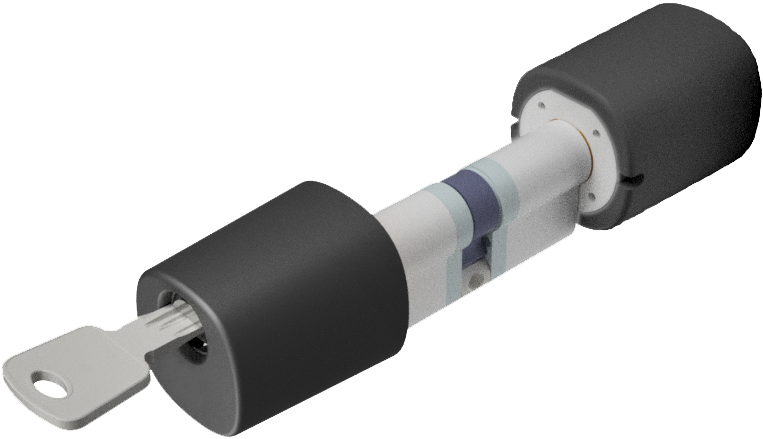
DORY replaces only the euro cylinder, so the internal door needs a euro profile lock. With a lever sashlock or a bathroom lock there is no cylinder to replace: change the lock first, as explained above. Then the usual checks apply: euro cylinder held by the side screw, at least 3 cm between the cylinder and the edge of the door, and both measurements taken with the gauge, because internal doors are thinner than front doors. The DORY compatibility check confirms it in four questions.
On a compatible door the mechanical key stays, from inside you open by turning the knob and from outside you enable opening from your smartphone. The standard version of DORY is for 10 users, and access can be given for a set time, for example to a colleague or a lodger: see the guide to temporary access.
Frequently asked questions
What lock goes on an internal door?
A tubular latch for doors that only need to stay shut, a bathroom lock for the bathroom, a lever sashlock where a key is needed and a euro profile sashlock for an office or a room that has to be locked properly.
How do I measure the backset of a lock?
From the forend, the plate on the edge of the door, to the centre of the spindle hole. On mortice locks 44 mm and 57 mm are common, but always measure your own.
How do I open a locked bathroom door from outside?
Most bathroom locks have an emergency release on the outside with a slot: turn it with a coin or a screwdriver to release the thumbturn.
Can I fit a euro cylinder to an internal door?
Yes, by swapping the lock for a euro profile version and the handle backplates to match. If the centres differ, the hole in the door has to be adapted.
Can DORY be fitted to an internal door?
Only if the door has a euro profile lock and passes the checks: side screw, at least 3 cm between cylinder and edge, and both measurements. With a lever lock or a bathroom lock, the lock has to be changed first.
Conclusion
The right internal door lock depends on the room: a passage door, a bedroom, a bathroom or a room that really has to be locked. Measure the backset, centres and forend of the old lock and check the latch direction. A smart lock only makes sense where several people need to open a room with a euro profile lock: run the DORY compatibility check first.