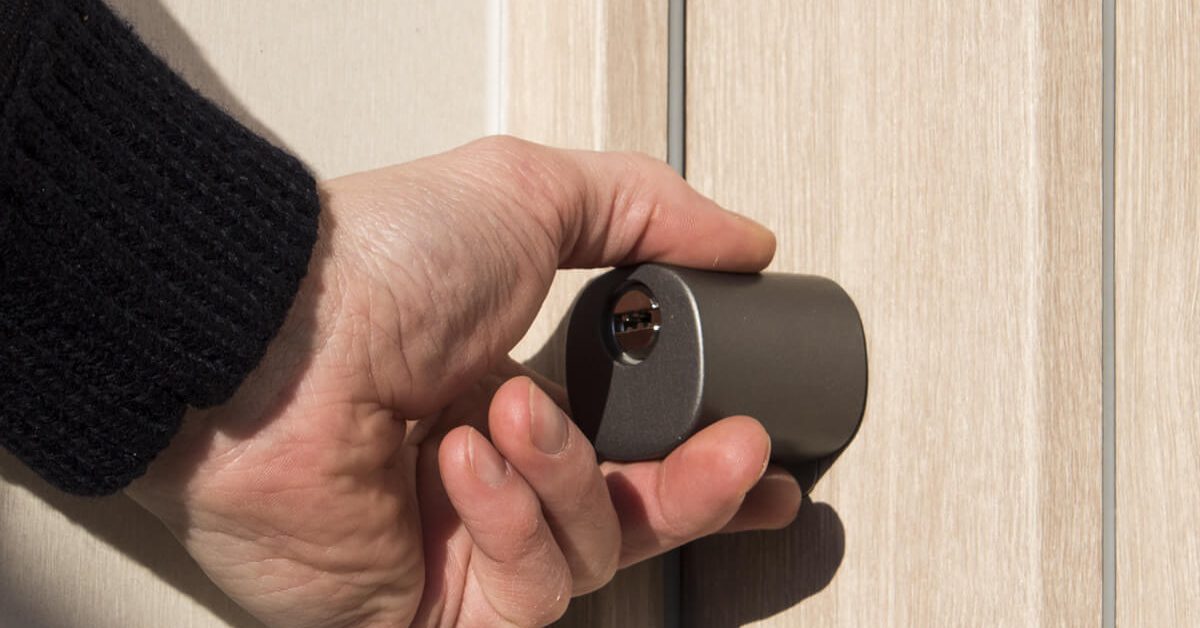
A multipoint door lock secures the door at several points along its edge, all worked by one action: the key, or lifting the handle and then turning the key. In short: almost every multipoint lock has a euro cylinder in the middle, which can be changed on its own without touching the rods and hooks. An electronic cylinder such as 1Control DORY locks and unlocks when you turn its knob; if your door has to be locked by lifting the handle, that part stays manual.
Below: how it is built, the two ways it works, how to tell which one you have, what to do when it jams and what changes with an electronic cylinder.
How a multipoint lock is built
Seen from the edge of the door, a multipoint lock is a long metal strip, the faceplate, hiding the mechanism. The parts are always the same:
- centre case (gearbox): it holds the latch (which keeps the door shut), the deadbolt and the opening for the cylinder;
- rods: they run inside the door up and down and carry the movement to the locking points;
- locking points: hooks, rollers, mushroom cams or bolts that engage the frame. From three, the classic three-point lock, to five or more;
- keeps: the plates on the frame that receive the points; if they are out of line, the door is hard to lock;
- euro cylinder and handle: the cylinder locks, the handle works the latch and, on many doors, the points too.
Spreading the locking over several points makes the door much harder to lever open, because the force is not concentrated in the middle. That is why it is standard on uPVC and composite front doors.
How it works: lift the handle or turn the key
Multipoint locks come in two families, and knowing which one you have answers most questions.
Lever-operated: lift the handle, then lock
You close the door and lift the handle: hooks or rollers come out and pull the door against the seals. Then you turn the key to lock the handle in that position. To open, you do the reverse: turn the key and push the handle down. If you do not lift the handle, the key usually will not turn: that is not a fault, it is how the lock stops you locking it halfway. This is the usual set-up on uPVC and composite doors in Ireland and the UK.
Key-operated and automatic
The handle only works the latch. It is the turns of the key that throw the deadbolt and the extra points: one turn, two, sometimes more. Automatic versions throw the points by themselves when the door shuts, and are usually opened with the key or the inside handle.
Which one do you have?
With the door open, lift the handle: if hooks come out, it is lever-operated. If nothing happens and the points only come out when you turn the key, it is key-operated. If they come out on their own when the door closes, it is automatic.

Thinking about a smart lock?
Check whether your door is compatible with 1Control DORY: it replaces your existing euro cylinder with no drilling and no changes to the door, and its mechanical key is always available. One-off purchase, no subscription.
299,00€ from 249,00€ VAT included
- 1,500+ reviews on Amazon, Facebook and Trustpilot
- Secure payments
- 2-year warranty
Changing the cylinder in a multipoint lock
In almost every modern multipoint lock the cylinder is a euro cylinder held by a screw through the faceplate. So to replace lost keys, upgrade security or move to an electronic cylinder, you do not need to change the lock: rods, hooks and keeps stay where they are.
- open the door and undo the fixing screw in the faceplate, level with the cylinder;
- insert the key and turn it slightly until the cam lines up with the cylinder body;
- slide the cylinder out and measure it from the centre of the screw, inside and outside separately;
- fit the new cylinder in the same sizes, put the screw back and test every turn with the door open, then closed.
On uPVC and aluminium doors the profile is narrow: check that the new cylinder does not stick out too far and that the handle and escutcheon do not catch. If your door has an old lever lock instead, there is no cylinder: it has to be converted to a euro cylinder first.
Common multipoint lock problems
- the handle is stiff to lift: usually the door has dropped or the frame has moved, so the hooks no longer meet the keeps squarely. The hinges or keeps need adjusting; forcing the handle breaks the gearbox;
- the key will not turn: on a lever-operated lock, check that the handle is lifted all the way. If it only turns when you push or pull the door, the points are rubbing on the keeps;
- the handle flops down: the spindle or the gearbox inside the case has broken; a broken gearbox means replacing the mechanism;
- it locks in winter and sticks in summer (or the other way round): uPVC and timber move with heat and damp; a seasonal adjustment of the keeps is often enough;
- one point does not come out: a rod has come loose or is blocked by dirt or rust; clean it and use a lock lubricant, not general oil.
When the gearbox is broken, the multipoint mechanism is replaced: you need the same model or one with the same sizes (length of the faceplate, backset, centres between handle and cylinder, position of the points). That is a job for a locksmith or a window and door installer, while the cylinder you can change yourself.
Multipoint locks and electronic cylinders: what changes, what stays manual
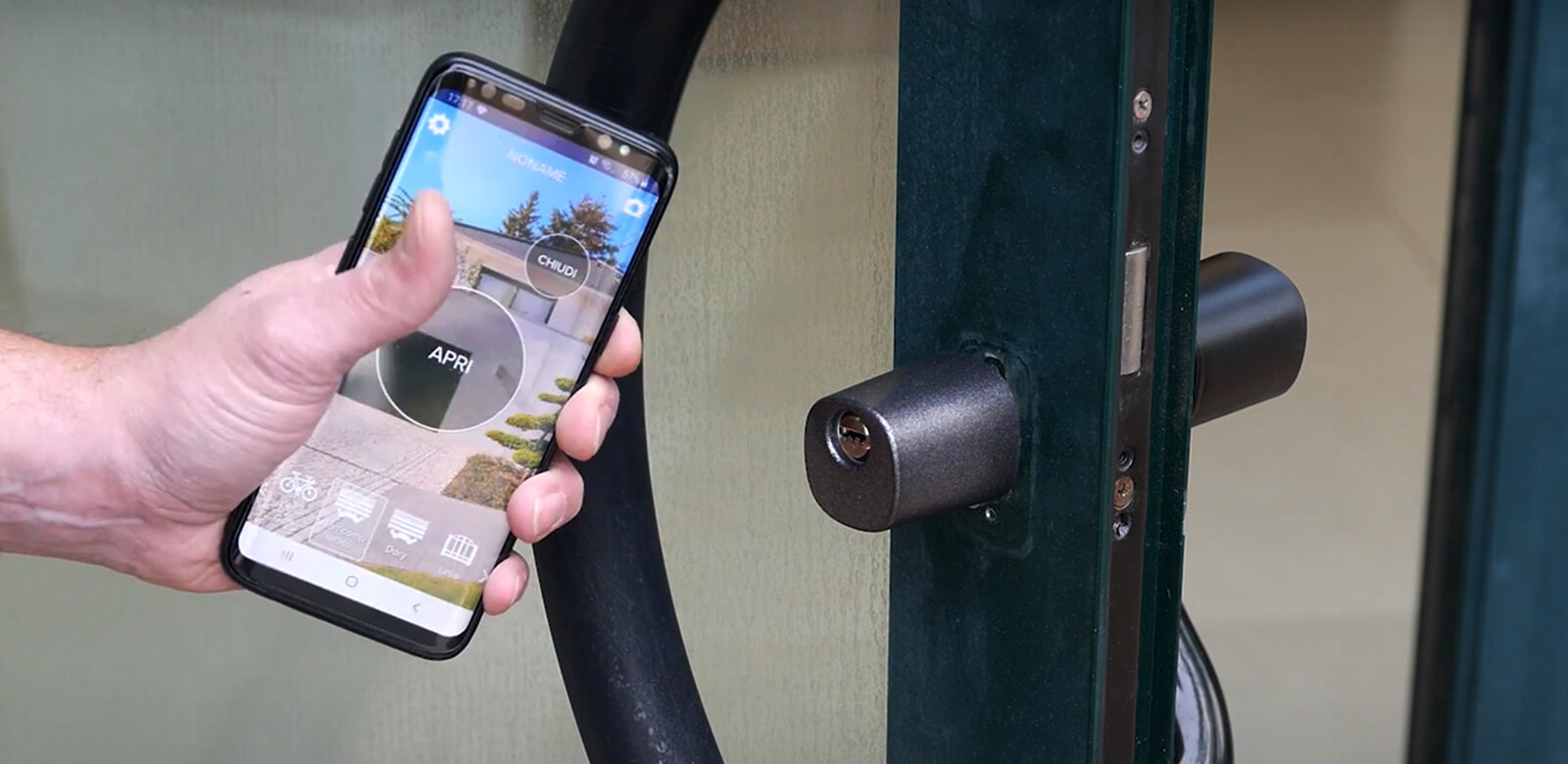
An electronic cylinder leaves the multipoint lock alone: rods, hooks and keeps stay as they were. With DORY it works like this:
- key-operated: from outside you enable opening from your phone or smartwatch and turn the knob, which locks or unlocks like the key and moves the points with it. From inside you turn the knob, no phone needed;
- lever-operated: lifting the handle stays a manual step. First you lift it, then you turn the knob to lock (from outside after enabling it); to get in you enable, turn the knob and push the handle down;
- either way, the door does not open or lock by itself: DORY enables the knob and you do the turning. With LINK you can enable it remotely as well, but someone at the door has to turn the knob and, where needed, the handle.
Before buying, the conditions are the same as on any door: a euro cylinder with the side fixing screw, at least 3 cm between the cylinder and the edge of the door (measure it on narrow profiles) and no cylinder guard; if there is one, you need DORY and the 1Control defender together. Multipoint locks add one rule: if the key is stiff today, fix the door first. The checks are in smart lock door compatibility.
Frequently asked questions
What is a multipoint door lock?
A lock that secures the door at several points along its edge: as well as the central bolt, rods inside the door throw hooks, rollers or bolts at the top and bottom into the frame. It is worked by the key and, on most uPVC and composite doors, by lifting the handle first.
Why do I have to lift the handle to lock the door?
Because your door has a lever-operated multipoint lock: lifting the handle throws the hooks or rollers, and only then can the key lock them. If the key will not turn without lifting the handle, the lock is working as designed.
What are the common problems with multipoint door locks?
A stiff handle, a key that only turns when you push the door, a handle that flops down and points that no longer engage. Most are caused by the door dropping or the keeps being out of line; a broken gearbox means replacing the mechanism.
What is the difference between a 3-point and a 5-point lock?
The number of places where the door locks into the frame. More points spread the force better over the height of the door; three points are common on front doors, five or more on larger doors and security doors. The quality of the door, keeps and cylinder matters as much.
Can I change just the cylinder of a multipoint lock?
Yes, if it is a euro cylinder: undo the screw in the faceplate, slide the cylinder out and fit one in the same sizes. The multipoint mechanism stays as it is.
Does a smart lock work on a multipoint door?
Yes, if it replaces a compatible euro cylinder, as DORY does: it locks and unlocks when you turn the knob. It does not lift the handle: on lever-operated multipoint locks that step stays manual.
Conclusion
You can understand a multipoint lock in a minute: lift the handle with the door open and see what comes out. The cylinder in the middle can be changed on its own, without touching the mechanism, and can become electronic; lifting the handle, where your door needs it, stays your job. To find out whether your door can take DORY, run the compatibility check; to recognise other locks, see the guide to the types of door locks.