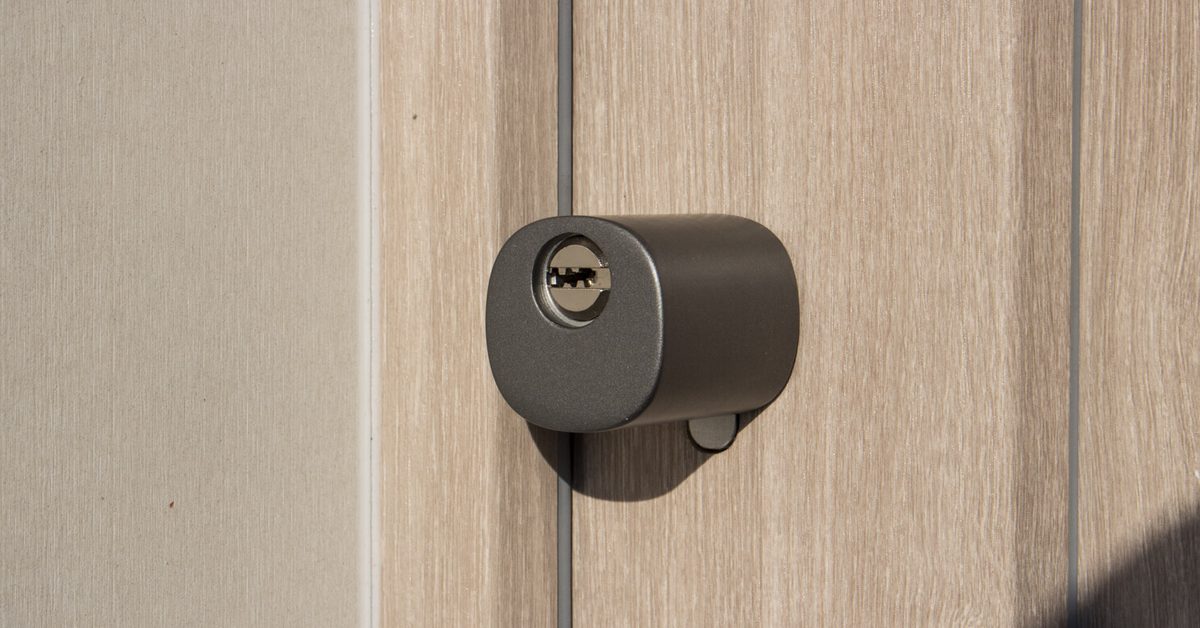
In short: if your key will not turn, start with one simple test: open the door (if you can) and try the key with the door open. If it turns freely and the bolts move in and out, the cylinder is fine: the problem is the door, which no longer lines up with the lock. If it will not turn even with the door open, the problem is in the cylinder or the key: wear, a bad copy, dirt, frost, or a key left in the other side. Either way, do not force it: a forced key bends or snaps. And if the cylinder does need replacing, you can also consider a smart cylinder such as 1Control DORY, which replaces only the euro cylinder.
Below: the checks in order, from the simplest to the most involved, what a stiff key means, and the signs that it is time to call a locksmith or replace the cylinder.
The test that tells the two cases apart: door open or closed
A lock works in two stages: the cylinder recognises the key and turns, then the cam at the centre of the cylinder drives the latch and the bolts into the keeps on the frame. If either stage sticks, the key stops. Testing with the door open separates the two.
- Open the door with the handle, if it is not locked, or have someone open it from inside.
- With the door open, turn the key from the outside as if locking, then unlocking. Watch the bolts come out of and go back into the edge of the door.
- Repeat from the inside, if the cylinder takes a key on that side too.
| What happens | Likely cause | What to do |
|---|---|---|
| Turns fine with the door open, not when closed | Misaligned door, bolts rubbing on the frame, multipoint lock under tension | Push or pull the door while turning, then have the door or keep adjusted |
| Will not turn even with the door open, with any key | Jammed cylinder: dirt, frost, internal wear, key in the other side | Check the inside, clean and lubricate, then call a locksmith |
| Turns with the original key but not with a copy | Badly cut copy or worn key | Use the original and have a new copy cut from it |
| Always stiff, even with the door open | Dirty or worn cylinder | Clean and use a lock lubricant; if no better, replace the cylinder |
If it turns with the door open: the door is out of line
This is the most common case, and the most reassuring one: the cylinder is fine. Over time hinges drop slightly, timber and uPVC expand with heat and damp, seals get compressed. The latch and bolts no longer go straight into the keeps on the frame and they rub: the key meets too much resistance and stops.
How to spot it
- the key turns if you push or pull the door towards you while turning it;
- you can see rub marks or worn paint on the keep or on the bolts;
- the door only shuts if you slam it, or it catches the frame at one point.
uPVC and composite doors with a multipoint lock
On doors with a multipoint lock, common on uPVC and composite doors in Ireland and the UK, you usually have to lift the handle fully before the key will turn: lifting the handle throws the hooks and rollers into the frame. If the key will not turn, close the door firmly, lift the handle all the way and only then turn the key. If lifting the handle takes force, the problem is again alignment.
What to do
For now, push or pull the door while turning the key, without levering on the key itself. Then have the door adjusted: hinges, keeps on the frame or, on high-security doors, the adjusters the manufacturer provides. It is a job for a locksmith or door fitter, often a quick one. Replacing the cylinder will not help here: a new key would stop at exactly the same point.

Changing the lock anyway? Make it smart
It's the same job: 1Control DORY replaces just your euro cylinder: open from your phone, with revocable temporary access and the mechanical key always available. Check in seconds whether your door is compatible. One-off purchase, no subscription.
299,00€ from 249,00€ VAT included
- 1,500+ reviews on Amazon, Facebook and Trustpilot
- Secure payments
- 2-year warranty
If it will not turn even with the door open: cylinder or key
If the key will not turn even with the door open, the problem is in the cylinder or the key. Check these causes in order.
A key left in the other side
If a key is inserted and turned on the inside, many cylinders will not let the outside key turn. Cylinders with an emergency (or clutch) function open even with a key in the other side, but not all have one. Before anything else, remove the inside key or ask whoever is at home to do it.
Worn key or badly cut copy
Try the original key or another copy. If the original works and the copy does not, the cylinder is fine: the copy is inaccurate. This often happens with copies cut from another copy, which add up the errors. Keys used for years wear down and the cuts get rounded: even the original can stop working. Either way, the fix is a new copy cut from the least worn original or, for restricted keys, ordered with the key card.
Dirt and lubrication
Dust, debris and corrosion build up between the pins and jam them. Blow into the keyhole and use a lubricant made for locks and cylinders, as the manufacturer recommends: usually a dry product based on graphite or PTFE. Insert and withdraw the key several times without forcing it to turn. Avoid general-purpose oil and grease: they hold dust and make the problem worse over time.
Frost
In cold weather, moisture inside the cylinder can freeze. Do not force the key and do not pour hot water on the lock, which will freeze again: use a lock de-icer spray or warm the key in your hand and insert it several times, patiently.
Broken or tampered cylinder
If no key turns, the cylinder is clean and it is not freezing, an internal fault is likely: a broken pin or spring, a damaged plug. If you see scratches, dents or tool marks around the cylinder, someone may have tried to break in: do not keep trying, call a locksmith and consider reporting it to the police. If the key is bent or cracked, stop turning it straight away: the next step is a broken key in the lock.
The key turns, but it is stiff: what that means
A stiff key is often an early warning of a jam: it pays to find the cause while the door still opens. The causes are the same, in a milder form.
- Stiff only with the door closed: the bolts are rubbing on the frame; the door or keep needs adjusting.
- Stiff with the door open too: dirty or worn cylinder; try cleaning and a lock lubricant.
- Stiff with one key only: that copy is inaccurate or worn.
- Stiff only at certain times of year: heat and damp swell the door, cold shrinks it; still an alignment problem.
If the key is still stiff with the door open after cleaning, the cylinder is at the end of its life: replacing it now costs less than calling a locksmith to a jammed door.
What not to do
- Do not use pliers or levers on the key: it is the fastest way to bend it or snap it inside the cylinder.
- Do not use cooking oil, grease or glue: they clog the cylinder and can jam it completely.
- Do not dismantle the lock unless you know how to put it back: on a security door, a mistake can leave the door stuck.
- Do not keep using a bent key: replace it with a fresh copy.
When to call a locksmith and when to replace the cylinder
Call a locksmith if you are locked out, if the key will not turn even with the door open after the checks above, if you see signs of a break-in attempt or if the key is bent. Ask for a quote before the work starts: the cost depends on urgency, time of day and the type of door.
Replace the cylinder if it is worn (the key is stiff even with the door open), if it has been tampered with, if it was damaged getting a key out, or if you no longer know how many copies of the key exist. On a door that closes properly the swap is simple: remove the screw on the edge of the door, line up the cam and slide the cylinder out. How to measure and choose the right one is explained in our guide to the euro cylinder lock.
If you replace the cylinder: the DORY option
If the cylinder has to go anyway, you can fit 1Control DORY in its place: a smart cylinder that replaces only the euro cylinder, with no drilling. You open from your smartphone or smartwatch and the mechanical key stays: it works even with flat batteries. From outside the knob turns freely until you enable opening, then you turn it yourself; from inside you turn the knob as usual.
DORY does not fix a misaligned door: you still move the lock yourself by turning the knob, so a door that rubs needs adjusting first. If the cylinder is protected by a defender (an escutcheon guard), DORY can only be fitted together with the 1Control defender: no other defender is compatible. For everything else, see our smart lock door compatibility guide and the DORY compatibility check.
Frequently asked questions
Why will the key only not turn when the door is closed?
Because the latch or bolts are rubbing on the frame: the door no longer lines up with the lock. Push or pull the door while turning the key and have the hinges or keep adjusted. The cylinder itself is fine in this case.
What should I use to lubricate a lock cylinder?
A lubricant made for locks and cylinders, as the manufacturer recommends, usually a dry graphite or PTFE product. Avoid general-purpose oil and grease, which hold dust and eventually jam the pins.
Why will my new key copy not turn?
Because the copy is inaccurate, or it was cut from another copy that was already worn. If the original works, have a new copy cut from the original. Restricted keys need the key card.
What do I do if the key will not turn because of frost?
Do not force it and do not use hot water. Use a lock de-icer spray, or warm the key in your hand and insert it several times until the ice in the cylinder melts.
When should I replace the cylinder?
When the key is still stiff with the door open after cleaning and lubricating, when the cylinder has been tampered with or damaged, and when you do not know how many copies of the key exist. If the key only stops with the door closed, adjust the door first.
The bottom line
When a key will not turn, the open-door test tells you almost everything: if it turns there, the door needs adjusting; if not, look at the cylinder and the key, in the order above. Forcing it solves nothing and can snap the key. If the cylinder is worn out, it is also the moment to choose the new one: start with our guide to the euro cylinder lock and, if you would like to open from your phone too, with the DORY compatibility check.