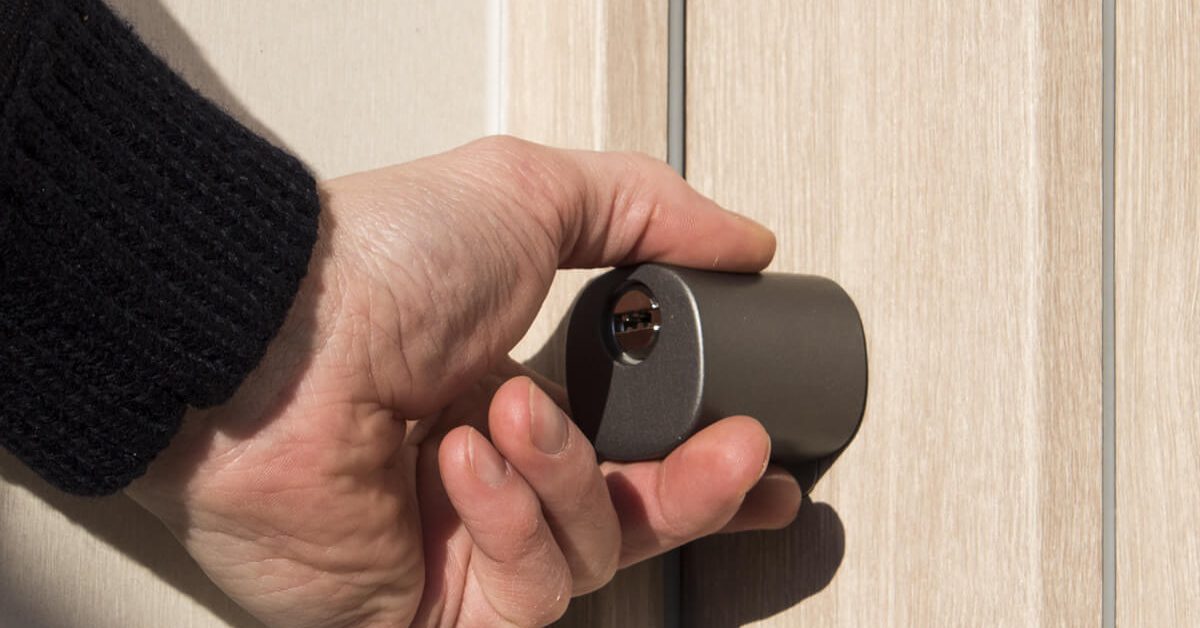
In short: if a key has snapped in the lock, stop: do not turn the piece left inside, do not push in another key and do not use glue. If the fragment sticks out, try to pull it straight out with fine tweezers, with the cylinder in the position where the key goes in. If it is flush or further in, you need a broken key extractor or a locksmith. Once it is out, decide whether the cylinder needs replacing: if it was stiff or got damaged, now is the time, and you can also choose a smart cylinder such as 1Control DORY, which replaces only the euro cylinder.
Below: the steps in order, when to stop and call for help, and what to do afterwards.
What to do straight away (and what to avoid)
- Do not turn the fragment. If the key snapped while you were turning it, the piece inside may have dragged the plug out of position: turning more pushes it deeper or damages the pins.
- Do not push in the other half or another key. You would push the fragment further in.
- Do not use glue, not even superglue to stick the two halves together: if it runs into the cylinder, the pins seize and the cylinder has to be thrown away.
- Look at where the fragment is: sticking out, flush, or out of sight inside. That decides the next step.
- Check for another way in: another door, someone at home who can open from inside, a spare key for the inside.
Keep the piece you are holding: it shows the locksmith how long the fragment inside is, and it can sometimes help to get a new key cut.
How to get a broken key out
Extraction works when the plug is in the insertion position, the one in which the key goes in and comes out. If the key snapped mid-turn, the plug has to be brought gently back to that position first.
If the fragment sticks out
Grip it with tweezers or fine needle-nose pliers and pull straight out, without turning and without levering sideways. A little lock lubricant sprayed into the keyhole can help the piece slide.
If the fragment is flush or inside
You need a broken key extractor: a very thin blade with small hooks that slides along the fragment, catches the cuts of the key and draws it out. They are sold in hardware shops, also in kits. If you have never used one, you risk pushing the piece deeper or damaging the pins: in that case it is better to call a locksmith straight away, who has the right tools.
Magnets and tricks
A magnet usually does not help: many keys are made of brass or other non-magnetic alloys. Improvised fixes with wire, pins or glue on a cocktail stick often make things worse.
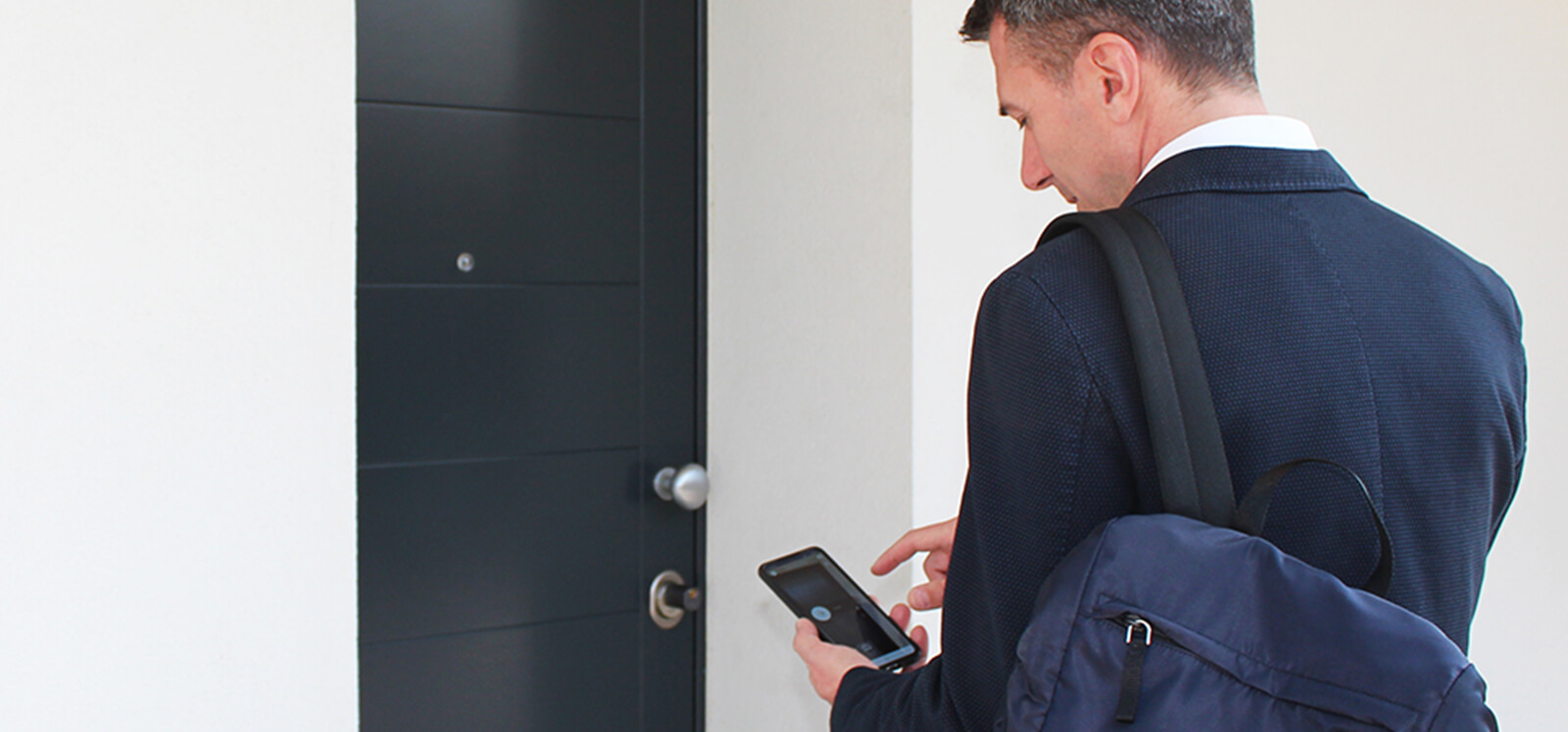
Changing the lock anyway? Make it smart
It's the same job: 1Control DORY replaces just your euro cylinder: open from your phone, with revocable temporary access and the mechanical key always available. Check in seconds whether your door is compatible. One-off purchase, no subscription.
299,00€ from 249,00€ VAT included
- 1,500+ reviews on Amazon, Facebook and Trustpilot
- Secure payments
- 2-year warranty
If the door is locked and you are outside
If the fragment is in the cylinder of a locked door and you have no other way in, call a locksmith. They usually try to extract the fragment without damage first; if that fails, they open the door and replace the cylinder. Ask for a quote before the work starts: the cost depends on urgency, time of day, the door and the cylinder.
If someone is at home, try from inside first: with an emergency (or clutch) function cylinder, the inside key or thumbturn works even with a fragment in the outer side. It also works the other way round: if you are inside and the key snapped in the inner side, someone with a key can try to open from outside.
Do not try to drill or snap the cylinder yourself: on a security door you risk damaging the lock and turning a quick job into a long one.
Why the key snapped
Keys do not snap by chance. The most common causes:
- a stiff lock: if the key had been hard to turn for a while, the extra force bent it and then broke it; the causes are in our guide key will not turn in the lock;
- a worn or cracked key: keys used for years get thinner near the bow;
- a poor copy: a copy cut from soft metal, or from another copy, deforms sooner;
- using the key as a handle to pull the door, or a heavy bunch hanging from it;
- a misaligned door: the bolts rub on the frame and the key works under strain.
If you do not remove the cause, the new key will bend too: adjust the door or replace the stiff cylinder.
After extraction: a new key and the cylinder
Do not reuse the broken key, not even glued. Use a spare and have a copy cut from the original. A key cutter can sometimes make a copy by putting the two pieces together, but it is not guaranteed and depends on the type of key; restricted keys need the key card.
Replace the cylinder if the key is stiff or jams after extraction, if the cylinder was damaged getting the piece out, if the locksmith had to open it or if you have no spare keys left. On a door that closes properly the swap is simple; sizes and how to choose are in our guide to the euro cylinder lock.
If you replace the cylinder: the DORY option
If the cylinder needs replacing, you can fit 1Control DORY in its place: a smart cylinder that replaces only the euro cylinder, with no drilling. You open from your smartphone or smartwatch and the mechanical key stays, which also works with flat batteries. It is not a repair for a broken key and it does not make the door immune to mechanical faults: it is a new cylinder, with digital opening on top.
If the cylinder is protected by a defender (an escutcheon guard), DORY can only be fitted together with the 1Control defender: no other defender is compatible. For everything else, see our smart lock door compatibility guide and the DORY compatibility check.
Frequently asked questions
Can I get a broken key out myself?
Yes, if the fragment sticks out: pull it straight out with fine tweezers, with the cylinder in the insertion position. If it is flush or inside, you need a broken key extractor; if you have never used one, call a locksmith so you do not damage the cylinder.
Does glue help to remove a broken key?
No. Glue can run into the cylinder and seize the pins: then the cylinder has to be replaced. Tweezers, an extractor or a locksmith are the better options.
Can a copy be made from a broken key?
A key cutter can sometimes make one by putting the two pieces together, but it is not guaranteed. It is better to start from a spare key. Restricted keys need the key card.
Do I need to replace the cylinder after a key snaps?
Not always. Replace it if the key is stiff or jams after extraction, if the cylinder was damaged or opened by a locksmith, or if the key snapped because the cylinder was already stiff.
Why do keys snap in locks?
Usually because of a stiff lock, a misaligned door, a worn key or a poor copy, or because the key was used as a lever. If you do not remove the cause, it will happen again.
The bottom line
With a broken key in the lock, the rule is not to make things worse: no turning, no glue, no other keys. If the piece sticks out, pull it straight out; if it is inside, use an extractor or call a locksmith. Then work out why it snapped: if the cylinder was stiff or got damaged, replacing it prevents the next jam. If you are choosing a new cylinder, our guide to the euro cylinder lock helps with sizing and the DORY compatibility check tells you whether you can open from your phone too.