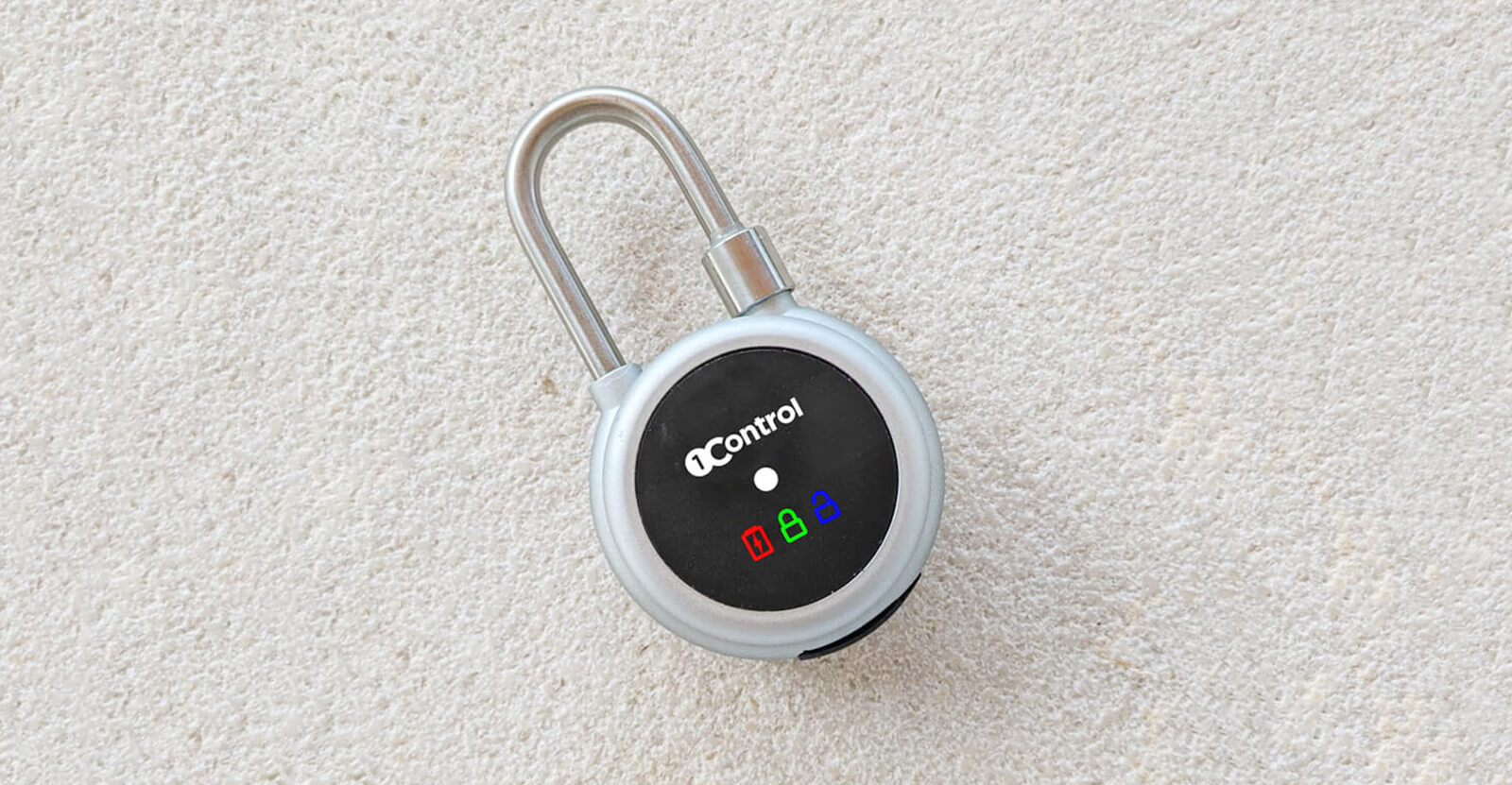
In short: a smart padlock is a padlock that opens with a digital authorisation — a smartphone over Bluetooth, a code, an RFID tag or a fingerprint — instead of a key. It pays off when you need to give, limit or take back access without handing out copies of a key: side gate, storage unit, bike shed, locker, holiday home. It is never stronger than its body and shackle: electronics do not make a padlock unbreakable. This guide compares the types, gives the buying criteria, explains what happens when the battery runs flat and places our own Bluetooth padlock, 1Control LOCO, honestly among them.
What a smart padlock is and how it works
Mechanically nothing changes: a body and a steel shackle that locks into it. What changes is the part that releases the shackle. Instead of a cylinder turned by a key, a small electric mechanism unlocks when it receives a valid authorisation — over Bluetooth from an app on a smartphone or smartwatch, with a code, an RFID/NFC tag, a fingerprint, or over Wi-Fi to open from afar. «Electronic padlock» often means a code or tag model with no app; «Bluetooth padlock» or «app-controlled padlock» assumes a smartphone.
Compared with a key, access becomes an authorisation that you grant, limit in time and revoke, with a log of who opened. The mechanical part does not change — and that is the part bolt cutters and angle grinders attack.
Bluetooth, code, RFID, fingerprint, Wi-Fi: the types compared
| Type | How it opens | Strengths | Limits |
|---|---|---|---|
| Bluetooth (app) | Smartphone or smartwatch a few metres away | No network needed on site, shares and revocation in the app, opening log, low power use | Needs a charged phone or watch; an app to install |
| Code (keypad) | Combination typed in | No phone, works for guests without an app | Code can be watched and stays the same; no per-person log; exposed keypad |
| RFID / NFC (tag) | Tag held to the lock | Fast, many users | Tags to hand out and collect; few time windows |
| Fingerprint | Finger on the sensor | Nothing to carry | Sensor sensitive to cold, wet fingers, gloves; users enrolled in person |
| Wi-Fi / 4G | Over the Internet | Opening from anywhere | Very high power use; needs a network where the lock hangs |
Bluetooth dominates among portable padlocks because it asks nothing of the place where the lock hangs: no router, no SIM, the phone and the lock talk directly at 5-10 metres. A code is still unbeatable for the guest who will never install an app; a tag suits places where many people open often; a fingerprint is the type that suffers most outdoors. Wi-Fi lets you open from afar, but the radio drains power and needs coverage at the exact spot of the lock, which is rare in a basement or on a garden gate: if remote opening matters, a Bluetooth padlock plus a hub at home is the better design.
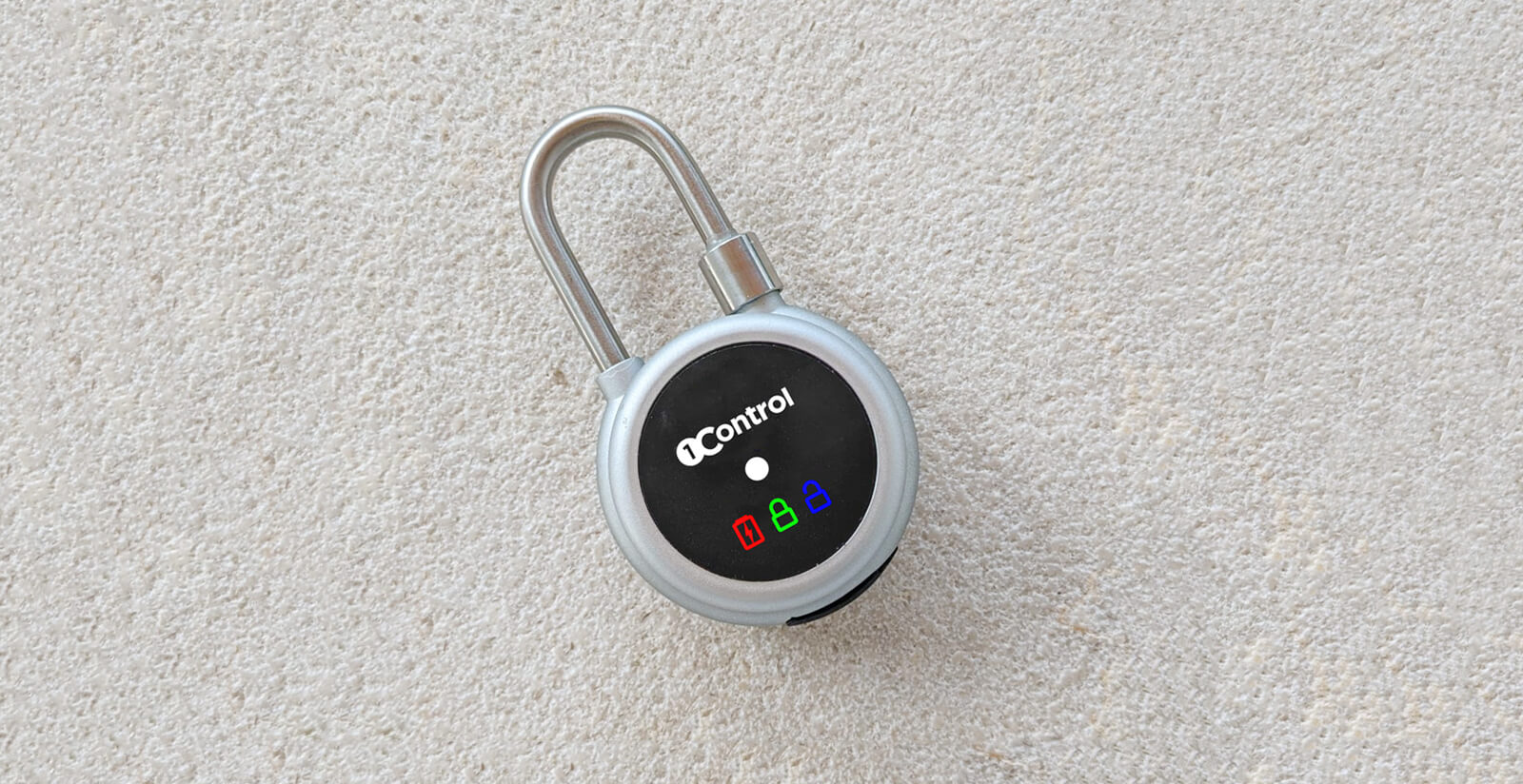
A padlock you open from your phone
1Control LOCO is the keyless Bluetooth padlock: share access only with the people you choose, one-off purchase, no subscription.
99,00€ 89,00€ VAT included
- 1,500+ reviews on Amazon, Facebook and Trustpilot
- Secure payments
- 2-year warranty
The buying criteria that matter
Mechanical strength: shackle, body, fixing
The first criterion has nothing digital about it: diameter and material of the shackle (hardened or stainless steel), material of the body, open or protected shackle. For padlocks the European reference is the EN 12320 standard, which grades padlocks by resistance, together with whatever your insurer requires: a smart padlock that does not reach that grade does not replace it. Weight matters too if you carry it every day.
Weather resistance and temperature
A padlock on a gate or a storage unit stays outside all year. IP67 means dust-tight and able to survive temporary immersion, so driving rain and snow are fine. Check the operating temperature range as well, especially for the battery in frost. A sealed Bluetooth body copes better than a keypad or a fingerprint sensor, which have to be exposed.
Battery and charging
A replaceable coin cell, or a lithium battery recharged over USB-C. Compare the number of openings and the standby time per charge, then ask two questions: does the app warn you before it runs flat? and what happens at zero? Depending on the model: a mechanical emergency key, contacts to power it from outside, or recharging by cable before you can open it again.
Sharing and revoking
This is the whole point of a smart padlock. Can you invite someone with just their phone number? Limit access to dates, days of the week and hours? Revoke it remotely? Are extra users free? Does the log show who opened and when?
And if your phone is flat?
With a Bluetooth-only padlock, no charged phone means no opening — unless there is another way in: a smartwatch with its own app, a second authorised person, or a backup keypad on hybrid models. Choose by use: the watch for the swimming pool locker, the second person for a shared storage unit.
How secure is a smart padlock, really?
On the physical side, a padlock is almost never attacked through its electronics: it is attacked with bolt cutters, a grinder, a lever on the shackle — or through the hasp it hangs from, often the real weak point. A smart padlock is exactly as strong as its shackle, body and fixing. If your insurer or a set of rules requires a certified grade, buy that grade, smart or not.
On the electronic side, serious models encrypt the exchange between phone and padlock; a code, by contrast, can be read and does not change. But a smart padlock is not an alarm: it does not detect an attack and warns nobody — for the house, read how to protect your home from burglary.
When a smart padlock is worth it
- Side gate and secondary entrances: the gardener on Tuesdays, the courier while you are on holiday, each with their own time slot.
- Storage unit, cellar, bike shed: in a block of flats or at a guest house — see the guide to secure bike storage for guests.
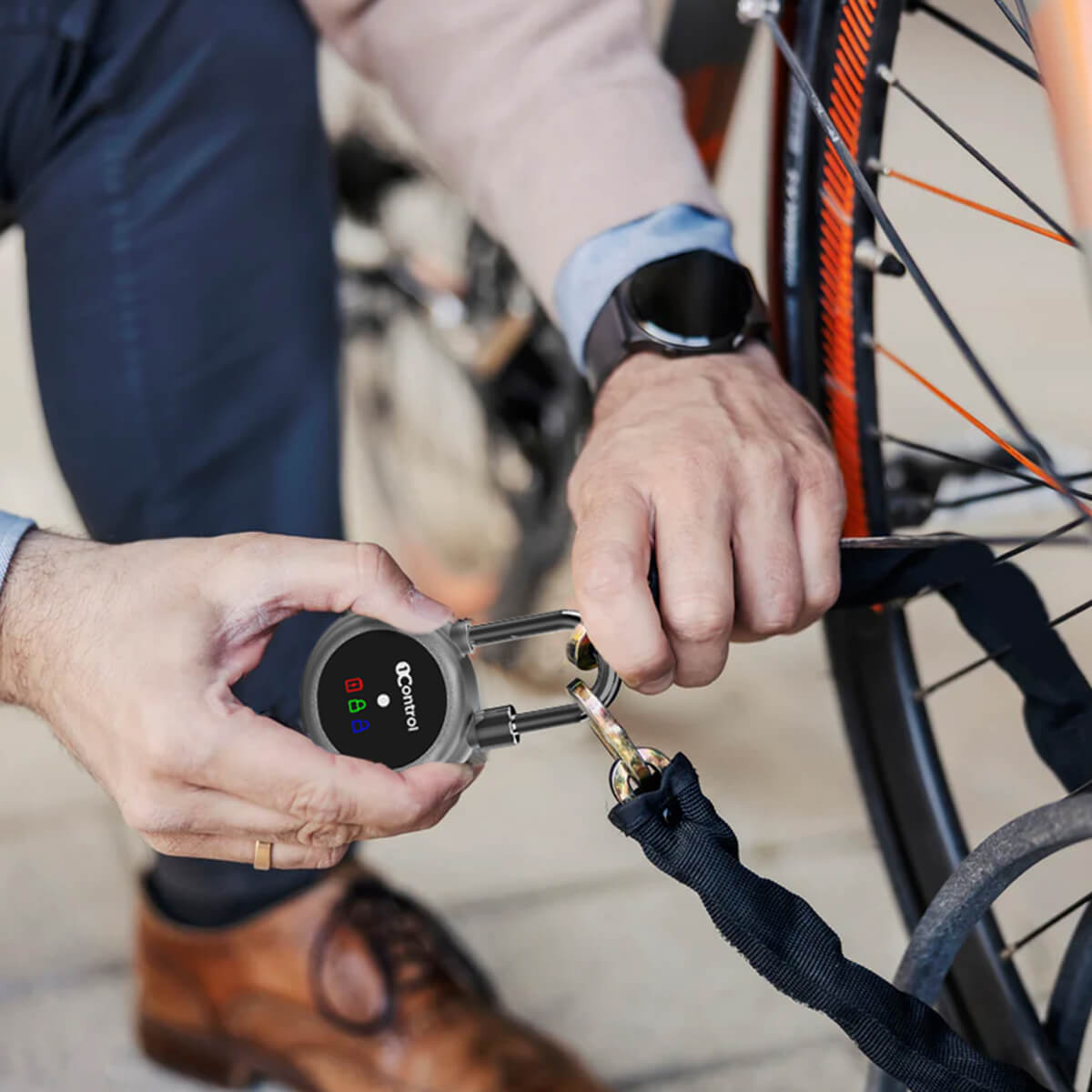
- Bike, e-scooter, moped: no more hunting for the key, with the caveat of the grade your insurer asks for.
- Gym or swimming pool locker: nothing to carry into the pool if the padlock opens from your watch — see how to choose a gym locker padlock with no key or code.
- Holiday home: gate, shed or outbuilding that a tradesperson has to open while you are away. For the front door you need a smart lock, not a padlock.
- Short lets: bike room or garage open only for the length of the stay, in the spirit of the alternatives to key lockboxes.
Fingerprint padlock or app padlock: what changes
The fingerprint padlock is one of the most searched-for types, and it has a real advantage: it opens with a finger, with no phone and no code to remember. For one or two regular users it is convenient. The differences from a padlock that opens from an app lie elsewhere, and they matter as soon as more than one person uses it:
- Adding someone: with a fingerprint, the person has to stand at the padlock to enrol their finger. With the app you invite them with their phone number, even from afar.
- Removing access: with a fingerprint you delete the finger on the padlock, the way the model allows. With the app you revoke the share with a tap, or create it from the start with an end date, days and hours, so it expires on its own.
- Knowing who opened: the app keeps a log of openings; a fingerprint padlock only does if the model also has an app.
- Wet or cold fingers, gloves: the sensor may need several attempts, which you notice at the pool or in winter. A phone or a watch does not depend on your finger.
- No phone on you: here the fingerprint wins. With a Bluetooth padlock the alternative is a smartwatch, if the model has a watch app, or another authorised person.
- Battery: both are electronic. Check how they charge and whether they warn you before they run flat.
1Control LOCO has no fingerprint reader. It opens from the 1Control app on your smartphone or from an Apple Watch or Wear OS smartwatch, with free time-limited shares and a log of openings. If you want a padlock that opens with your finger, LOCO is not the right one; if you need to give and take back access, that is what it is made for.
1Control LOCO in detail: what it does and what it does not
1Control LOCO is our Bluetooth smart padlock.
- Bluetooth LE, no Internet: no SIM, no Wi-Fi. Typical range of 5-10 metres depending on the smartphone; reinforced concrete and metal doors weaken the signal.
- Reinforced aluminium body, stainless steel shackle; IP67, from -20 °C to +50 °C, unaffected by rain, snow or direct sun.
- Built-in lithium battery, rechargeable over USB-C: more than 500 openings and over 180 days of standby per charge; the level shows in the app, which warns you when it is running low. When it is flat, you recharge it over USB-C.
- Free 1Control app for iOS and Android, no subscription — the same app as the SOLO gate opener and the DORY smart lock.
- Opening from your watch: Apple Watch and Wear OS, without the phone. Garmin, Huawei and Amazfit watches are not compatible.
- Free, revocable shares: invite by phone number, choose dates, days and hours, revoke at any time even remotely; log of openings. Up to 10 users; more can be purchased from the app.
- Remote and voice, as an option: with the 1Control LINK hub, connected to your home network over 2.4 GHz Wi-Fi or Ethernet and placed within about 25 metres, LOCO opens remotely and with Alexa and Google Home. LOCO stays a Bluetooth padlock: the hub is the bridge.
- Encrypted communication between smartphone and padlock.
What LOCO is not: an alarm, or a certified high-security padlock — where a contract or a set of rules requires an approved grade, you need the approved padlock. Its ground is shared, revocable access: gate, shed, storage unit, locker, and the everyday bike or scooter.
Frequently asked questions
What is the most secure padlock?
There is no single answer. A padlock's security is measured first of all by its shackle, body and fixing; the EN 12320 standard grades padlocks by resistance, and that grade, together with your insurer's requirement, should guide the purchase when security comes first. The smart part adds control over who opens, not mechanical strength.
Can a smart padlock connect to Wi-Fi?
Wi-Fi padlocks exist, but the radio drains batteries within weeks or needs a cable, and you need Wi-Fi coverage at the exact spot of the padlock, which is rare in a cellar or a garden. The common approach is a Bluetooth padlock plus, to open remotely, a hub at home that relays the commands — which is what LINK does with LOCO.
What happens if a smart padlock's battery runs flat?
It depends on the model, and it is worth checking before you buy: a mechanical emergency key, contacts for external power, or recharging by cable. On LOCO the charge level shows in the app, which warns you when it gets low; one charge covers more than 500 openings, and if the battery is flat you recharge it with a USB-C cable.
Can you open a smart padlock without a smartphone?
With a Bluetooth padlock, opening goes through an authenticated device: the smartphone, or a smartwatch when the model has its own watch app. Code, tag and fingerprint padlocks do without a phone, with the limits described above. With LOCO, an Apple Watch or a Wear OS smartwatch opens it without the phone; otherwise another authorised person opens it with theirs.
Does LOCO have a fingerprint reader?
No. LOCO opens from the 1Control app on your smartphone or from an Apple Watch or Wear OS smartwatch. Other people get access through a share in the app, even remotely and with dates and hours, and you revoke it whenever you like.
Conclusion
A smart padlock does not replace the strength of a good padlock: it adds what a key cannot do — give, limit and take back access. Choose the mechanics and weather resistance for the place first, then the way it opens for the people who will use it. For shared access with no network on site and no subscription, LOCO is made for exactly that — and it tells you where it stops.