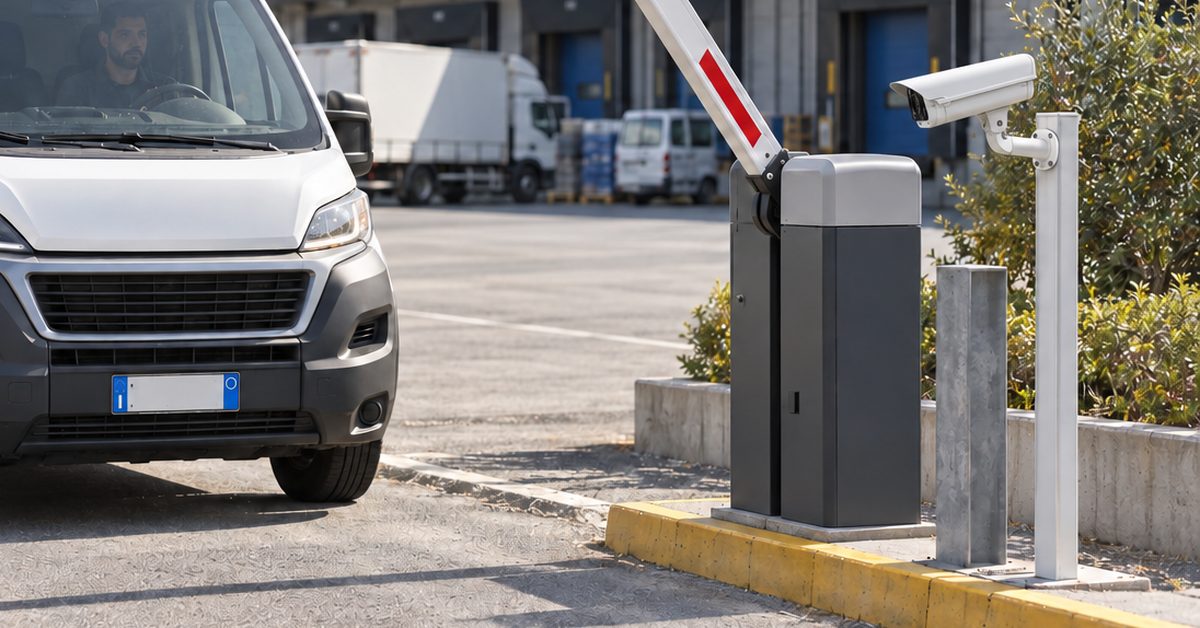
In short: with number plate recognition a gate or barrier opens when a camera recognises the plate of an authorised vehicle, so the driver does not have to get out, look for a remote control or type a code. With 1Control ACCESS the camera is a module of the same access control system: the plate is linked to a person and follows that person's rules (entrances, days, time slots, expiry date), just like their app, badge or PIN. Every entry is logged. ACCESS connects to the gate or barrier you already have.
This guide explains how plate recognition opening works, when it makes sense and when it does not, what you need to add it to an existing entrance, and which organisational points (privacy included) to settle first.
How number plate recognition works on gates and barriers
The principle is simple and repeats at every arrival:
- the vehicle approaches the entrance and the camera captures the plate;
- the plate is compared with those linked to authorised users;
- the system checks that this user may enter at that moment, through that entrance;
- if so, it sends the opening command to the gate or barrier operator;
- the entry is logged with person, date, time, entrance and method used.
Reading a plate and deciding who gets in are two different things
Many solutions stop at step one: a camera that opens if the plate is on a list. That works while the list is short and never changes. When there are many people, with different hours, suppliers coming and going and staff leaving the company, the plate has to be just one of the ways a person gets in, governed by the same rules as the others. That is the difference between a plate reader and an access control system with plate recognition.
When opening by number plate makes sense
Plate recognition works best when the people entering are always in a car or a vehicle and use the same entrance often:
- company fleets and staff cars entering the internal car park;
- regular suppliers with lorries and vans, for whom getting out at every delivery is wasted time;
- logistics centres with barriers for heavy goods vehicles and loading shifts;
- residential complexes with a busy vehicle gate;
- recycling centres and municipal areas, where vehicle access has to be regulated and traced.
It is less useful when arrivals are mostly occasional (visitors, consultants, ever-changing couriers) or when pedestrians and bikes also use the entrance: there the plate is still useful, but it needs other methods alongside it, as we will see below.
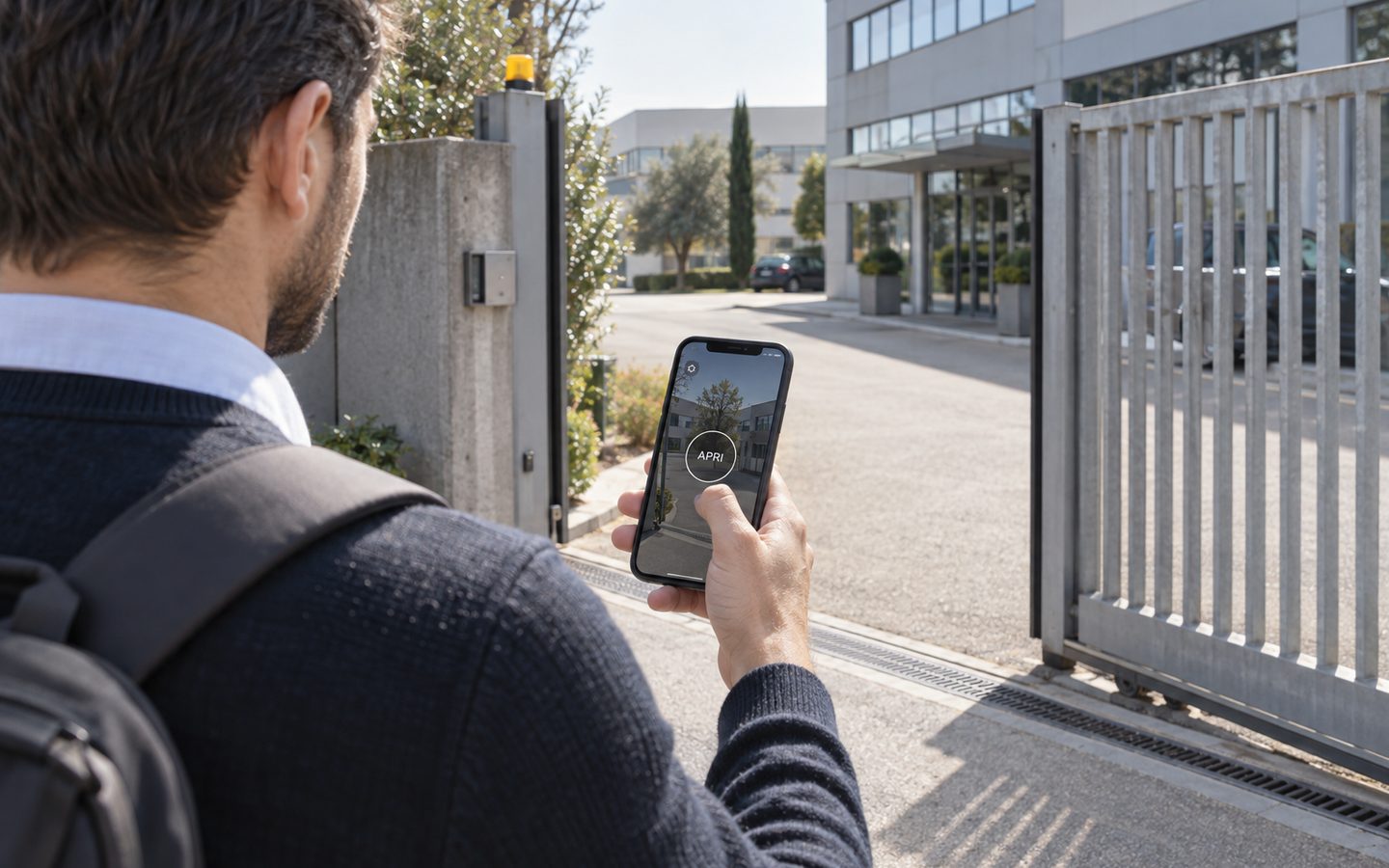
Plates, badges and app on the same entrance
1Control ACCESS opens gates and barriers with plate recognition and applies each user's rules to their vehicle, with a log of every entry. Data SIM included for 3 years.
- 1,500+ reviews on Amazon, Facebook and Trustpilot
- Secure payments
- 2-year warranty
Number plate recognition with 1Control ACCESS
A plug-and-play camera in the same system
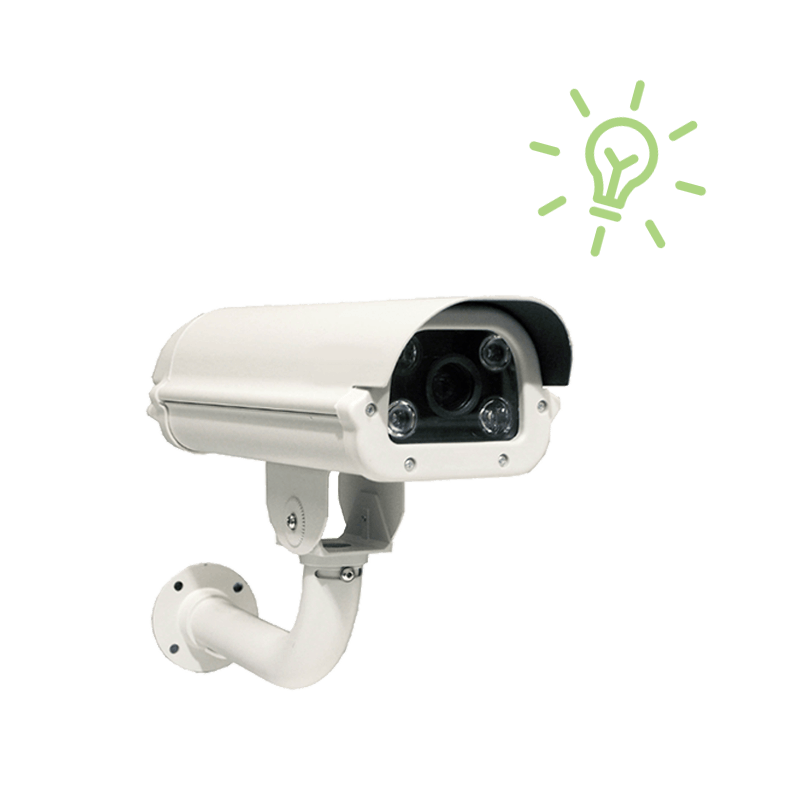
ACCESS can manage one or more cameras with plate recognition, without an NVR or a dedicated video surveillance system. The camera is a module of the access control system, not a separate system to configure on its own: plates, PINs, badges, remotes and the app are all managed from the same web admin area.
The plate follows its user's rules
In the web admin area each plate is linked to a person or a group («Staff», «Suppliers», «Night shift»). If a supplier may use the goods entrance Monday to Friday from 7 to 12, their plate opens only on those days and at those times. The same rule automatically applies to their app, PIN or remote control.
One revocation, every method
When an employee leaves or a supply contract ends, you deactivate the person in the web admin area: plate, app, badge, PIN and remote control all stop working at once. You can also set an end date, and the access expires by itself.
A log of every entry
Every opening goes into the log with person, date, time, entrance and method, and can be filtered by person, period or method. If a delivery is disputed, the log shows whether and when that vehicle came in.
What the plate does not solve on its own
Plate recognition is convenient, but it does not cover every case. Better to know in advance.
- Visitors and one-off arrivals. Someone who comes once has no registered plate. You can open remotely from the app or the web admin area, or create a PIN valid for that day only.
- Change of car. Courtesy car, rental, new vehicle: the plate must be updated in the web admin area, otherwise the entrance will not recognise it. That is why it helps if the same person also has a second method, such as the app.
- Pedestrians and bikes. The pedestrian gate needs a badge, PIN or app, with the smart keypad or the smartphone.
- The plate identifies the vehicle, not the driver. If a colleague drives a company car, the log shows the plate of the person it belongs to. If you need to know who came in personally, add a personal method on the pedestrian entrance.
- Camera position. Framing, lighting and the point where the vehicle stops are assessed on site with the installer. There is no position that suits every entrance.
Adding it to an existing gate or barrier
There is no need to replace the operator. ACCESS connects to the opening command of the gate or barrier you already have: all it needs is 12 V power and the opening contact of the automation. It works on sliding and swing gates, barriers, up-and-over doors, sectional doors and roller shutters.
ACCESS has built-in LTE with a data SIM included for 3 years: it goes online on its own, with no Wi-Fi or router. That matters at vehicle entrances, which are often far from the building and the company network. Authorisations are stored in the device: if the connection drops, authorised people keep getting in with their methods, and changes arrive when the network is back.
How many users? It depends on the configuration: ACCESS MINI up to 500 users, ACCESS up to 1,000.
A day with number plate recognition
A distribution company with a barrier for lorries, a vehicle gate for cars and a pedestrian entrance.
- 6:50 The first employees arrive by car: the camera reads the plates of the «Morning shift» group and the barrier lifts.
- 8:30 The regular supplier's lorry stops at the goods barrier: plate recognised, barrier open, nobody gets out.
- 10:15 A courier in an unknown van: the plate is not registered and the barrier stays closed. The logistics team opens it remotely from the app.
- 13:00 A sales agent arrives in a rental car. The office updates the plate in the web admin area in a minute.
- 17:40 An employee has left the company: they are deactivated, and from that moment their plate no longer opens, just like their badge.
- 18:30 The manager checks in the web admin area that the barrier is closed and scrolls through the day's log.
Number plates and privacy: what to clarify first
A vehicle plate linked to a person and a time is personal data. Before switching on plate recognition, clarify a few points with your adviser or data protection officer: the notice for employees, suppliers and visitors, signage at the entrance, how long to keep the access log and who may consult it. These choices depend on your organisation and the applicable rules: this guide is not legal advice.
Frequently asked questions
How does opening a gate with number plate recognition work?
A camera captures the vehicle plate, the system checks that it is linked to a user authorised on that day and at that time and, if so, sends the opening command to the gate or barrier. The entry is logged.
Do I need a video surveillance system or an NVR?
No. With ACCESS the plate recognition camera is a ready-to-use module of the access control system and does not require an NVR or complex video infrastructure.
Can I add plate recognition to a barrier that is already installed?
Yes. ACCESS connects to the opening command of the existing operator with 12 V power and the opening contact: there is no need to replace the barrier or the gate.
What happens if a vehicle with an unregistered plate arrives?
The entrance does not open. You can open it remotely from the app or the web admin area, or give the person a temporary PIN to use on the smart keypad.
Can I restrict a plate to certain days and times?
Yes. Each plate follows the rules of the user or group it is linked to: entrances, days, time slots and expiry date.
Does plate recognition work without internet?
ACCESS has an LTE connection with a data SIM included for 3 years and keeps authorisations stored in the device: even without a connection, authorised people keep getting in with their methods.
Conclusion
Number plate recognition turns a gate or barrier into an entrance that recognises regular vehicles and lets them through without stopping. The real value, though, is not the camera: it is that the plate follows the same rules as every other method, can be revoked in a moment and leaves a trace in the log. With ACCESS you get this on the entrance you already have, with badges, PINs and the app for people on foot or one-off visitors. If your case is a staff car park, read the guide to the managing company car park access with an app; to compare methods there is badge, PIN or smartphone, and for deliveries the guide to letting couriers and suppliers in.
Want to work out where to put the camera and how to organise access at your entrance? Request a demo of 1Control ACCESS.