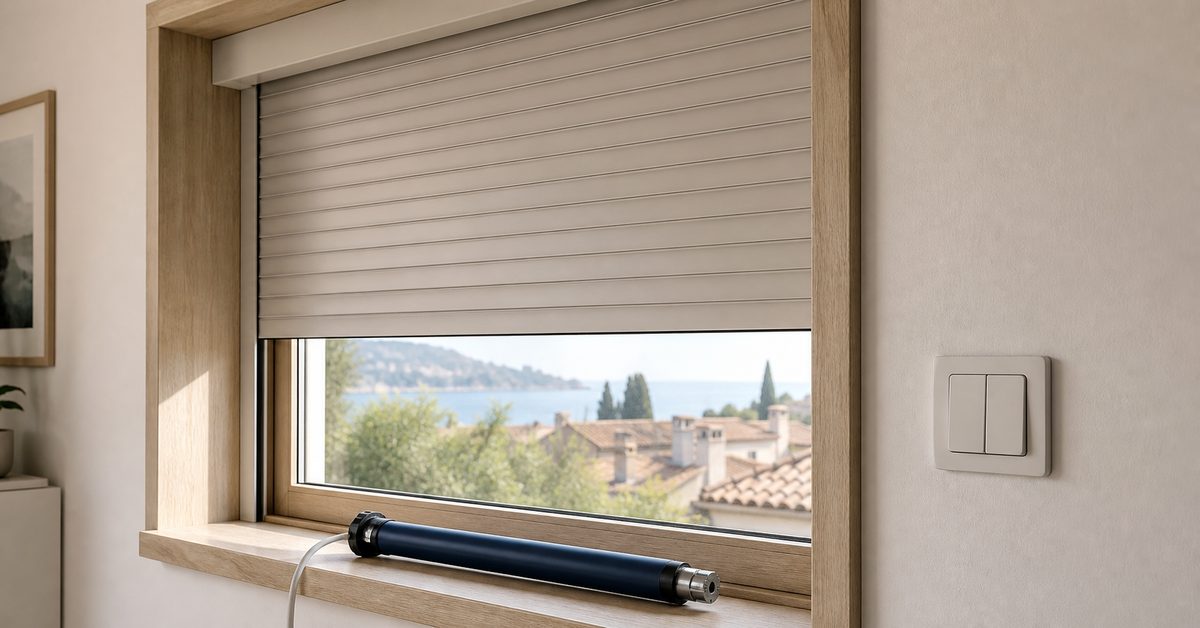
In short: in the UK, "electric blinds" means two different products, and mixing them up is the fastest way to buy the wrong one. Most of the time it means motorised indoor blinds — roller, venetian or roman blinds moved by a small motor running on mains, battery or solar power. Across much of Europe, and on a growing number of UK security and garage projects, the same words point at outdoor roller shutters, driven by a tubular motor hidden in the shutter box. This guide covers both worlds: how each is powered, what you can retrofit yourself, what belongs to an electrician, and what the market honestly charges.
One thing before we start: 1Control does not make blind or shutter motors, and its devices are not designed to control them — which is exactly why this guide can afford to be genuinely neutral. Our trade is gates and garage doors, and they appear only where a whole-home project happens to cross them, in one clearly marked section further down.
Blinds or shutters? Two products, one search term
The terminology is worth two minutes, because the two products share little beyond the word "blind" — and search results in the UK mix them freely.
- Motorised indoor blinds sit inside the glass and do the light-and-privacy job: roller blinds, venetians, romans, vertical blinds and curtain tracks with a motor instead of a chain or cord. This is what most UK retailers mean by "electric blinds" or "motorised blinds".
- Outdoor roller shutters sit outside the window or door: a curtain of aluminium or PVC slats running in guide rails, rolled around a tube in a box above the opening. Standard on homes across much of the Continent, in the UK they are best known on shopfronts and garages, and are gaining ground on houses for security and insulation. Motorising one means fitting a tubular motor inside that tube.
Everything below is split along that line, so you can read the half that matches your windows — though if your project is "make the whole house smarter", both halves and the section on gates will earn their space.
Why do you want electric blinds?
As with most home upgrades, the right purchase depends on the job, not the aisle. Three motives cover almost everyone:
- Convenience. Tall or hard-to-reach windows, a room with five blinds that go up and down every day, heavy shutters on a strap that has seen better days. Motorisation is the straightforward answer, and the next sections are a plain guide to choosing it.
- Making them smart. Schedules, voice control, blinds that close at dusk by themselves. That is a second layer on top of motorisation, and it deserves its own space: our smart blinds guide covers motors, hubs and integrations in detail.
- "While I'm automating the house anyway." The blinds are one piece of a wider project — in which case it is worth knowing early which parts of the house the blinds' system will never reach. The gate and the garage are the notable ones, covered further down.
Motorised indoor blinds: wired, battery or solar
For indoor blinds the fundamental choice is not the brand but the power source, because it decides who installs the blind and what living with it feels like.
Mains-wired
A cabled connection to the mains: no batteries to think about, the strongest motors, and support for the quietest and most polished behaviour. The price is the cable run — hidden wiring is easy during a renovation and disruptive after it, and connecting to the mains is a job for a qualified electrician. Wired makes most sense when you are already opening walls, or on large installations where charging a dozen batteries would become a chore.
Battery and rechargeable
The retrofit favourite, and the reason electric blinds have gone mainstream: a motor with a built-in rechargeable battery, installed without any wiring. Expect a recharge every few weeks to a few months depending on window size and daily use, usually via a USB cable. Ikea's motorised range made this category affordable and familiar; made-to-measure firms build battery motors into blinds of any size; and retrofit kits exist that motorise the chain of a blind you already own. The honest trade-offs: charging is a routine you are signing up to, and cheap motors can be noisier and slower than wired ones.
Solar
A battery motor plus a small photovoltaic panel that keeps it topped up from daylight — no wiring and, in the best case, no charging routine either. It suits sun-facing windows and conservatories, and it is the standard answer on roof windows: Velux, for example, offers solar as well as electric versions of its windows and blinds, with retrofit options for windows already installed. On a north-facing window in a British winter, be realistic about how much the panel will actually harvest.
Outdoor roller shutters: the tubular motor
An outdoor roller shutter is motorised by replacing the manual mechanism — the strap winder or the crank — with a tubular motor that slides inside the roller tube. The shutter itself usually stays: same box, same guide rails, same curtain. It is one of the more satisfying retrofits in the house, because it removes a genuinely tedious daily action.
What decides the purchase is measurement, not marketing. The motor must match the roller tube's shape and diameter, and its torque must match the weight of the curtain — a wide aluminium shutter needs more than a small PVC one, and both figures are in the kit tables. Motors from the big names in the field, such as Somfy and Nice, are widely available and widely documented, alongside plenty of unbranded kits; what matters more than the badge is that the specification matches your shutter.
The second decision is the control: a wall switch wired to the motor, or a radio motor with a handheld remote. Radio costs a little more and spares you a cable run to the switch position; it is also the version that leaves the door open to smart control later. Either way, tubular motors are mains-powered: fitting the motor in the tube is a competent-DIY job, but the connection to the mains belongs to a qualified electrician. If the shutter, box or rails are tired, a supplied-and-fitted electric shutter may beat motorising the old one — an installer will tell you in one visit.
What electric blinds cost in the UK
Honest ranges, as seen across UK retailers and trade sites — not quotes, and prices move, so treat them as orientation:
- Off-the-shelf battery roller blinds commonly sit between roughly £80 and £250 per window, with flat-pack ecosystems at the lower end.
- Made-to-measure motorised blinds more often run from around £150 to £600 or more per window, depending on size, fabric and motor type; motorised curtain tracks sit in a similar band.
- Retrofit motor kits for a blind you already own typically cost from a few tens of pounds to a little over £100 per blind.
- Tubular motor kits for an existing roller shutter are commonly £80 to £250 in parts, with an installer's or electrician's time on top.
- New electric roller shutters, supplied and fitted, run to several hundred pounds per opening, and beyond for large or security-rated ones.
Two comparison traps: remotes, hubs and wall switches are often priced separately from the motor, and "per blind" arithmetic multiplies quickly across a whole house. Price the full window count, with controls, before deciding between routes.
If you're making the house smart: your gate and garage sit outside the blinds' system
Somewhere around this point the project usually widens from "the blinds" to "the house". So it is worth saying plainly: whatever system your blinds end up on — a manufacturer's hub, a smart-home platform, plain remotes — the two motorised things you use most are not on it. The driveway gate and the garage door have their own motors and their own radio logic, installed years ago and controlled by the remote in the car. No blind hub will open them, and nothing in this guide changes that.
They do not need a new motor, though — they need a smarter way in to the one they have. SOLO connects to the existing radio automation of a gate, garage door or barrier exactly as an additional remote control would, with over 800 remote models supported, rolling code included. Nothing on the control board is touched and no wiring changes: you open from the app over encrypted Bluetooth, share access with family free of charge and revoke it just as easily. It is a one-off purchase with no subscription. Our step-by-step guide to opening a gate with your smartphone covers installation and compatibility in detail.
And the boundary, stated once and clearly: SOLO is designed and documented for gates, garage doors, up-and-over doors and barriers — we don't offer it for blind or shutter motors. Your blinds and shutters deserve a system built for them, chosen with the sections above; your outdoor entrances already have their automation, and SOLO is how it reaches your phone.
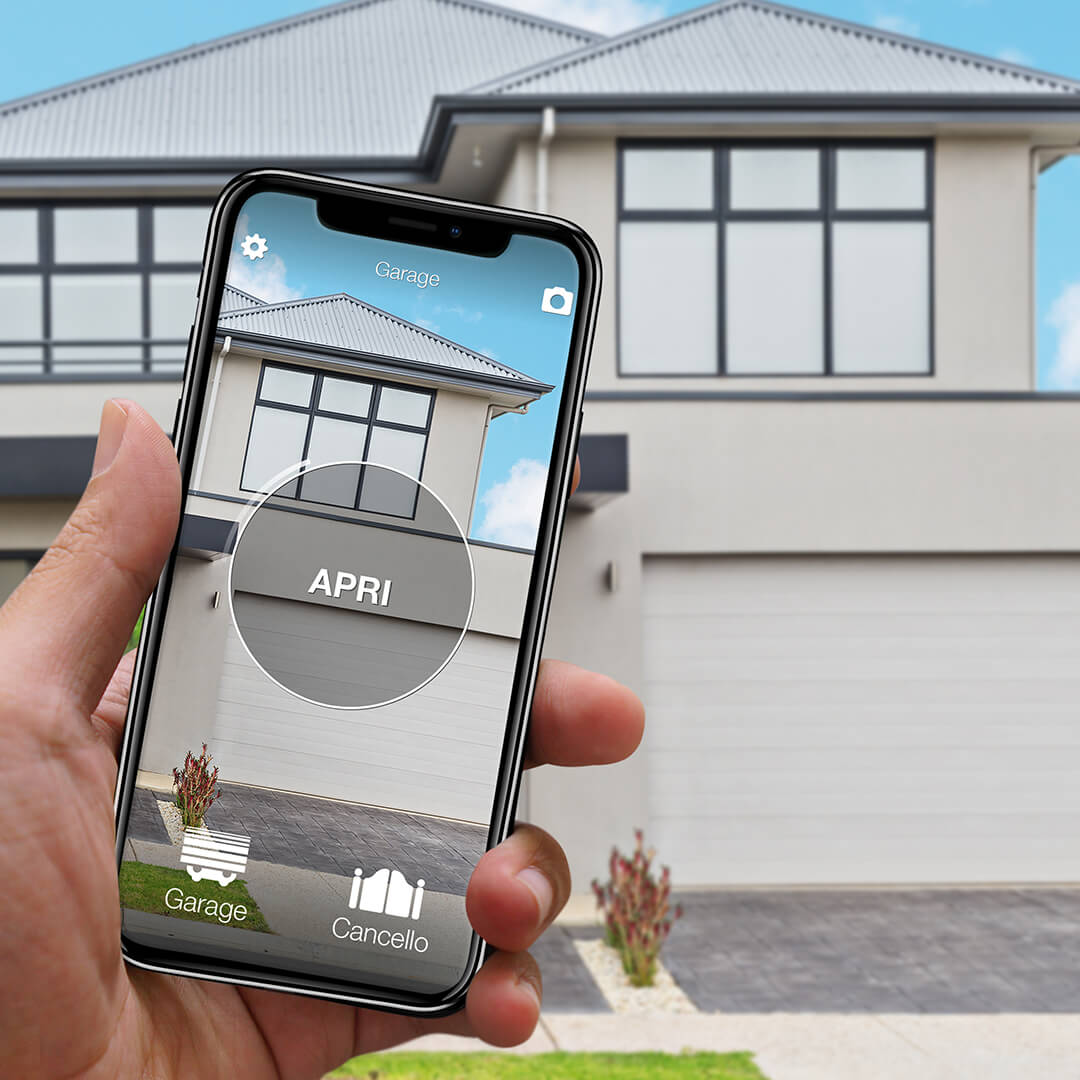
Motorising your blinds? Your gate and garage can already open from your phone
While you make your blinds smart with their own system, your outdoor entrances shouldn't lag behind: 1Control SOLO adds to your existing gate and garage automation without touching the control board, with free, revocable sharing. Check in seconds whether your system is compatible. One-off purchase, no subscription.
139,00€ 119,00€ VAT included
- 1,500+ reviews on Amazon, Facebook and Trustpilot
- Secure payments
- 2-year warranty
The honest limits of the retrofit
A neutral guide owes you the fine print as well as the options.
- Electrical work is not optional. Mains-wired blinds and tubular shutter motors involve mains connections: budget for a qualified electrician, and treat any kit instruction that waves this away with suspicion.
- Power cuts. A mains-only shutter with no manual override stays where it is when the power goes. Many motors offer a manual override crank as an option — on a shutter you may need to open in an emergency, specify it.
- Flats and leasehold. External roller shutters change the look of the building. In a flat or leasehold house, expect to need the freeholder's or management company's consent, and in some settings planning considerations apply — this is general information, and the lease or a local check settles it.
- Measure twice. Made-to-measure means what it says: recess sizes for indoor blinds, tube diameter and curtain weight for shutter motors. Most disappointing purchases in this category are measurement errors, not product failures.
- Battery upkeep. A house full of battery blinds is a house with a charging rota. It is a small cost, but it is real, and solar or wired options exist precisely to remove it.
Two systems that live together
The blinds' world and the entrances' world stay separate — separate motors, separate radio, separate apps — and that is fine, because nothing forces you to unify them. The natural meeting point is the voice assistant layer: motorised blinds join Alexa or Google Home through their manufacturer's hub, the gate and garage answer through SOLO's integrations, and a single morning routine can raise the blinds while the gate stands ready for the school run. Each system keeps doing the job it was engineered for; your phone and your voice are where they meet.
Frequently asked questions
Is it worth getting electric blinds?
It depends on the windows and on how often you use them. Motorisation earns its keep on tall or hard-to-reach windows, on rooms with several blinds that move every day, and wherever cords are a child-safety concern, since motorised blinds are cordless by nature. Add scheduling and the case gets stronger: blinds that move on a timer help with light, summer heat and the lived-in look when you are away. For a single blind you rarely touch, a manual control is cheaper and has nothing to go wrong.
Do electric blinds need to be plugged in?
Not necessarily — there are three power routes. Mains-wired blinds need a cabled connection, which is an electrician's job and easiest during a renovation. Battery blinds are the usual retrofit choice: they install without any wiring and recharge every few weeks to months depending on use. Solar blinds add a small panel that keeps the battery topped up from daylight, which suits sun-facing glass and roof windows. Outdoor roller shutters are different again: their tubular motors are generally mains-powered, so plan for an electrician.
How much do electric blinds cost in the UK?
As market ranges across UK retailers, not quotes: off-the-shelf battery roller blinds commonly sit between roughly £80 and £250 per window, made-to-measure motorised blinds more often run from around £150 to £600 or more depending on size and fabric, and retrofit motor kits for an existing blind typically cost from a few tens of pounds to a little over £100. On the outdoor side, a tubular motor kit for a roller shutter is commonly £80 to £250 in parts plus an installer's or electrician's time, while new electric shutters, supplied and fitted, run to several hundred pounds per opening. Compare like for like: remotes, hubs and installation are often priced separately.
Can I control my blinds with 1Control SOLO?
No. SOLO is designed and documented for gates, garage doors, up-and-over doors and barriers: we don't offer it for blind or shutter motors. Blinds and shutters need their own control systems — the motor manufacturer's remotes and hubs, or the retrofit routes this guide describes. What SOLO does is bring the outdoor entrances into the same project: it joins the existing radio automation of your gate or garage like one more remote control, so you open them from your phone while the blinds run on their own system.
The bottom line
Settle the terminology first — indoor motorised blinds or outdoor roller shutters — and half the confusion disappears. Indoors, choose by power source: wired if walls are open, battery for the painless retrofit, solar where the light justifies it. Outdoors, let the tube diameter and curtain weight choose the motor, and give the mains connection to a qualified electrician. Price the whole window count, controls included, before committing to a route. And if the blinds are one chapter of a wider smart-home story, remember the two doors the blinds' system will never open: the gate and the garage already have their automation, and putting them on your phone is a separate, simpler decision. When you are ready for the smart layer on the blinds themselves, the smart blinds guide is the next read.